
OilersNation has no direct affiliation to the Edmonton Oilers, Oilers Entertainment Group, NHL, or NHLPA
Draisaitl’s 2026 Olympic journey ends, Canada’s puck-moving struggles and more
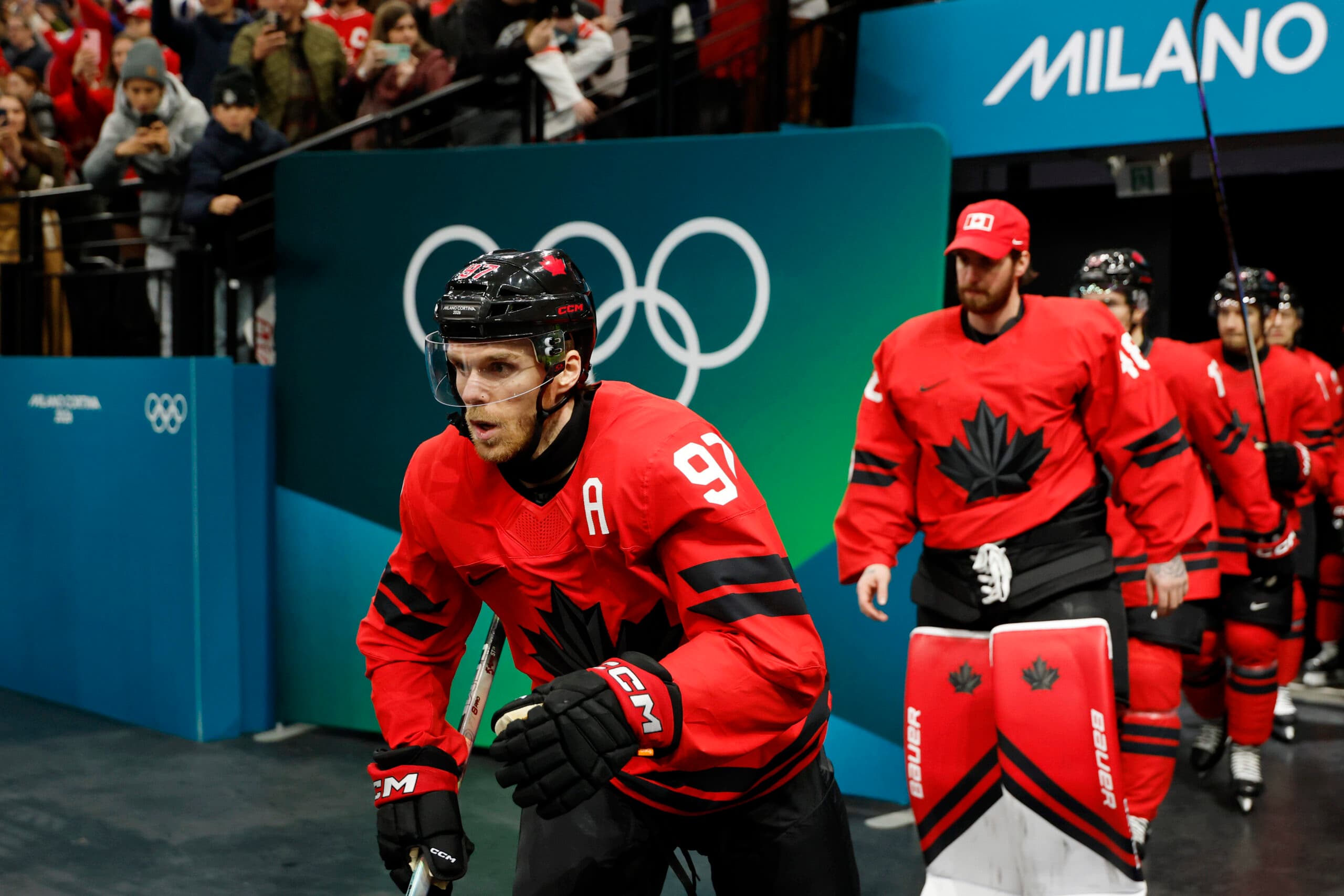
Photo credit: © Geoff Burke-Imagn Images

With all four quarterfinal games wrapped up on Wednesday, the stage is now set for the 2026 Olympic Men’s Hockey semifinals. On Friday, Canada will play Finland, while the United States will face off against Slovakia.
It has been a wildly entertaining tournament thus far, with Connor McDavid breaking Olympic point records, Czechia nearly pulling off a historic upset against Canada, and three out of the four quarterfinal games heading to 3-on-3 overtime.
With the field narrowed down to four, here are four thoughts before the puck drops on Friday.
*All statistics via Olympics.com unless stated otherwise
A strong performance by Draisaitl despite an underwhelming result for Germany
It is undeniable that Germany has the star power to compete with the world’s best. Leon Draisaitl, Moritz Seider, and Tim Stützle form an excellent top-end core. However, the gap between the performance of their stars and the rest of the lineup was simply too wide.
To briefly recap, Germany won their first game of the Olympics against Denmark, but lost the subsequent two preliminary round games to Latvia and the United States. They were victorious in the qualifiers against France, but thoroughly lost 6-2 to Slovakia in the quarterfinals.
In total, the Germans scored 17 goals in 5 games. Draisaitl and/or Stützle were on the ice for 14 of them, meaning the rest of the roster combined for just three goals without their top-two centres. To put that into perspective, compare that to the Slovakian team heading into the semifinals, for example, where third‑liner Pavol Regenda recorded three points in the quarterfinal game alone.
Defensively, the issues were just as stark. Seider was the lone NHL blueliner on the roster, and the lack of support around him showed. Though Seider managed to finish the tournament with a positive even-strength goal differential, Germany allowed a combined 15 goals in their losses to Latvia, the U.S, and Slovakia.
Despite the team’s shortcomings, Draisaitl had an excellent individual tournament. He posted seven points in five games and, according to Dimitri Filipovic’s scoring chance tracking, ranked second among all players in scoring‑chance contributions per game during the preliminary round, trailing only his Oiler teammate Connor McDavid. Note that he accomplished this with far inferior linemates.
It was evident that Germany’s game plan was to lean heavily on Draisaitl. He averaged more than 24 minutes per game — ranking as the only forward among the tournament’s top-ten skaters in ice time — and logged over 28 minutes in the quarterfinal, just a day after already playing over 24 minutes in the qualifier against France.
At the end of the day, there’s only so much that one player can do.
 © James Lang-Imagn Images
Feb 18, 2026; Milan, Italy; Leon Draisaitl of Germany looks on in a men’s ice hockey quarterfinal during the Milano Cortina 2026 Olympic Winter Games at Milano Santagiulia Ice Hockey Arena. Mandatory Credit: James Lang-Imagn Images
An underwhelming showing for Sweden
Sweden was the only nation from the 2025 NHL Four Nations tournament not to reach the 2026 Olympic semifinals. Their run ended on Wednesday with a 2-1 overtime loss to the United States in the quarterfinals.
In isolation, there is little shame for Sweden to lose to the United States. The Americans are a powerhouse, and the game was razor-thin, ending in overtime. However, the disappointment stems from the fact that Sweden should never have been in a quarterfinal elimination game with the US to begin with.
Heading into the Olympics, Sweden was the clear favourite to win Group C. They boasted the third-most players in the NHL to choose from, most notably carrying an elite defensive corps on par with Canada and the US. Instead, Sweden finished third in the group, losing the tiebreaker to Slovakia and Finland, who claimed the top two spots, the former of which received a bye to the quarterfinals and thus a much weaker opponent than the US.
Relative to expectations, Sweden was rather underwhelming throughout the entire event. Their first matchup with Italy was tied 2-2 at one point despite Italy having no NHL players, a huge contrast to Finland’s dominant 11-0 victory over the same team. Sweden followed that with a 4-1 loss to Finland, a narrow 5-3 win over Slovakia, and ultimately the overtime defeat to the U.S. in the quarterfinals.
There were many puzzling decisions by Sweden’s management and coaching throughout the tournament. Filip Forsberg, the 5th highest scoring Swede in the NHL this season, ranked 11th among their forwards in TOI per game, playing only a minute in their opening game. Jesper Bratt was a healthy scratch at one point. And while it may not have changed the outcome, leaving Oiler Mattias Ekholm — the 1LD on a team that reached the last two Stanley Cup Finals — off the roster was also difficult to justify in my mind.
All things considered, Sweden never resembled the gold‑medal contender that they were expected to be. It’s hard to argue that head coach Sam Hallam should return behind the bench for Sweden at best-on-best hockey after this.
Canada’s puck-moving has been their biggest weak spot
On the one hand, perhaps it was a good thing in hindsight for Team Canada to face some adversity before the medal games.
But on the other hand, with full respect to Czechia, that quarterfinal should never have been as close as it was.
It is pretty wild to think that we were one shot away from an all-time historic upset. Ultimately, Canada obviously prevailed, but it exposed a couple of concerns in their game that could be worrisome as we head into the semifinals. Specifically, I would like to highlight Canada’s puck-moving.
A major reason the game remained tight was Czechia’s ability to disrupt Canada’s transition game. For long stretches, Canada’s defence outside of Cale Makar mightily struggled to move the puck cleanly out of their zone. It showed up in the rush chances data, as Czechia was ahead 10-5 in scoring chances off the rush per Dimitri Filipovic’s data during the quarterfinals.
In my view, this issue stems largely from personnel. Travis Sanheim and, particularly Colton Parayko have been extremely subpar in transition, as Canada’s decision to leave both Evan Bouchard and Matthew Schaefer off the roster continues to age very poorly in my eyes. I would say even Jakob Chychrun and Noah Dobson had strong cases to make the team.
Hopefully, Josh Morrissey can return sooner than later. I think he can make a significant difference in this aspect. And, regardless of how this tournament ends, I hope Canada’s management prioritizes adding more defencemen who can move the puck for the 2028 World Cup of Hockey and the 2030 Olympics.
Connor McDavid and Macklin Celebrini have been outstanding
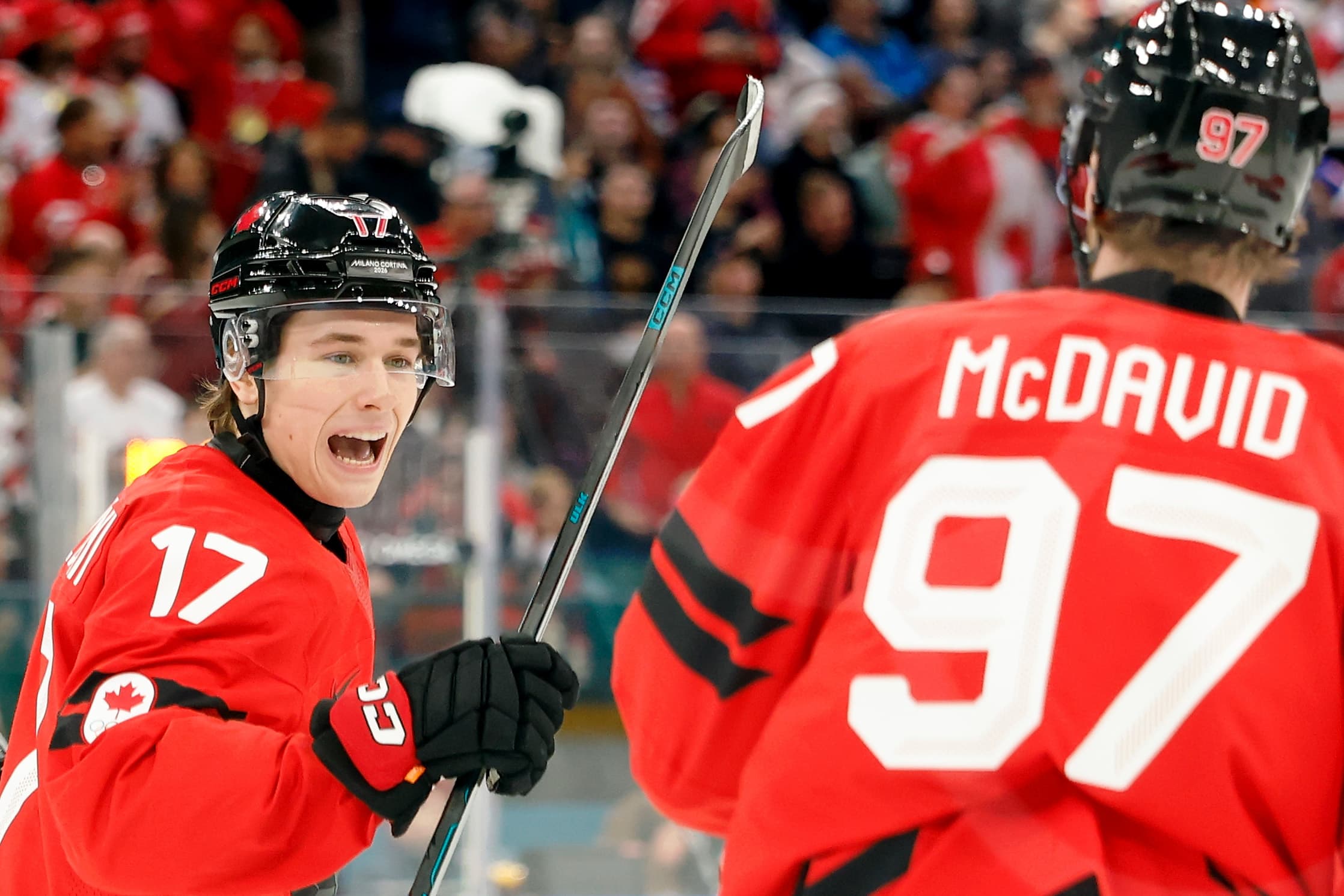
Feb 18, 2026; Milan, Italy; Macklin Celebrini of Canada celebrates with Connor McDavid after scoring their first goal against Czechia in a men’s ice hockey quarterfinal during the Milano Cortina 2026 Olympic Winter Games at Milano Santagiulia Ice Hockey Arena. Mandatory Credit: Geoff Burke-Imagn Images
The last time that NHL players went to the Olympics was in the Sochi Olympics back in 2014. That year, Phil Kessel and Erik Karlsson tied for the scoring lead with 8 points each.
Connor McDavid and Macklin Celebrini are already at 11 and 9 points, respectively after four games, and they still have two more games left to play.
All-in-all, McDavid and Celebrini’s instant chemistry together at these Olympics has been unreal to watch. They have been a step ahead of the opposition all tournament long, tilting the ice on seemingly every shift. Celebrini has set a record for the most points by a teenager in an Olympics with NHL players, while McDavid has now set a record for most points overall by any player in an Olympics with NHL participation.
As we head into the semifinals, there is a long list of question marks for Team Canada. Their goaltending is questionable, their puck-moving has been mediocre, and Sidney Crosby’s injury in particular is a huge concern. However, Canada’s exceptional star power remains the reason why I believe they will still ultimately win gold.
Find me on Twitter (@NHL_Sid)
PRESENTED BY DAILY FACEOFF’S OLYMPIC COVERAGE

Catch Every Goal from the 2026 Milan Games! The 2026 Milan Games are almost here, and the world’s best men’s and women’s hockey players are ready to battle for gold! The Nation Network is bringing you every game, every jaw-dropping save, and all the drama with live reaction streams and full recaps. Don’t miss a moment of Olympic hockey action—men’s, women’s, and everything in between—on the Daily Faceoff YouTube channel. Subscribe now and stay on top of every play!


Breaking News
- Oilers from the past: Has Tobias Rieder finally started scoring goals?
- Oilers announce theme night schedule for 2026-27 season
- What if the Oilers traded for Mikko Rantanen in 2025?
- Leon Draisaitl welcomes Mike Babcock’s accountability, but will it apply to every Oiler?
- Oilers’ Josh Samanski goes incognito at German festival to find romance

Edmonton OilersTeam Cap Summary

Cap Summary
2026-27
2027-28
Projected Cap Hit
$99,274,166
$87,350,000
Projected Cap Space
$4,725,834
$26,150,000
Current Cap Space
$4,725,834
$26,150,000
Active Players
23/23
15/23
Draft Picks
Round
'26
'27
1
0
0
2
1
1
3
1
0