
OilersNation has no direct affiliation to the Edmonton Oilers, Oilers Entertainment Group, NHL, or NHLPA
Beyond Accountability: What Mike Babcock could change behind the Oilers’ bench
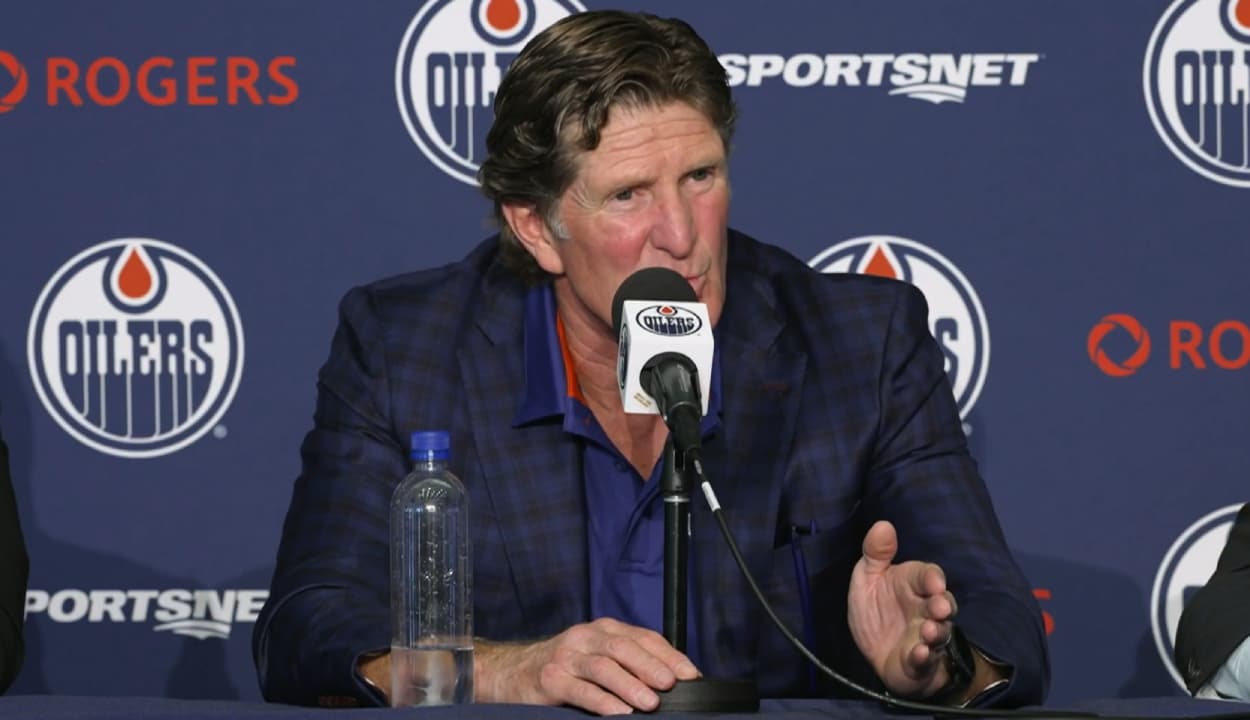
Photo credit: Screengrab/Edmonton Oilers

We’ve heard it time and again this summer: the Edmonton Oilers were looking for a different type of coach when they brought in Mike Babcock. The word that has resurfaced in articles and interviews has been accountability; the team’s leadership felt they needed more of this from their coach to get over the finish line.
There will be more to Mike Babcock being a “different type of coach,” though; holding the players accountable will be one part of it, but what other decisions will he make that are different from coaches of the past?
Previous Oilers coaches have been criticized for riding the superstars too hard. And who could blame them? When you’ve got two of the best players in the world, how do you not put them on the ice? But, come playoff time, it’s crucial to have your stars as fresh as they can be so they can carry a heavier load down the stretch. Under Kris Knoblauch last season, Connor McDavid and Leon Draisaitl averaged around 22 minutes per game. Many other star forwards average closer to 20 minutes, like Vegas’s Jack Eichel, Toronto’s Auston Matthews, and Tampa Bay’s Nikita Kucherov. Those two extra minutes take their toll over the course of a season, not only on the guys playing the minutes but also the guys forced to spend extra time on the bench. Having a more even split throughout the lineup keeps everyone involved, allows for more contributions up and down the lineup and keeps your stars fresh.
When Mike Babcock last coached in Toronto, this was clearly the strategy. No forward averaged above 20 minutes per game. Even the splits between defencemen were more even, with top-minute man Morgan Reilly hovering around 23 minutes per game. A change like this was one of the first ones talked about when Babcock signed on with the Oilers – I’d expect the fourth line to see around 10 minutes per game this season and the top lines to be closer to the 20-minute mark throughout.
How will Mike Babcock handle Connor McDavid and the Oilers’ penalty kill?
What about the penalty kill? This has been a sore spot for the Oilers the past couple of seasons and ultimately had Kris Knoblauch resorting to having Connor McDavid on the penalty kill several times last season. In his final season in Toronto, Babcock used Auston Matthews on the penalty kill sporadically as well. That said, removing the penalty kill from McDavid’s plate seems like an easy way to manage some of his ice time and to prevent injuries from shot-blocking and potential extended shifts with the puck under the opponent’s control. Another way of managing this, if the new coaching staff really likes McDavid on the kill, could be removing the “shift after a successful kill” from his plate instead. If the Oilers are able to have other players step up, they could leave McDavid killing and leave the next shift to Leon Draisaitl, Zach Hyman and others to swing the momentum back.
Another impending decision is whether Babcock will play McDavid and Draisaitl together. This has been a lever used by every coach since the dynamic duo came into the league. They can be such a dominant combination, but does this move leave enough depth to get contributions from other lines? Stan Bowman mentioned that he liked when the two play together (how can you not?) – interestingly, Babcock tended to pair up Auston Matthews and William Nylander when he was in Toronto, and had Mitch Marner on his own line. Nylander wasn’t quite the player he is today at that time, so it seems like Babcock had more of a propensity to split the talent up throughout the lineup. We’ll see if he takes the same approach in Edmonton, especially after he first witnesses the nuclear combination in person.
How will Mike Babcock spark the Oilers’ roster during tough stretches?
An always-important aspect of coaching has been how they create a spark. Sometimes, it’s starting the fourth line, sometimes it’s switching up the lines, and sometimes it’s sending a message by heavily scratching someone or limiting their ice time. Some coaches yell, some have great pre-game speeches, and some are more even-keeled. Kris Knoblach probably falls into the latter category, especially when the cameras could see him. In his first season, he was a magician with moving the line combinations around and finding setups that got players going. The Oilers were unable to sustain any momentum last season, winning trhee games in a row for the first time 55 games into the season – they needed that spark last season and just couldn’t find it. In his previous coaching roles, Mike Babcock has used ice time to light a fire under his players. He has never been afraid to reward those playing well and reduce playing time for those who weren’t, regardless of who they were. Watch for more depth players to see time on the top line if they’re going, and for Babcock to call out his leaders to step up, both behind closed doors and in the media.
The media is an interesting tool for coaches. Kris Knoblach always approached the media with a calm demeanour, not often saying anything controversial. The same can’t be said for Babcock. Whether he calls out his star players or is brutally honest with reporters, look for there to be a few more quotable press conferences this season, all aimed at lighting a spark in the locker room.
Goaltending has been a hot topic in Edmonton forever. The team enters the season with two NHL-calibre goalies (Tristan Jarry and Devon Levi) and one more, Frederik Andersen, on the shelf for the first month or so. Babcock hasn’t been shy about riding a hot hand and making changes during the season if the team or the goaltender struggles (think veteran Chris Osgood and young gun Jimmy Howard in the 2009-10 playoffs ). With lots of depth at his disposal in goal this season, looks for him to be aggressive on this – if someone is going, ride the hot hand.
I expect Mike Babcock to hit the ground running with a lot of these decisions – and for a lot of them to change throughout the season. Eighty-four games is a lot and leaves room for lots to happen. The Oilers brass and leadership group brought in Babcock because they thought he could find the right combination of these buttons to lead them to the promised land.
PRESENTED BY CAPITAL GMC BUICK
Hockey fans recognize elite performance instantly, and that’s exactly how Capital GMC Buick operates. With one of the city’s deepest selections of top-quality GMC and Buick vehicles and a customer experience built to win year after year, this dealership consistently leads the pack. Five current NHL players proudly drive vehicles from Capital GMC Buick, and for good reason. The store has been rated the #1 GM dealership in Canada by DealerRater for three consecutive years, is the only GM dealer in Edmonton endorsed by J.D. Power as a Dealer of Excellence, and has raised over $30,000 for the Stollery Children’s Hospital.


Breaking News
- Beyond Accountability: What Mike Babcock could change behind the Oilers’ bench
- Oilers 2026 Prospect Countdown No. 7: Viljami Marjala
- The NHL’s new reality: Star players now dictate where they want to play
- Oilers bold predictions: Devon Levi emerges as Edmonton’s best regular-season goaltender
- How concerning is Matt Savoie missing training camp for the Oilers?

Edmonton OilersTeam Cap Summary

Cap Summary
2026-27
2027-28
Projected Cap Hit
$102,071,666
$88,322,500
Projected Cap Space
$1,928,334
$25,177,500
Current Cap Space
$1,928,334
$25,177,500
Active Players
22/23
16/23
Draft Picks
Round
'26
'27
1
0
0
2
1
1
3
1
0