
OilersNation has no direct affiliation to the Edmonton Oilers, Oilers Entertainment Group, NHL, or NHLPA
Sunday Scramble: Why NHL Expansion to 33 teams is a bad idea for hockey
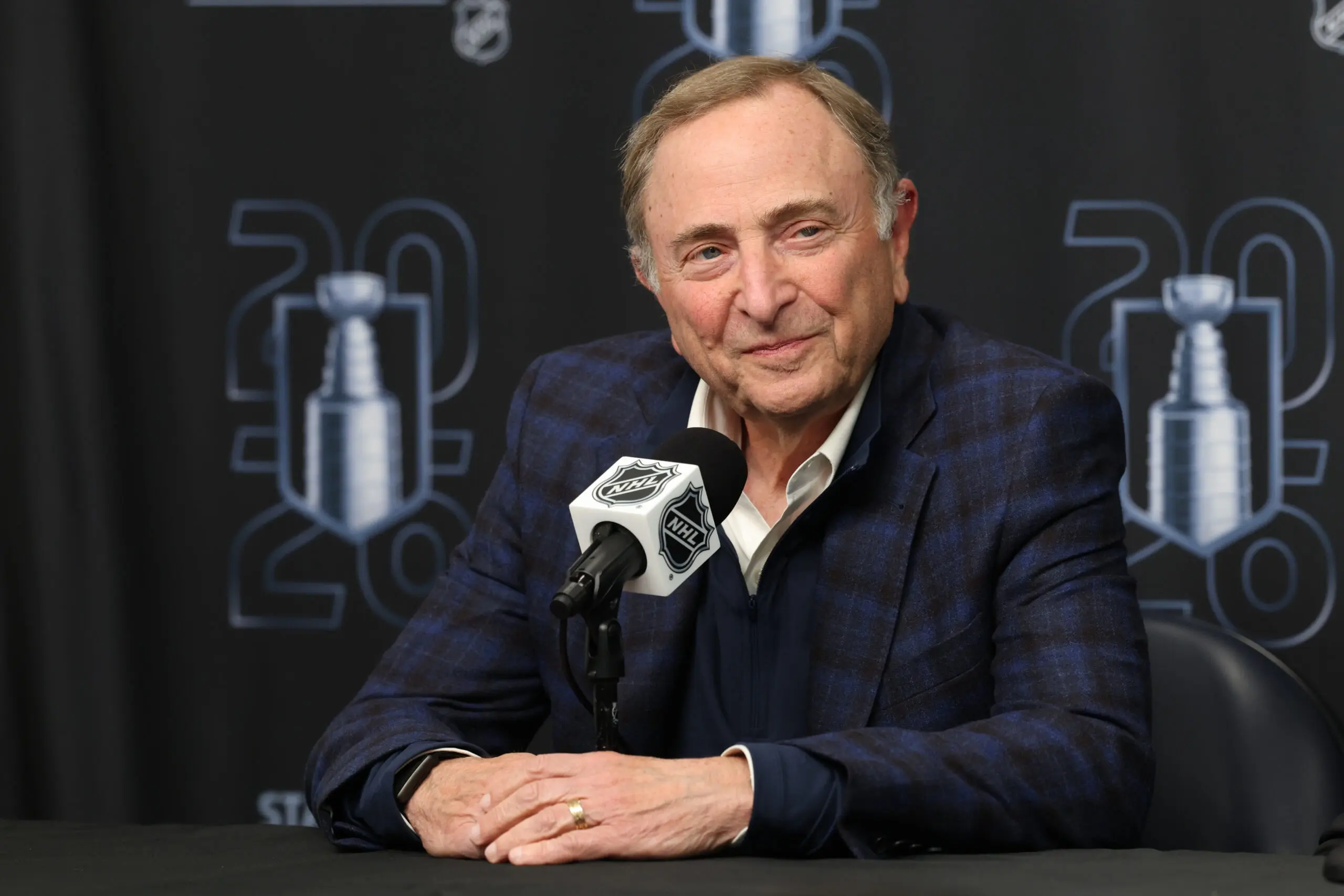
Photo credit: Rob Gray-Imagn Images

Aug 2, 2026, 17:30 EDTUpdated: Aug 12, 2026, 15:09 EDT


I won’t beat around the bush.
I am not in support of NHL expansion. A 33rd NHL team? Is there any good reason besides billions of dollars in expansion fees? (He asks, knowing that’s hard to argue against).
I don’t think so. The Houston Aeros? Sorry, no thanks.
But this is not necessarily the league’s point of view, as the NHL is flirting with lucky No. 33. Don’t be surprised if five years from now the league is 34 teams deep.
Out of the June Board of Governors meeting, Commissioner Gary Bettman sounded different than the guy who told us just a few weeks earlier the league was not ready to expand yet.
I get the sense he’s warming to the idea.
There had been rumblings about Houston. Atlanta was suggested because the third time is the charm. Austin is in the mix, but no word on Joe Rogan.
Regardless, the Friedkin family wants an NHL team to add to their portfolio, owning Premier League team Everton and Serie A squad AS Roma. It’s gonna cost some $3.5 billion for expansion fees and the cost of building a brand-new arena, Bettman says.
“We have been in discussions for the better part of two years with the Friedkin family, principally for the last two years about Houston as an expansion opportunity,” said Bettman on June 23.
“But as we continued to focus with them, particularly on the need for a new arena in Houston, the discussions morphed into also a discussion about Austin, which would also need a new building. But we are going to work together under the terms, a term sheet that we were able to agree upon, in terms of a framework to consider what makes the most sense moving forward.”
Thus begins a six-month period to investigate, evaluate, and commiserate that the NHL will water itself down by another three per cent or so.
After that process, if the NHL feels comfortable, the Board of Governors will move forward with a vote.
Why is Houston a leading candidate for NHL Expansion?
I have no personal beef with Houston, but some Edmonton Oilers fans might due to some uncomfortable history. They remember 1998 when Les Alexander was just hours away from taking our muse and shipping operations south to join his portfolio with the Houston Rockets.
Houston is obviously attractive to the NHL. It’s a massive market with tons of international business. By population, it’s the fourth-largest city in the United States and fifth-largest in terms of metropolitan area, according to 2025 figures, with roughly 7.9 million residents in the Houston-Pasadena-Woodlands area.
But as we know, it takes more than just a large citizenry to make a successful market, as Phoenix is the fifth-most populous American city, and Atlanta is the fifth-largest metro area. Both struggled with ownership and arena issues throughout their NHL days.
Yet, all three of those cities have long footholds in the NBA, MLB, and the NFL (when Houston Oilers owner Bud Adams moved to become the Tennessee Titans after a long debate about who would pay for a new building, the NFL awarded them an expansion team just a couple of years later).
At one time, Houston was one of the most important franchises in the World Hockey Association in the 1970s, with Gordie Howe as one of the consistent faces of the rebel league.
If the NHL had accepted merger talks a year sooner in 1978, instead of 1979, there’s a strong chance Houston would’ve had a franchise then, but when negotiations ended, so did the Aeros.
The Aeros came back in the 1990s as an independent IHL team, a strong one too, and were absorbed into the AHL in 2001 once those leagues’ battle for North America’s second-best hockey league ended.
Houston became the primary affiliate for the Minnesota Wild, with an agreement too with the Dallas Stars. There’s still a handful of current NHLers who spent time in Houston, as well as former Oilers coaches Todd McLellan and Dave Tippett.
Their eventual departure from Houston came with landlord issues, as Les Alexander, who owned the Toyota Center they rented, wanted to free up concert dates or charge five times the fees under their previous agreement.
Eventually, the Aeros became the Iowa Stars. In their final season of 2012–13, the Aeros had the seventh-best average attendance in the AHL.
Not bad at all. The theoretical case for Houston makes a ton of sense to me. I suspect Houston could be a strong NHL franchise.
But it sure doesn’t help the league sell its most valuable commodity in today’s sports landscape.
Parity and luck
Salesman Gary Bettman has worked hard to try and sell one thing that beats all in an already saturated NHL — hope.
The league’s standings rely on the loser point to keep average teams competitive for longer, so franchises can keep selling tickets right to the very end of the season.
Ties existed before Bettman’s tenure began in 1993, and the NHL isn’t the only league to reward an overtime loss. However, in today’s game, it works to sell artificial parity—where playoff teams are defined not just by who wins the most, but by who loses better than their opponents.
The point system incentivizes fans to stay invested longer because their team remains mathematically alive, even if their actual championship odds are near zero.
But hey, you have to sell something in a 32-team league in a sport where luck plays a greater role than the other big three North American sports, where a gruelling now 84-game marathon is met by two months of a brutal sprint towards glory.
Just how much does luck play into a hockey team’s results?
According to Mark Robert Rank, professor of social welfare, arts and sciences at Washington University, the “true score theory” is the mathematical formula analysts use to try and account for luck in sports.
In hockey, the contribution of luck to a team’s season record is 53 per cent. In the NBA, it’s 12 per cent. Other sports are in the middle.
Hockey is played with a frozen disc on a sheet of ice with players skating on three-millimetre blades. It’s high variance. What the puck may or may not do is baked into the very nature of the game.
As opposed to other sports, hockey is a game of battling and harnessing chance and chaos, making sense of conditions that are inherently difficult to control. That’s what makes it so unique, and that’s why we love it.
That’s why analytics try to account for luck with PDO, which adds on-ice shooting percentage and save percentage together, to see who is performing and who is getting flat-out lucky.
Anything that creates more randomness than necessary towards championship success — in a game already so lucky — I’m against.
Now, the parity created by the loser point isn’t the same as pure luck. But my point is that forced parity makes advancing from an average to good team, or good to true contender, that much harder for teams trying to chart an organizational course.
The thinner the margins in the standings, the more power luck gains over the final results.
Anything that introduces more unnecessary randomness into a sport that is already so coin-flip-heavy strays from true competitive integrity. Adding another expansion team doesn’t build a better league — it just spins the wheel again.
Does adding a 33rd NHL team dilute the player talent pool?
I fear another franchise would require another talent dilution across the NHL, a.k.a. another expansion draft. Nor is another team a one-time drain of talent, but another seat at the table at every NHL draft.
Are there enough NHL-calibre players to fill out a 33rd roster? Probably, although how good that team would be is unclear. Are there enough goalies? I’m not so sure.
The skill level across hockey is unquestionably higher today than ever before, and the rise of the global game has mined new talent from non-traditional corners of the world. But having more skilled players available doesn’t mean the NHL needs to expand its borders to accommodate them.
Elite sports rely on scarcity. Exclusivity is what preserves the gap between a standard professional and a world-class athlete. Just because a player is capable of filling a bottom-end NHL roster spot doesn’t mean the top league in the world should create one for them.
Fringe defencemen like Alec Regula can probably play in the NHL. Having a team of Regula types isn’t a great thing for the NHL.
It’s hard to say no
With that said, it’s hard for the NHL to say no.
A massive influx of a few billion dollars is the direct impact on hockey-related revenue that moves the salary cap upward, while hopefully creating new hockey fans who buy jerseys, tickets, and the joy involved in rooting for a team in such a chaotic, fun game.
The NHL is never going to have the same footprint in the United States with the same barriers to access that hurt middle-to lower-class Canadians today. And there are only 25 franchises in America. Compared to the three other leagues, there are 32 U.S. teams in the NFL and 29 in MLB and the NBA.
Four fewer franchises, particularly in major markets I listed above, is significant.
I understand why the league would want to up those U.S. numbers when a massive market like Houston sits there vacant. But to cross the line and become the first to go to 33 teams, that seems more like a lottery than a league to me.
Michael Menzies is an Oilersnation columnist and co-host of PreGaming and Oilersnation After Dark. He’s also been the play-by-play voice of the Bonnyville Pontiacs in the AJHL since 2019. With seven years of news experience as the Editor-at-Large of Lakeland Connect in Bonnyville, Menzies collects vinyl, books, and stomach issues. Follow him on X at Menzies_4.
SIGN UP NOW FOR THE NATION GOLF TOURNAMENT

The Nation Golf Tournament driven by GMC is back Friday, August 28, 2026! Which means it’s once again socially acceptable to skip work on a Friday for “networking.” Join us on Friday, August 28, 2026, at Mill Woods Golf Course for an 18-hole Texas scramble shotgun start, questionable swing decisions, and enough chirping to last the entire offseason. Grab your squad and sign up now at nationexperiences.ca before it sells out!


Breaking News
- Oilers bold predictions: Stan Bowman swings big before trade deadline
- Top 100 Oilers: No. 14 — Ales Hemsky
- Edmonton’s Most Wanted: Analyzing the NHL’s biggest Oilers killers
- NHL Notebook: Former Oiler Shawn Horcoff named Red Wings interim general manager
- The standouts, the notables, and the disappointing performances from the Oilers’ NextGen game

Edmonton OilersTeam Cap Summary

Cap Summary
2027-28
2028-29
Projected Cap Hit
$88,322,500
$61,025,000
Projected Cap Space
$25,177,500
$61,975,000
Current Cap Space
$25,177,500
$61,975,000
Active Players
16/23
10/23
Draft Picks
Round
'27
'28
1
0
1
2
1
0
3
0
1