
OilersNation has no direct affiliation to the Edmonton Oilers, Oilers Entertainment Group, NHL, or NHLPA
A closer look at the Oilers’ penalty kill struggles
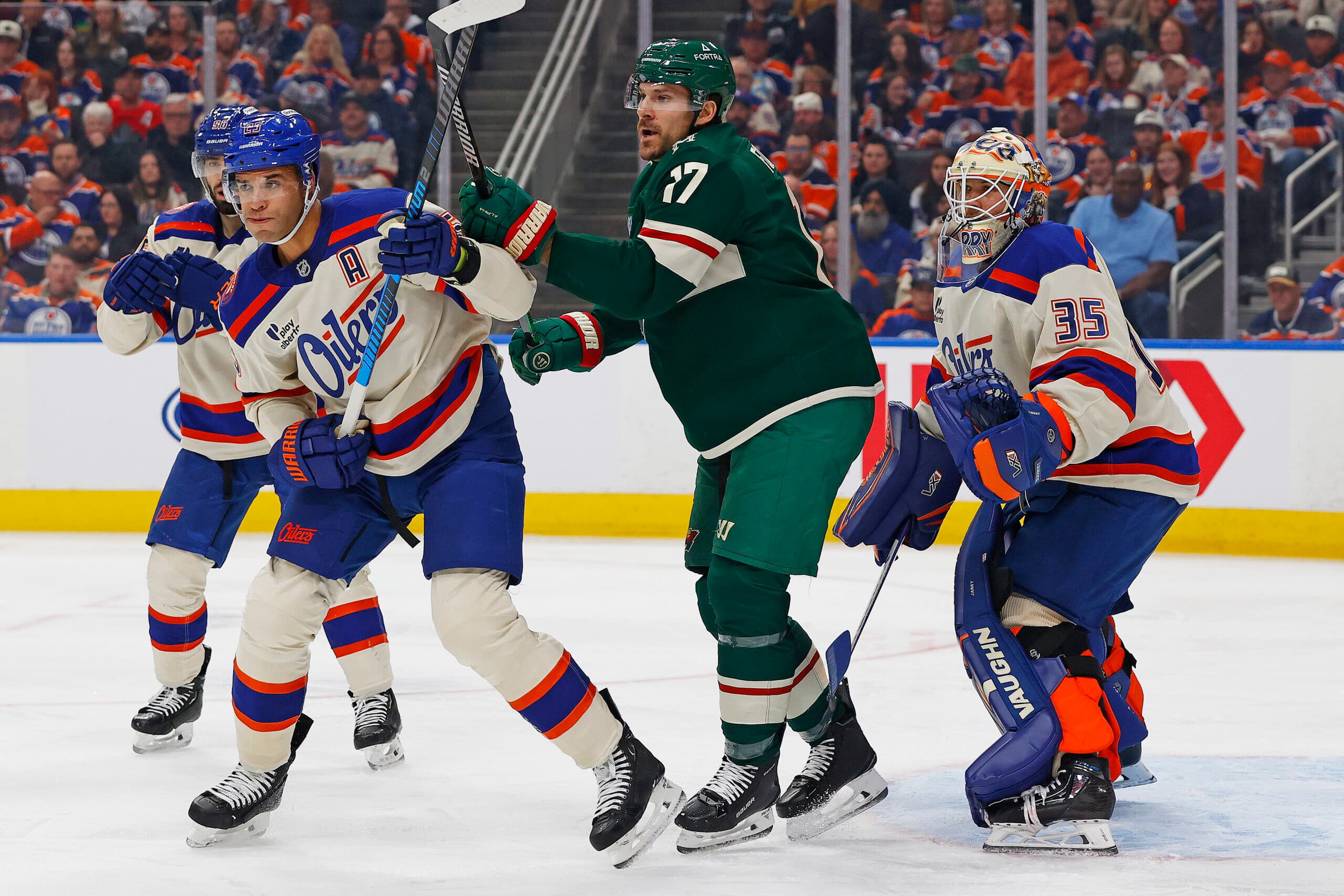
Photo credit: Perry Nelson-Imagn Images

By Lane Golden
Feb 6, 2026, 09:00 ESTUpdated: Feb 5, 2026, 20:08 EST


The Edmonton Oilers have a penalty kill crisis on their hands. After killing off just 54 percent of their penalties over the last eight games, they rank 27th in the NHL in PK efficiency.
Edmonton has been missing one of its best penalty killers this season in Adam Henrique, and cold streaks are bound to happen at some point during a season. Unfortunately for the Oilers, the issues run deeper than that, and the cracks were showing long before this recent mess.
Their penalty kill has declined for back-to-back seasons, and what remains is a far cry from the unit that boasted a 94 percent success rate in the 2024 playoffs. So, what happened? Let’s take a look.
System and personnel changes
For years, the Oilers ran what’s known as a wedge +1 penalty kill. The system is designed to counter a 1-3-1 power play and protect the middle of the ice: two defencemen and one forward form a triangle in the slot, while the “+1” forward applies pressure to the puck carrier, typically moving downhill. The goal is to deny passes to the middle and force the power play to the outside. This diagram from The Coaches Site provides a helpful visual of how the setup works:
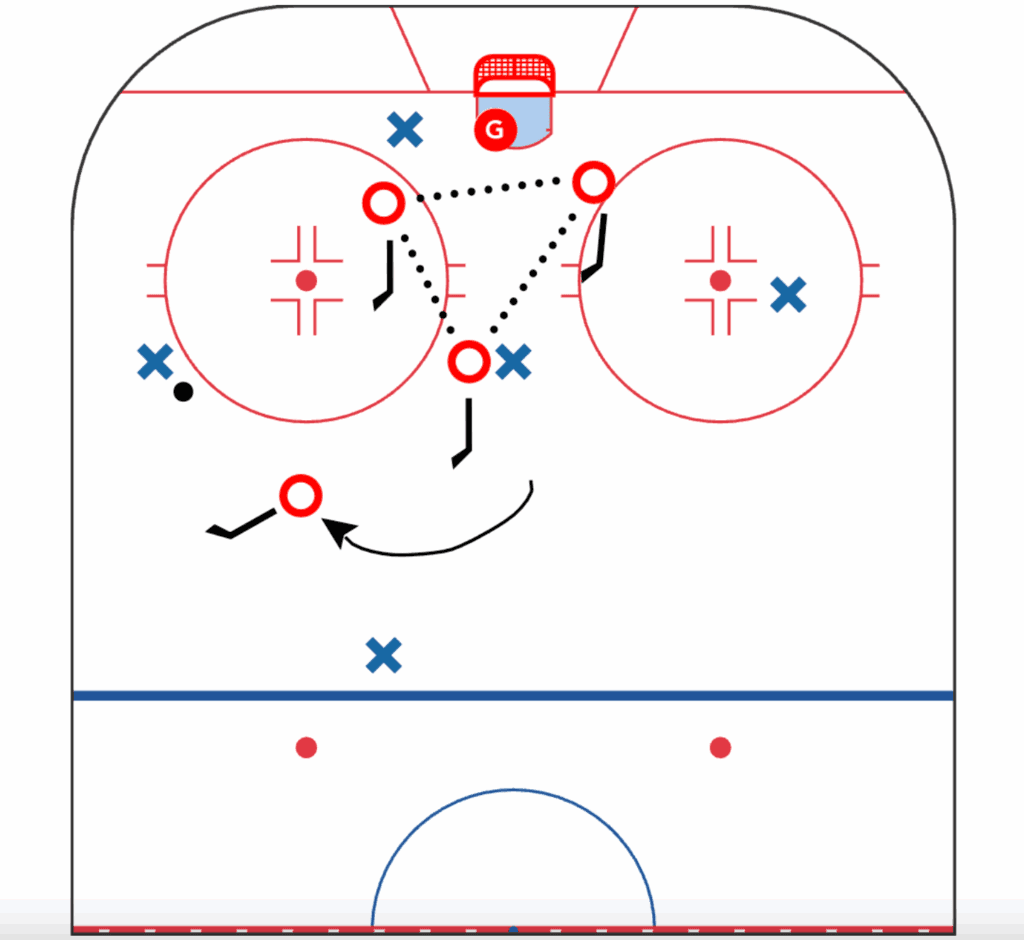
The wedge +1 can be complicated to execute because it requires the two forwards to coordinate their movement and rotate positions based on who has a better chance of getting to the puck carrier. The low forward is responsible for taking away backdoor plays, so if the forwards don’t rotate cleanly, it can cause breakdowns.
If done successfully, however, it is a fantastic system for dealing with the popular 1-3-1 power play setup. The triangle protects well against plays to the slot and low cross-seam passes, and the +1 forward forces flankers into making decisions under pressure.
In 2023-24, the Oilers executed this system well. They ranked 15th in PK percentage, but 5th in expected goals against per hour. In the playoffs, the goalies started holding up their end of the bargain, and Edmonton had one of the greatest penalty kill runs in Stanley Cup Playoff history.
The key for the Oilers was speed and pressure. Forwards like Ryan McLeod, Connor Brown, Warren Foegele, Mattias Janmark, and Connor McDavid all had the quickness to pressure as the +1 forward to take away time and space, and rotate quickly when needed. The defence used their length and shot blocking ability to protect the net front, and the unit developed great chemistry.
In the summer of 2024, the Oilers suffered significant personnel losses, disrupting the PK. Foegele, McLeod, Desharnais, and Cody Ceci were all traded or signed elsewhere in free agency, leaving Edmonton without some of their best penalty killers.
While personnel regressed, the Wedge +1 system remained in place for 2024-25. The Oilers fell to 16th in penalty kill percentage and 14th in expected goals against per hour. In the playoffs, they killed off just 67 percent of their penalties, which cost them dearly against the Florida Panthers in the Stanley Cup Final.
While the wedge +1 protected the netfront reasonably well, the coaching staff felt the Oilers were starting to give up too many east-west passes — looks that gave their goaltenders fits. Edmonton finished in the top half of playoff teams in expected goals against per hour, but the results didn’t match the process, as the goalies struggled to keep the puck out of the net. In response, the staff opted to adjust the structure to support them better going forward.
That brings us to this season. Penalty kill coach Mark Stuart ditched the wedge +1, introducing a 2-2 box structure. While box and diamond penalty kill formations have their advantages over the wedge +1, they do not protect as well against set plays to the bumper that 1-3-1 power plays run.
Take this New York Islanders goal, for example. The Oilers’ structure is passive, allowing the Islanders to circle relatively unchallenged until they find a set play with a low-to-high spin pass. The bumper man is all alone in the middle of the box.
Even a simple one-touch pass from the flank to the slot can be dangerous without anyone protecting the middle of the ice.
So how bad are some of these new problems? The heat maps below from HockeyViz help illustrate the results, showing Edmonton’s penalty kill shot locations over the past three seasons. Orange areas indicate where the Oilers have allowed more shots, while purple highlights areas where they’ve prevented them.
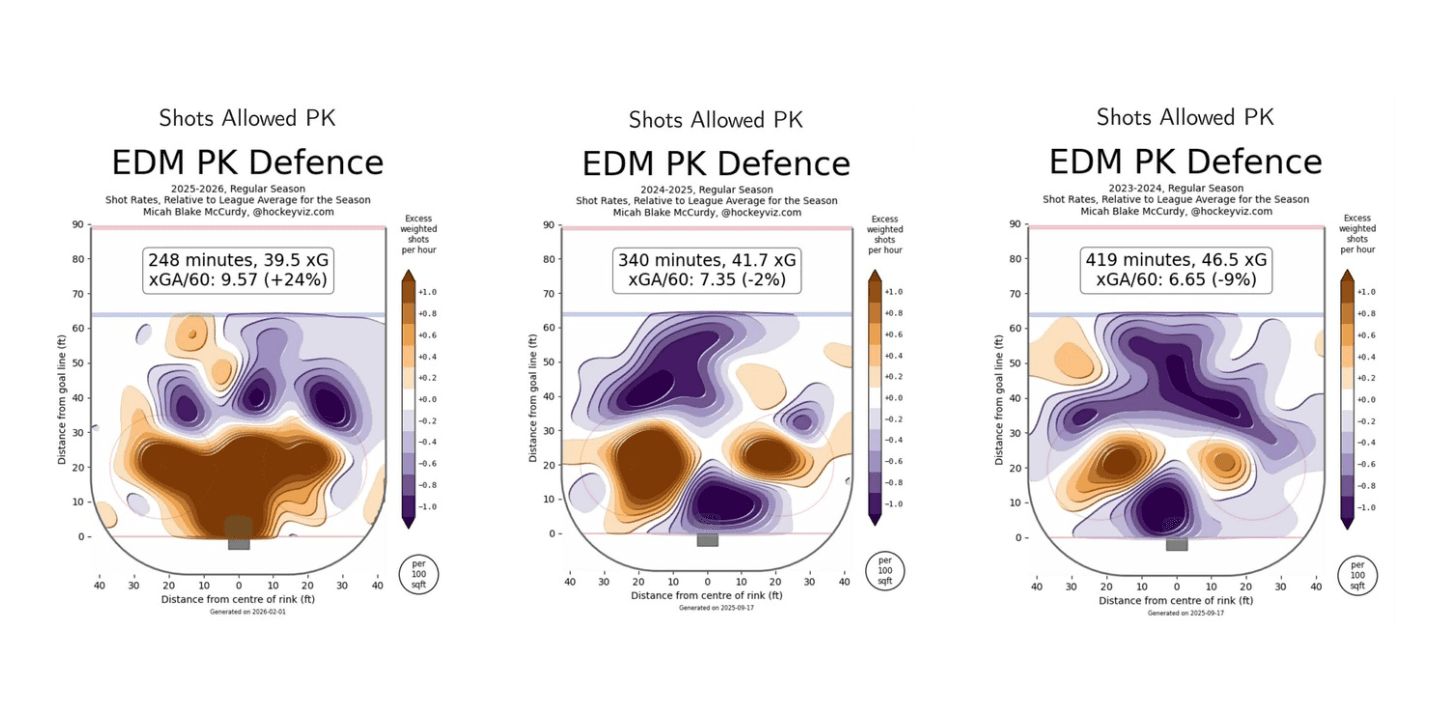
The visual is startling. Not only are the Oilers still allowing shots from the same areas near the faceoff dots, but now they’re also conceding the prime real estate in front of the net that the old system used to suppress.
Edmonton currently ranks 27th in the NHL in expected goals against per hour on the penalty kill, and it’s been trending down fast. When the Oilers let some of their top penalty kill personnel go in 2024, they still had an effective enough system to get by, but by radically overhauling their tactics this season, they’ve created a host of new problems.
The Oilers will have three weeks off as the NHL goes on pause during the Olympics, creating an opportunity for the coaching staff to reflect on their team’s play and how they can improve
“Coaches have a long time to, you know, look at [and] really evaluate what we want to do,” said Kris Knoblauch earlier this week. “We’ve got a little mini training camp when we come back, where we’ve got about a week to focus on what we need to get better at or any changes we need to make.”
While coaches never make sweeping changes to a penalty kill mid-season, there’s no doubt they will be looking for ways to tweak or improve it during the break, whether through deployment, new wrinkles to their tactics, or both. If Mark Stuart remains behind the bench coming out of the Olympic break, he has his work cut out for him.
All stats via Advanced Hockey Stats and NHL.com unless stated otherwise.
PRESENTED BY DERRICK DODGE

There’s a new chapter beginning at Derrick Dodge, and the momentum is real. Under new ownership, the dealership is bringing fresh energy, a renewed focus on customer experience, and a bold, forward-thinking approach to vehicle buying. This change marks the start of an exciting new era, built around transparency, trust, and putting customers first. To celebrate this transition, every vehicle purchase comes with a trip for two to Las Vegas. Whether you’re shopping for your next vehicle or simply curious about what’s changed, Derrick Dodge is moving forward with confidence, purpose, and a clear vision for the future.


Breaking News
- The Oilers can’t risk going all season without signing Savoie to extension
- Looking at where Oilers prospects will play in 2026-27
- The Day After -1.0: Big dogs bark as Oilers make light work of Jets
- Oilers loan Samuel Jonsson, Nathaniel Day to Condors
- Babcock says Formenton could be ‘difference-maker’ for Oilers after scoring in pre-season debut

Edmonton OilersTeam Cap Summary

Cap Summary
2027-28
2028-29
Projected Cap Hit
$88,322,500
$61,025,000
Projected Cap Space
$25,177,500
$61,975,000
Current Cap Space
$25,177,500
$61,975,000
Active Players
16/23
10/23
Draft Picks
Round
'27
'28
1
0
1
2
1
0
3
0
1