
Sticking with stuff that annoyed me from the second round of the 2017 postseason, the Oilers stormed back to tie the game at 3, just for this goal to go in. Had they won this game, the series would've been 3-0.

OilersNation has no direct affiliation to the Edmonton Oilers, Oilers Entertainment Group, NHL, or NHLPA
Flashback Friday: Looking at the Oilers’ 2006, 2017 playoffs series against the Ducks
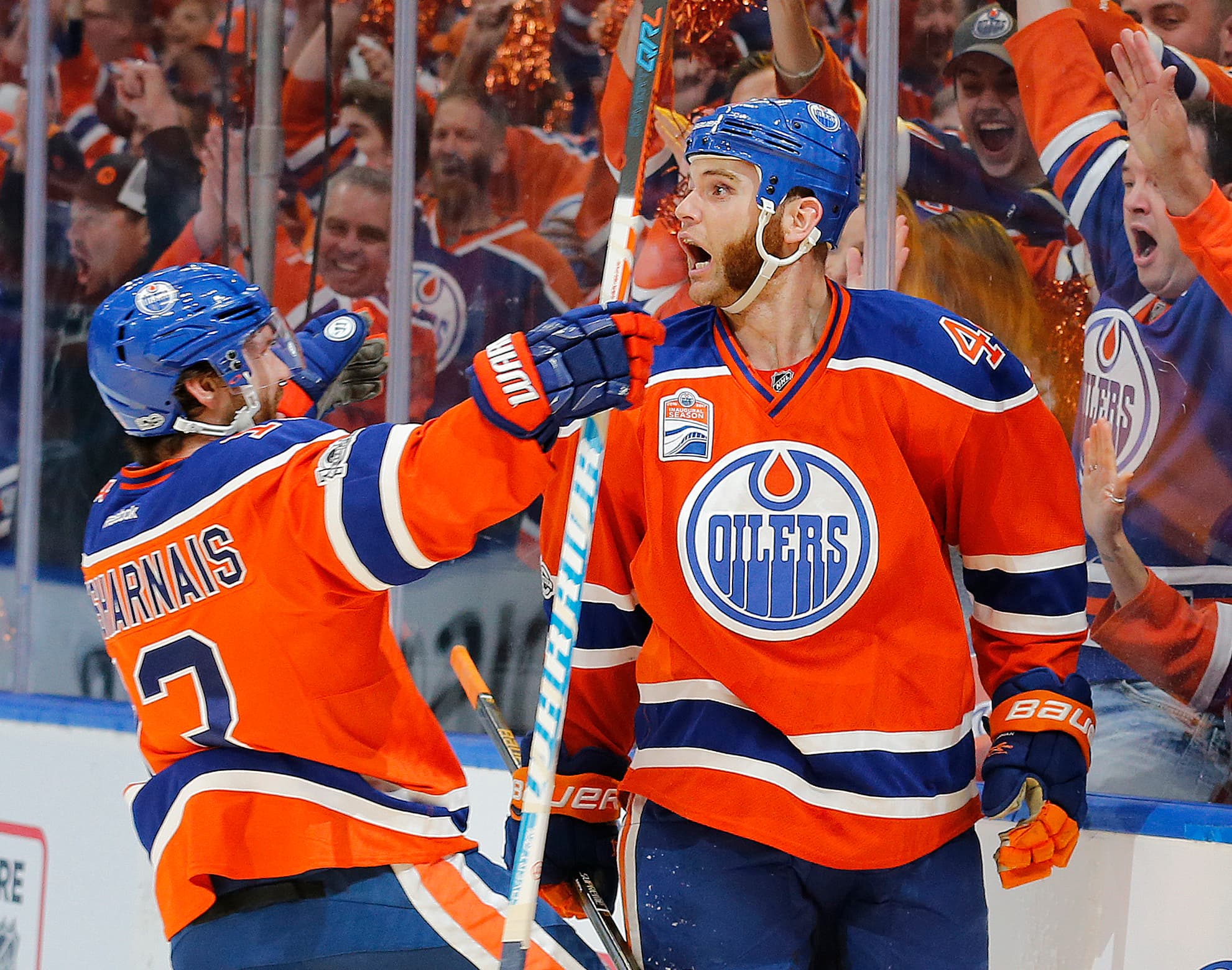
Photo credit: Perry Nelson-USA TODAY Sports

Apr 17, 2026, 20:00 EDTUpdated: Apr 17, 2026, 18:49 EDT
The Edmonton Oilers postseason begins on Monday.
Heading into the final day of the season on Thursday, the Oilers first round opponent was anyone’s best guess. There were three possibilities: The Colorado Avalanche, the Los Angeles Kings, and the Anaheim Ducks. Before the Vegas Golden Knights won on Wednesday, the Oilers even could’ve played the Utah Mammoth.
But after Thursday’s slate of games, the Oilers opponent was made official. They’ll play the Ducks with home ice advantage. Of course, it’s not the first time the Oilers have played the Ducks in the postseason, as the two Pacific Division teams have battled two other times.
In this edition of Flashback Friday, we’ll take a look at those two other series.
2006 Western Conference Finals
By the time the Oilers met the Ducks in the Western Conference Finals in 2006, the Oilers were on a roll. Entering the postseason as the eighth seed, they knocked off the Presidents’ Trophy-winning Detroit Red Wings in six games, before dropping the first two games against the San Jose Sharks. They then proceeded to win the next four games to head to the Conference Finals.
Game 1
With the Oilers being the eighth seed in the Western Conference, the first two games were held in Anaheim. Michael Peca opened the series scoring with 95 seconds left in the first period, but Andy McDonald tied it for the Mighty Ducks (their name at the time).
Aleš Hemský scored his fourth of the season on a power play midway through the second period, which turned out to be the game-winner. For good measure, Toddy Harvey buried it into the empty netter with 42 seconds left, with the Oilers taking Game 1 by a score of 3-1.
Their player of the game had to be netminder Dwayne Roloson, basically the story of the 2006 postseason, as the Oilers’ goalie stopped 31 of 32 shots for a .969 save percentage. Funnily enough, Corey Perry was a healthy scratch for the Mighty Ducks in this game.
Game 2
Game 2 had the exact same result, as the Oilers won 3-1 to take a 2-0 series lead. Chris Pronger scored his third goal of the season on the power play with about seven minutes left in the first. Six minutes into the first, Jeff Friesen tied the game for the Mighty Ducks.
Then with about three minutes left in the second period, Fernando Pisani scored his eighth of the postseason to give the Oilers a 2-1 lead. Peca buried the empty netter with 18 seconds left for the victory.
Not only was the score the same, but the two teams had nearly the identical number of shots as they did two days prior. In Game 1, the Oilers flung 26 shots on the Mighty Ducks’ netminder. They only totalled 26 in Game 2, while Roloson stopped 33 of 34 shots for a .971 save percentage.
Game 3
The Oilers had all the momentum as the series shifted to Alberta. With six minutes left in the first, Toby Petersen scored his first of the postseason on a wrap-around, giving the Oilers an early lead.
Game 3 stood that way until the third period, when Peca scored just over two minutes into the final frame, giving the Oilers a 2-0 lead. Then just over a minute later, Steve Staios scored his first of the playoffs thanks to a power play goal. That momentum continued with Pronger’s power play goal a little a minute after that.
Entering the third period, the Oilers were only up 1-0, but before the five minute mark, they extended that lead to 4-0. That said, it was far from over. Sean O’Donnell got the Mighty Ducks on the board with just under 13 minutes to play, then Teemu Selänne scored two minutes later, cutting the Oilers’ lead in half.
Things got hairy when Chris Kunitz scored midway through the third period, but Pisani answered back with his ninth of the postseason with just 5:46 on the board. That was a much-needed insurance goal, as Todd Marchant scored with 1:45 left on the clock. Fortunately, the Oilers held on for the 5-4 victory and 3-0 series lead.
It wasn’t Roloson’s best game, though he faced 38 shots and saved 34 of them, good enough for an .895 save percentage.
Game 4
If you’ve read recent editions of Flashback Friday, you’ll know that the Oilers haven’t won their division since 1986-87, the longest division title drought in the big four North American sports. Another lengthy streak is they haven’t swept a series since the 1990 postseason.
They had a chance to do that in Game 4 of the 2006 Western Conference Finals, but the Mighty Ducks finally showed some fight. Future Oiler Dustin Penner opened the scoring seven and a half minutes into the first, then added a second goal with about five minutes left in the first. Ryan Getzlaf also added a goal in the final minute of the first.
Marc-André Bergeron’s goal three and a half minutes into the second gave the Oilers some life, but Ruslan Salei scored just over two minutes later to give the Mighty Ducks a 4-1 lead. Ryan Smyth and Georges Laraque both scored before the halfway point of the game, but those were the final goals for the Oilers.
The back breaker came in the form of Joffrey Lupul’s eighth of the post season with 108 seconds left in the second period. The game remained 5-3 until 70 seconds left in the game, when Lupul buried the empty netter for the 6-3 win.
Even though he allowed five goals, Roloson faced 45 shots, good enough for an .889 save percentage. That said, he had to be better for the remainder of the series.
Game 5
Game 5 was another low scoring affair in Anaheim. Unlike the previous two games in the Los Angeles suburb, the Mighty Ducks opened the scoring. Francois Beauchemin beat Roloson seven and a half minutes into the first period on the power play.
That was the Mighty Ducks final goal of the series. Early in the second period, Ethan Moreau scored his first of the postseason to tie the game. Five minutes later, Raffi Torres scored the game-winning goal.
The Oilers held on for the final 31 and a half minutes, as Roloson stopped 32 of 33 shots, sending the Oilers to their first Stanley Cup Finals since 1990. There, Roloson was injured, the Oilers fought back to force Game 7 after going down 3-1, then lost a heartbreaker. It was their last postseason for over a decade.
2017 Semifinals
You know the story after the 2006 finals. The Oilers had a disappointing 2007, trading Ryan Smyth before the trade deadline. That move essentially kick-started the decade of darkness, where they landed four first overall picks in a span of six drafts. It was the last draft, the 2015 draft, which changed the Oilers fortunates, as they were able to select Connor McDavid.
They didn’t immediately return to the playoffs, as McDavid broke his collarbone in early November. By the time he returned, the Oilers were well out of a playoff spot, but they started to look like the team they’d become in 2017.
Finishing second in the Pacific Division in 2016-17, the Oilers had a tough first round matchup, playing the San Jose Sharks during their period of contention. Just one year prior, the Sharks made their first Stanley Cup Finals, losing to the Pittsburgh Penguins.
However, the Oilers prevailed after going down 2-1 in the series thanks to a David Desharnais overtime goal, Zack Kassian going off, and a strong series from Leon Draisaitl. That set up a second round matchup against the Ducks.
Game 1
Things started off well for the Oilers. Once again, they were the lower-seeded team, meaning the series kicked off in Anaheim. Early in the second period, Getzlaf scored a power play goal to take a 1-0 lead. But six and a half minutes into the middle frame, Mark Letestu scored a power play goal of his own to tie it up after 40.
Almost exactly 20 minutes of game time later, Letestu scored another power play goal. This one came 6:23 into the third period, after having scored 6:22 into the first. Adam Larsson scored eight minutes into the third period to give the Oilers a 3-1 lead.
The experienced Ducks fought back, as expected. Patrick Eaves cut the Oilers’ lead to within one just over a minute later, and before you knew it, the game was tied thanks to Jakob Silfverberg’s goal midway through the period.
Adam Larsson found twine for just the second time in the postseason with 4:40 left in the game, and this time, the Oilers held on to the lead. Draisaitl added an empty netter with 65 seconds to play, as the Oilers won Game 1.
Game 2
Things went from good to even better in Game 2. In a throwback to the series 11 years ago, the Oilers won a low-scoring affair in Anaheim. Andrej Sekera scored just 65 seconds into the game, then, Patrick Maroon scored his second of the postseason on a power play midway through the second.
Silfverberg cut the lead in half with a power play goal with under five minutes to play in the second period, but Cam Talbot stopped all 16 shots he faced in the final frame. In total, he allowed just one goal on 40 shots for a .975 save percentage. Realistically, the Oilers had no business winning this game, but they found a way.
Game 3
Like 11 years ago, Game 3 shifted to Edmonton with the Oilers up 2-0 in the series. However, the only similarity from this game was to any game in Edmonton in 2006 is that the Ducks won 6-3.
This series was the series of blown three-goal leads. We’ll get to the one later in the article, but the Ducks also blew a three-goal lead in this series. It took just 25 seconds for the Ducks to get the lead, as Rickard Rakell scored his third of the postseason. Five and a half minutes into the first, Silfverberg scored his third of the series, the Getzlaf scored with about eight minutes left in the first, just like he did in the Mighty Ducks’ 6-3 win in Game 4 of the 2006 Western Conference Finals.
Maroon’s goal with 40 seconds left in the first period gave the Oilers some life. They got even more life with Anton Slepyshev’s goal a minute and a half to the second. Nine minutes into the second, McDavid scored a beauty to even Game 3 at three apiece.
That tie game was short-lived. Under a minute later, Talbot let in an awful goal from the half boards, as Chris Wagner restored the Ducks’ lead. Silfverberg scored his fourth of the series to make it 5-3, then the Ducks added another one midway through the third for the victory.
Game 4
No one expected the Oilers to sweep the Ducks. Still, they were in a good position heading into Game 4. They were in even better position after Milan Lucic’s power play goal with five minutes left in the third. Then, McDavid scored his fourth career playoff goal just over two minutes later.
The experienced Ducks fought back though, as Getzlaf cut the lead in half 97 seconds into the middle frame, Rakell tied it five and half minutes into the second period, then Getzlaf scored again with 5:35 to play in the second. Down by a goal with less than two minutes to play, Drake Caggiula scored with just 1:42 on the board to send the game to overtime.
The Ducks won it, and you can guess who scored it. Just 45 seconds into the first overtime, the Oilers left Silfverberg all alone in the slot (did they not learn?), as the Duck scored his fifth of the series. That knotted the series up at two, making it a best of three with the Ducks hosting two of those games.
Game 5
There are three main things that make me mad when it comes to the Oilers. The first is the Griffin Reinhart trade, the second is Oscar Klefbom having to retire early, and the third is Game 5. It makes me so mad, in fact, that this is the last section of the article I’m writing.
After a scoreless first period, the Oilers jumped out to a 1-0 lead just 15 seconds into the second, as Draisaitl scored his third of the postseason. Less than two minutes later, McDavid scored a power play to put them up two. Then with seven and a half minutes left in the second, Caggiula scored his second goal in as many games to give the Oilers a 3-0 lead.
Throughout this article, I’ve referred to the Ducks as “experienced”. The reason for that was the final three minutes and 16 seconds of the game. Up 3-0, the Oilers should’ve closed this out, but Getzlaf scored, then Cam Fowler scored just 35 seconds later, cutting their lead to one.
They settled down a bit, but with just 15 seconds to play, Rakell beat Talbot to tie the pivotal Game 5 at three each. As biased as I am at times, this goal should have never counted. The Ducks player was pushed into Talbot by Darnell Nurse, sure, but he had plenty of time to get out of the crease. Not just that, but the Ducks player very clearly held the pad, how the hell did this count.
The inexperienced Oilers crumbled with 3:16 left in the game up 3-0, and they never recovered. They were out-shot 14-9 in the first overtime period, then future Oiler Corey Perry scored the game-winner seven minutes into the second overtime period to push the Oilers to the brink.
Although this was a disappointing result that still makes my blood boil, the series was far from over with the series returning to Alberta for Game 6.
Game 6
Now in a do-or-die situation, the Oilers returned home needing a victory to send it to seven. On a Sunday afternoon in May 2017, the Oilers throttled the Ducks. Less than three minutes into the first, Draisaitl scored his fourth of the postseason. Then five minutes later, he scored again to give the Oilers a 2-0 lead.
They weren’t done, though, as Kassian made it 3-0 eight and a half minutes into the third, with Reinhart picking up an assist. Then Lestestu scored a pair of goals, one midway through the first, the other with just 1:11 left in the opening frame. That gave the Oilers a 5-0 lead after 20.
Slepyshev scored his second of the series 45 seconds into the second period, before the Ducks finally stopped the bleeding with a Rakell goal nine minutes into the middle frame. Draisaitl scored his first postseason hat trick with just over four and a half minutes left in the second, as the Oilers routed the Ducks 7-1.
Due to scoring seven goals, Talbot’s performance went under the radar. He allowed just one goal on 35 shots for a .971 save percentage, forcing a winner-take-all Game 7.
Game 7
Game 7 of the 2017 semifinals was the first time I ever experienced a heart break. Well, at least in hockey. The title of first heartbreak goes to Game 6 of the 2015 American League Championship Series, with the Toronto Blue Jays’ season ending far sooner than it should have.
Anyway, Caggiula scored his third of the series three and a half minutes into the game. The score held that way until former Oiler Andrew Cogliano tied it midway through the second. Early in the third, Nick Ritchie scored to give the Ducks a 2-1 lead. Although the Oilers pushed, they were unable to score the game-tying goal to force overtime, losing a series that they should’ve won.
Had they won this series, there was a real possibility that they could’ve made the Stanley Cup Finals, first having to go through the Nashville Predators, who beat the Ducks in the Western Conference Finals. The Predators faced the Pittsburgh Penguins in the 2017 Stanley Cup Finals. We were that close to a showdown between Sidney Crosby and McDavid.
Hopefully, this series goes much better for the Oilers.
Ryley Delaney is a Nation Network writer for Oilersnation, FlamesNation, and Blue Jays Nation. Follow her on Twitter @Ryley__Delaney.
OIL UP: THE OILERSNATION PLAYOFF COLLECTION IS HERE
Edmonton, the playoffs are calling—and it’s time to answer. We are so back, and Oilersnation is ready with the OIL UP playoff collection, available now. From tees and hoodies to hats built for every game-day fit, this drop has everything you need all postseason long. Whether you’re heading to a watch party, the rink, or setting up camp in front of the TV, consider this your official playoff uniform. Don’t wait—gear up before puck drop. Shop the full collection now at nationgear.ca


Breaking News
- Why Evan Bouchard’s contract makes him more valuable than Cale Makar
- Oilers’ Devon Levi has golden opportunity in wake of Andersen injury
- Oilers prospect Tommy Lafrenière ready for NCAA challenge at Western Michigan
- Top 100 Oilers: No. 18 — Evan Bouchard
- House where former Oilers owner Peter Pocklington was shot goes up for auction

Edmonton OilersTeam Cap Summary

Cap Summary
2026-27
2027-28
Projected Cap Hit
$102,071,666
$88,322,500
Projected Cap Space
$1,928,334
$25,177,500
Current Cap Space
$1,928,334
$25,177,500
Active Players
22/23
16/23
Draft Picks
Round
'26
'27
1
0
0
2
1
1
3
1
0