
OilersNation has no direct affiliation to the Edmonton Oilers, Oilers Entertainment Group, NHL, or NHLPA
Meet Connor Murphy: Playing mean, excitement for his first playoffs with fans, and philantrophy
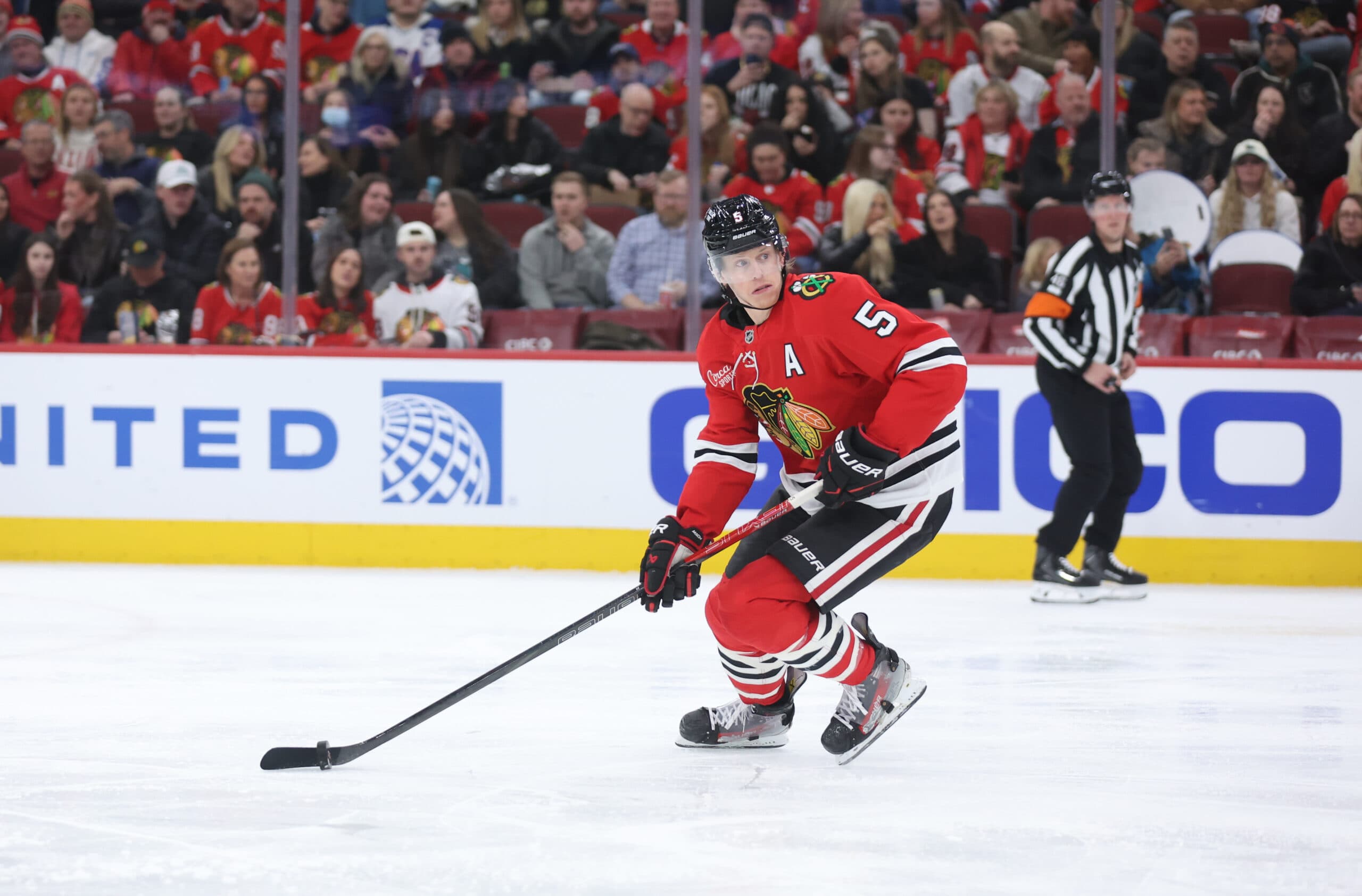
Photo credit: Talia Sprague-Imagn Images

By Jason Gregor
Mar 5, 2026, 13:00 ESTUpdated: Mar 5, 2026, 13:14 EST
Connor Murphy cracked a joke seconds after we met.
I’d heard from reporters in Chicago that Murphy is one of the most genuine players you will cover. After our first interaction, he reminded me of Zach Hyman — polite, humble, laughs often and well spoken. How the Oilers media availability works is the group requests a few players, and then if you want a one-on-one interview you put in a request. There is a big screen in the dressing room and as the players come off the ice into the room, they look at the board and if their number is on it, they need to do a media scrum. There is another column that says “side,” and if your number is under that it a one-on-one interview.
I requested Murphy, and I walked over to him and introduced myself. He asked what does side mean? “Am I the side piece?” he laughed. “You could do better, but also worse,” I replied and the ice was broken and we sat down. We chatted briefly about a few other things and then got right into the interview. Murphy was thrilled with the trade. He loved Chicago, but this is his 13th NHL season, and he’s only made the playoffs once, in 2020 with no fans. More on that later. I suspect fans will like Murphy. He’s direct, honest and insightful. He will add some much-needed grit and for a team and fanbase starving for a defense-first mindset, Murphy fills that void.
Jason Gregor: This is the second time you’ve been traded, but the first time in season. Walk me through how the last few days have been?
Connor Murphy: Yeah, it has been a crazy mix of emotions and mainly excitement, a little bit of the nerves going into it and obviously reminiscing on good times and amazing nine years of Chicago. But honestly, it feels like time for a great change and to be able to come here and have this new challenge. I’m really grateful for Stan (Bowman) to give me this opportunity is amazing.
To get the call yesterday, me and my wife are full of excitement to come to such a great team and organization that you see on the outside, and being inside for one day I can already tell why it has that reputation. And I just want to get started and help however I can, and do whatever for the team.
Gregor: I think a lot of people know Connor Murphy as a hard worker who takes pride in the defensive zone, will stand up for his teammates and one of the elements of your game that this team lacks is real toughness in front of the net. I know this era is different and you can’t Chris Pronger guys and cross-check them 10 times in the back, but you’ve found ways to make it hard for forwards. How do you make it hard, and do you think that attitude in front of the net can be infectious?
Murphy: It can. I think as a defenseman that’s where you take pride, mainly because a lot of the goals are scored around the net. There’s a lot of talent and speed nowadays with guys taking rushes and taking one timers cross-ice, but the majority of goals are still happening around the slot. So, if you can really protect that, whether it’s physically or with blocking or a good stick, that’s really a key to defending. And I’ve learned for a while about using your body to either box guys out or use your stick.
But even honestly, building into being a shot-blocking defenseman, where you at times can’t get a body on a guy and you’re going to the front and try to sacrifice yourself for a block for the team. So there’s definitely a knack to doing it. And every play has got a different life of its own around the net. But it’s definitely a staple of the defenseman.
Gregor: You’ve been a key part of the best penalty killing unit in the NHL this season. Having spoken to the coaches, is there a big difference in how you’ll penalty kill here compared to how you did in Chicago?
Murphy: Talking to the coaches so far, it doesn’t sound like really much difference at all. So if anything, it’s just chemistry building with players. It’s a combination with the forwards and D. That’s what we had in Chicago, honestly, all season. We had the same four guys on the top PK unit working together. So in practices and meetings and games, you build that chemistry and it really is a four-man unit and making sure you’re in flow, in sync with each other, taking away the danger areas and staying calm to get your clear.
I’m excited to get in with penalty killers here, and I hope it’ll be a seamless transition. I think it will be systemically and it will be just about trying to get acclimated with the guys and build chemistry.
***Jason Dickinson was acquired after our interview, and Dickinson was on the top PK unit with Murphy, so look for those two to form half of the Oilers’ top PK unit.***
Gregor: It’s been a long time since you’ve been in a playoff push late in the year. Even in 2020 when you did make the playoffs, the season was postponed and you weren’t really in the playoff race at that time, so is it easier to get traded knowing you’re coming to a team where the intensity has to ratchet up?
Murphy: Yeah, I found it hard the last few years when you’re out of it, it’s hard to prepare for games, knowing you’re just playing to play for individuals accolades or individual stat lines and scrape out a win here and there. That’s a hard thing to mentally prepare for. But when you prepare knowing that the game means something, it’s easy to get up for, easy to turn it on and to get intense and play with passion and pride.
I think you want that, you invite that pressure because it means you’re in the right spot where you want to be. And I hope to be impactful as I can in impactful games.
Gregor: Many believe defense is a lot about will, maybe more so than skill at times. I’m not sure that is completely accurate, but I’m curious how do you feel you’ve improved as a defender in your career, especially as the game has evolved and gotten quicker?
Murphy: I think the biggest thing I’ve improved on is probably just being level-headed. I think earlier in my career, which is natural for young defensemen to get rattled by mistakes, you let in goals and you know, it’s your fault. And then you start to snowball and think you’re letting your team down and then one bad goal turns into a bad period and bad games.
I think where I’ve grown and matured is just being able to make mistakes and just move on with it and be impactful the next shift. I’m not saying that always happens, but that’s something where I felt I’ve been able to grow. And I think for a lot of veteran players, it’s something that you’re able to come to grips with is that there’s going to be mistakes everywhere in the game and you’re going to have to just keep pushing forward and there’s ways to still have a good game after you make some mistakes.
Gregor: You made the playoffs once. It was against the Edmonton and you beat them, but it was a unique time with no fans. You’re a few months away from your first playoff experience with fans and in a Canadian market. How exciting is that?
Murphy: It’s great. I think the games as a road team speak for themselves even in the regular season here and as I watched last night, I think the Oilers fans wear the most jerseys in the crowd that I’ve seen anywhere in the league. To show that dedication to want to come and show the pride and let alone hear it is something that really stands out in Edmonton.
And I think that’s honestly why I didn’t credit that COVID playoffs so much, because I think the fans are what make playoffs, as far as the intensity and what’s on the line and to feel that ride of a roller coaster of emotions with them as players. I think that’s what makes it intense. I can’t wait for that.
Gregor: Talking to people around the league, teammates, even new teammates, they say Connor Murphy, one of the nicest guys you’ll meet. A very genuine human being. And then you see Connor Murphy on the ice. He’s got a bit of a switch. Where’d that come from?
Murphy: (Laughs) I don’t know. I think it is competitiveness. I think it’s just frustration sometimes builds up from competing. And honestly, when I started my career in my first year we had Jim Playfair in Arizona, and he also coached here, and he was all about showing a little bit of meanness and grit and — a little bit of ‘eff you,’ he’d call it — in your game. He and head coach Dave Tippett, they would point out clips, when you weren’t being mean and then when you were being mean and showing what was right and wrong and showing that if you want to be a impactful defenseman you have to be able to grit your teeth and take some and give some.
That’s where that started a little bit, and then I think for any player, when you can kind of get your nose dirty a little bit, it gets you involved in the game more and hockey is a physical sport and you want to be able to bring the best out of yourself competitively.
Gregor: Playing that style can bring your other teammates into the fight a little bit. So not only can you help improve the Oilers defensive game, do you feel you can bring in an emotional boost to the team?
Murphy: Hopefully. That’s what you want to be as a role player in a team. And honestly, I think even from the skill side of the game, what I’ve learned over years is it doesn’t have to be running a guy with a hit, or it doesn’t have to be blocking shot off your ankle or getting in a fight.
What guys offer, which I even see here, even with the top-end skill guys, is a willingness to get into a battle to when it’s hard against a hard defenseman or a hard player that’s strong. And those guys are going in head first, trying to get a puck. I think that’s competing. That’s physicality in its own way. So to see a team effort with that, I think it stands out and it’s something you want to have as a group. As a team and as an individual you want to be known as being hard to play against.
Gregor: You played with Duncan Keith in Chicago and some budding young D-men in Chicago. Now you will play with Evan Bouchard. What element of his game do you appreciate the most?
Murphy: His patience and puck play. I think that’s something that’s hard to teach and hard to grow as a player personally. I found it was more natural to me to defend, but I’ve been trying to grow some of the puck play, skating plays in my game and I know it doesn’t come easy and natural.
For him to have that ability over the course of a game, and especially in playoffs, you see the production he’s had to be able to move the puck and to be able to be patient in pressure situations while playing a lot of minutes, I think that stands out and to do that against top lines isn’t easy. He’s definitely a great player.
And we honestly, I think a lot of these D-men in Edmonton have a lot of great skillsets and attributes to bring. I’m excited to play with them.
Gregor: You mentioned your wife. Do you have kids?
Murphy: We have a one-and-a-half-year-old boy, Tucker.
Gregor: Many players have spoken about the importance of family when you go through a big change. How did your wife and Tucker help?
Murphy: Yeah, it’s big. I think I’ve learned a lot from being married and from having a kid. You realize that life isn’t all hockey. Sometimes it can be hard when you’re young and you just sit around your room and think about how you can play better, train better and practice better, but now you have that release and you have something that’s even more important than hockey, having a son and a wife and a family.
I’ve been super grateful for them to support me. And then even just to have that love and family aspect, I think has been the biggest thing that’s happened in my life. And it’s honestly led to me to becoming a better player. To be able to just detach from the game when I go home and then I come back and feel a little bit fresher. My wife was super excited when we found out we were coming to Edmonton.
Gregor: You did a lot of philanthropy work in Chicago, which is something I respect immensely. I think it’s important that you have a platform and use it positively. How did you get involved with wanting to help out numerous charities?
Murphy: Honestly, it was veterans that I played with before. I had Shane Doan as my captain in Arizona. He made it a priority. We had Keith, Seabrook, Toews and Kane in Chicago, and they all had their own charity events. Whether it was a foundation or whether it was certain parts of the community they specifically honed in on. Right now, Nick Foligno, he gets really involved with the children’s hospital and with his foundation he has from his mother and his daughter’s challenges.
I just really admire those guys who are able to connect to the community. And honestly, just realize that the platform you have is so big to be able to give back and hockey players are just people and normal guys. But for some people to see it as an elevated experience, it’s so easy to, to go and meet people and to get to know and be inspired by people. I think there’s so many people that have a lot harder lives, whether it’s their job or what they’re going through. To be able to go and meet them is inspiring. And to get to know them in the community, I think is a bonus that you wouldn’t get to do if I wasn’t on a professional hockey team. So I’ve been grateful to be able to meet those people and be involved in the community and I try to help whenever we can.
Gregor: We will end with some rapid fire. How would you rank yourself as a cook and what’s your go-to meal?
Murphy: Cooking, I would say I can do the basics. I would rate myself like a six out of 10 because there’s no fanciness to it, but I can put a balanced meal together. And then the go-to meal would either chicken breast or salmon, just easy grills and then put together some diced sweet potato.
Gregor: What are your go-to TV shows right now?
Murphy: I just finished a couple. I finally finished Game of Thrones. I know, I know I’m really late to that (laughs). I beared down and watched every season this year. And after that I watched the Knight of the Seven Kingdoms one. I was late to the game, but guys are excited around the room to get back into the Game of Thrones talk. Everyone’s into that.
Gregor: Are you a reader? Favourite book?
Murphy: Unfortunately, no, I fall asleep when I read. I wish I was.
Gregor: Favourite hobby or hobbies?
Murphy: I’d say golf is a big one. Having a kid definitely took some time away from that this past summer, but I’d say combination of golf and then being in Chicago there is a big restaurant scene and we (he and his wife) became foodies. We loved trying different places and food.
Gregor: And lastly, favorite goal you’ve ever scored.
Murphy: I could probably say my first NHL goal, but actually I was lucky enough to score the game winning goal at the U18 world championships for USA. I scored the gold medal game-winning goal in overtime. That was something that helped me get drafted. That was a big moment to have as a youth player to kind of come up in a big moment and give yourself some confidence.
Gregor: That is a massive goal. Hopefully you score one in the playoffs. Welcome to Edmonton.
Murphy: That would be great. Thank you.
WRAP UP…
— Murphy thrives in the defensive zone. He can chip in a bit offensively, but his main calling card will be on the penalty kill, blocking shots, playing mean and limiting scoring chances. His approach and skillset are what the Oilers need. Add in his Chicago teammate, Jason Dickinson, who the Oilers acquired last night, and Edmonton has added two players who should shore up the PK and defensive play. The rest of the players will need to follow suit, because Murphy and Dickinson can only do their jobs, but adding players committed to defense will help. Murphy and Dickinson have played almost exclusively together on Chicago’s PK. Murphy talked about how chemistry and timing were key factors to their success, and Mark Stuart will just need to find the right two players to play with them.
— I don’t get the uproar over the Dickinson trade. I realize they gave up a first rounder in 2027, but Chicago had to take Andrew Mangiapane’s $3.6m for next season and the Oilers also received Colton Dach. He turned 23 this past January. He was a second round pick in 2021. He scored 52 goals and 126 points in his final 104 WHL games. He’s a hulking winger at 6’4″, 220 pounds. He’s played 78 NHL games and chipped in with 5-11-16. He averaged 52 seconds/game on the PP this year. He has some offensive potential along with a physical style. He led Chicago with 189 hits in only 53 games. The next highest forward on the team, Nick Foligno, had 87. Dach was averaging 11:41 per game as a rookie this season. He brings an element the Oilers lack in their bottom six. He also is an above average skater with a top speed of 22.58, which puts him in the 70th percentile in the NHL.
Dach just turned 23. The first-round pick in 2027 will likely be a pick between 25-32.
Here are the players taken 25-32 during Dach’s 2021 draft:
25th: Corson Ceulemans has yet to play an NHL game.
26th: Carson Lambos has played one NHL GP.
27th: Zachary L’Heureux has 5-10-15 in 66 GP.
28th: Oskar Olausson has played four NHL games.
29th: Chase Stillman has yet to play in the NHL.
30th: Zachary Dean has played nine NHL games.
31st: Logan Mailloux has 5-5-10 in 54 games.
32nd: Nolan Allan has 1-7-8 in 43 games.
That is just one year, but I think some people see first round pick and they think the pick will be a star player. It might be, but here’s a list of picks 25-32 from 2011-2020 who played 250+ NHL games.
2011: Philip Danault (26th), Vlad Namestnikov (27th) and Rikard Rakell (30th).
2012: Brady Skjei (28th) and Tanner Pearson (30th).
2013: Michael McCarron (25th), Shea Theodore (26th), Jason Dickinson (29th), Ryan Hartman (30th).
2014: David Pastrnak (25th), Adrian Kempe (29th) and Brendan Lemieux (31st).
2015: Jack Roslovic (25th), Anthony Beauvillier (28th) and Christian Fischer (32nd).
2016: Tage Thompson (26th), Brett Howden (27th), Trent Frederic (29th) and Sam Steel (30th).
2017: Ryan Poehling (25th), Jake Oettinger (26th), Henri Jokiharju (28th) and Eeli Tolvanen (30th).
2018: Rasmus Sandin (29th), Joe Veleno (30th) and Mattias Samuelsson (31st).
2019: Shane Pinto (31st).
2020: Jake Neighbours (26th) and Ridly Greig (28th at 225GP).
So, 29 out of 80 picks (36.5%). have played 250+ games and they possess a wide array of skill level. The pick Chicago acquired has value, but it isn’t a lock that pick becomes an NHL player, and considering solid players like Greig have yet to play 250 games six years after his draft shows you how long it takes for that pick to become a regular NHL player. The Oilers are in win-now mode, and they got a very good NHLer in Dickinson, and a young player in Dach, who already has more points than any of the picks taken 25th-32nd during his 2021 draft.
It is still too early to say how long he will and how impactful Dach will be, but he is young and possesses attributes the Oilers need right now. The Oilers pro scouts have been much better at finding players 21-24 than they have been signing UFAs, so I think the Dickinson/Dach trade was a worthy bet. If Dickinson re-signs, at a fair AAV and term, then the deal becomes even better.
PRESENTED BY THE DAILY FACEOFF TRADE DEADLINE SPECIAL

The 2026 Trade Deadline Special is going LIVE March 6th. Join the Daily Faceoff crew on Friday, March 6th from 9 AM-1:30 PM MT for wall-to-wall coverage of every single move as it happens. Get instant reaction, expert analysis, and exclusive insights from special guests throughout the day. Tune in LIVE on the Daily Faceoff YouTube channel and don’t miss a second of deadline day chaos.


Breaking News
- Oops! It’s all Edmonton: St. Louis Blues name leadership group full of Alberta ties
- WWYDW(TE): Should the Oilers keep Connor McDavid and Leon Draisaitl together?
- What does a successful 2026-27 season look like for Oilers’ Colton Dach?
- Oilers injury update: Frederik Andersen’s absence stems from lingering playoff injury
- Oilersnation celebrates 2026 Battle of the Donairs winner Famous Donair

Edmonton OilersTeam Cap Summary

Cap Summary
2026-27
2027-28
Projected Cap Hit
$102,071,666
$88,322,500
Projected Cap Space
$1,928,334
$25,177,500
Current Cap Space
$1,928,334
$25,177,500
Active Players
22/23
16/23
Draft Picks
Round
'26
'27
1
0
0
2
1
1
3
1
0