
OilersNation has no direct affiliation to the Edmonton Oilers, Oilers Entertainment Group, NHL, or NHLPA
It’s time for the NHL to introduce better goal-tracking technology
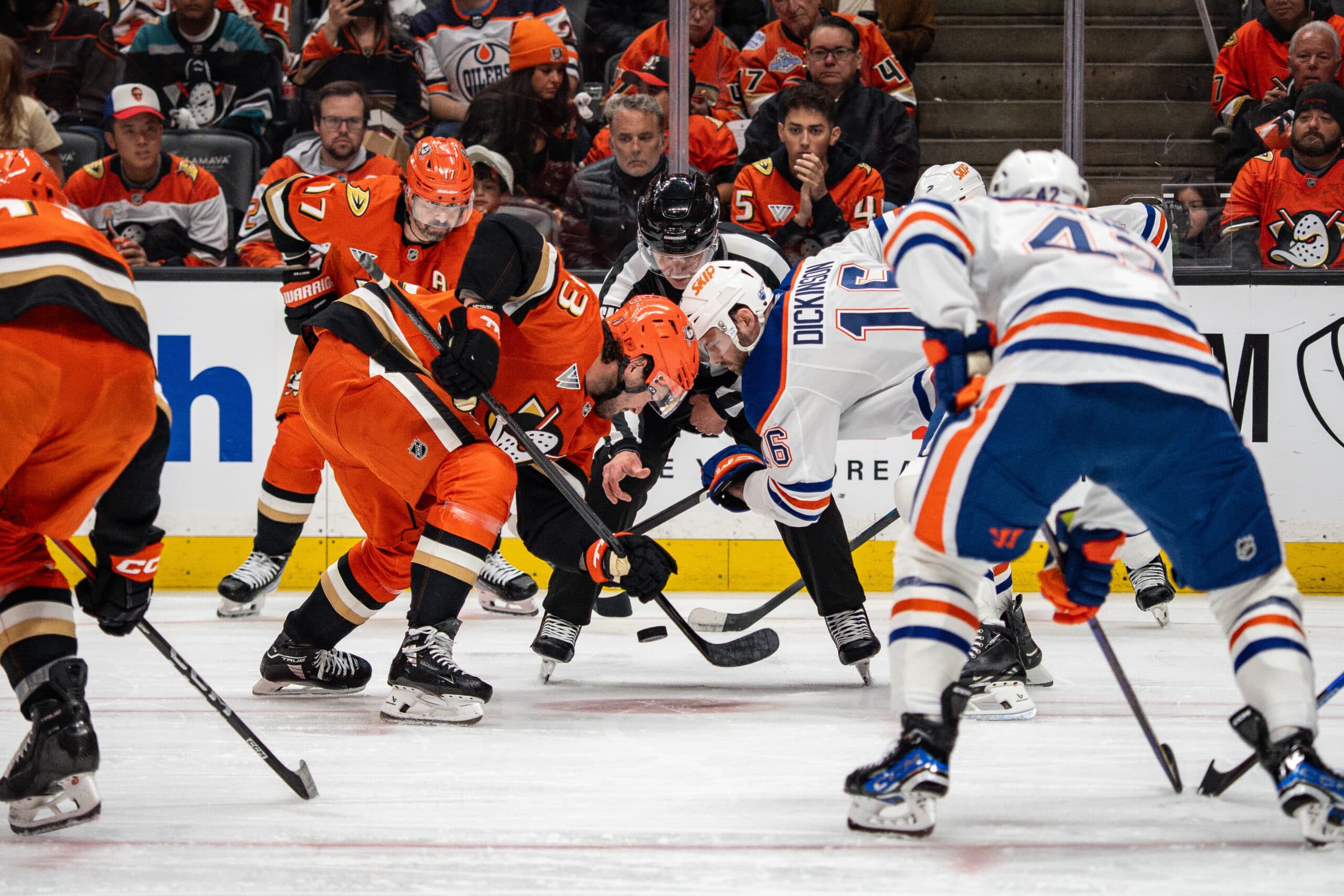
Photo credit: Corinne Votaw-Imagn Images

Apr 27, 2026, 13:00 EDTUpdated: Apr 27, 2026, 21:33 EDT
The Edmonton Oilers are on the brink.
They’re heading home down 3-1 to the Anaheim Ducks after dropping both games on the road. Anaheim is led by young talent, but built with experience. They’ve got no pressure, which is allowing them to play freely.
Edmonton hasn’t played well in this series and fully deserves to be down. However, that hasn’t come without controversy, which the league needs to look at.
The officials jumped into action in Game 4, calling Ryan Poehling’s attempt in overtime a goal, despite no conclusive evidence that the puck crossed the goal line. No official was in position behind the net, with the closest referee near the face-off dot. No call was made on the ice until the officials gathered and ruled it a goal.
At that point, you’re at the mercy of the call on the ice. No referee had a clear view of the puck, and there was no conclusive evidence. But because the call on the ice was ruled a goal, it stood.
Did the puck cross the goal line? Probably. However, show us the images that prove it. Tristan Jarry’s skate is covering the top half of the puck, preventing anyone from seeing. We are all assuming, which is wrong.
Before going any further, let’s make one thing clear. Goals shouldn’t ever enter the grey area. They’re not opinions, they’re facts. It’s a black-and-white outcome. Did the puck go in, yes or no? Somehow, after last night, we still don’t know.
The NHL needs to move away from giving the officials all the power on the ice. Bringing more technology into the game is the only way to do it. Hockey is one of the few professional sports that relies on lines to determine outcomes and still allows for human error.
Major League Baseball has made significant changes to its game over the past few seasons to bring it into the modern era. They added the pitch clock to help speed up the game. Now, if a game goes to extra innings, a player starts on second base to end the game sooner. This season, they put more power into the players’ hands with the ABS challenge system to get strike and ball calls down to tenths of inches.
Soccer added Video Assistant Technology a few years back. Its offside system is controversial, but its goal-line technology is top-notch. There’s never any disputing whether the ball crossed the goal line or not. Again, it puts the officials in a better spot because the decision is out of their hands. Also, goals are black-and-white. Did it cross the goal line, yes or no? Fans always have the answer.
Tennis moved into the technology game a long time ago. They added the “Electroline” way back in 1974 and haven’t looked back. They’ve continued to advance their game and improve it wherever they can.
Now, here we are in the NHL in 2026, looking down, allowing the people in striped sweaters to assume a puck crossed the line. The staff in Toronto or New York are now zooming in on every angle, but all they can see is Tristan Jarry’s skate covering the puck, preventing any reasonable outcome. What also comes with that? Controversy.
Please advance the game. There is no way in 2026 that we can’t find ways to bring technology into this. If curling can detect if the rock was let go too late, then Gary Bettman and his team can find ways to tell us if the puck crossed the line. Technology should be a friend to the league, not an enemy.
And while the call will dominate the headlines, Edmonton put itself in this position with inconsistent play and costly mistakes. It’s now do-or-die on Tuesday night. Any form of defence should help Edmonton win at least that game.
It’s an uphill battle, but Edmonton has the talent level to provide the unthinkable. The unthinkable is winning three games in a row, which has been a task for the Oilers all season.
PRESENTED BY PRAIRIE TOYOTA DEALERS

The Toyota Tacoma is the ultimate power play. Its standard i-FORCE engine delivers more power than ever and a towing capacity of up to 6,400 lbs. It helps you take on challenging landscapes with confidence with its available Panoramic Multi-Terrain View Monitor that provides a live, underfloor view of the terrain you’re tackling. It even makes loading and unloading gear effortless with its available Power Liftgate. Whether it’s for early morning practice or weekend away games, the Tacoma is a teammate you can rely on. Visit your local Prairie Toyota dealer during Red Tag Days for limited-time offers.


Breaking News
- Bowman: Hockey Canada reinstating Formenton played ‘big role’ in Oilers signing
- Oilers bold predictions: Colton Dach becomes an everyday player
- Oilers scrape bottom of hockey barrel in signing Alex Formenton
- Edmonton Oilers sign Alex Formenton to one-year contract
- Total of 14 Oilers games only available through streaming in 2026-27

Edmonton OilersTeam Cap Summary
Cap Summary
2026-27
2027-28
Projected Cap Hit
$102,071,666
$88,322,500
Projected Cap Space
$1,928,334
$25,177,500
Current Cap Space
$1,928,334
$25,177,500
Active Players
22/23
16/23
Draft Picks
Round
'26
'27
1
0
0
2
1
1
3
1
0