
All 35 of Ryan Shea’s points in 2025-26 came at even strength. With his addition, the Oilers now have three of the top 20 even-strength scoring D-men from last season in Shea, Evan Bouchard, and Mattias Ekholm.

OilersNation has no direct affiliation to the Edmonton Oilers, Oilers Entertainment Group, NHL, or NHLPA
What the Edmonton Oilers should expect from Ryan Shea
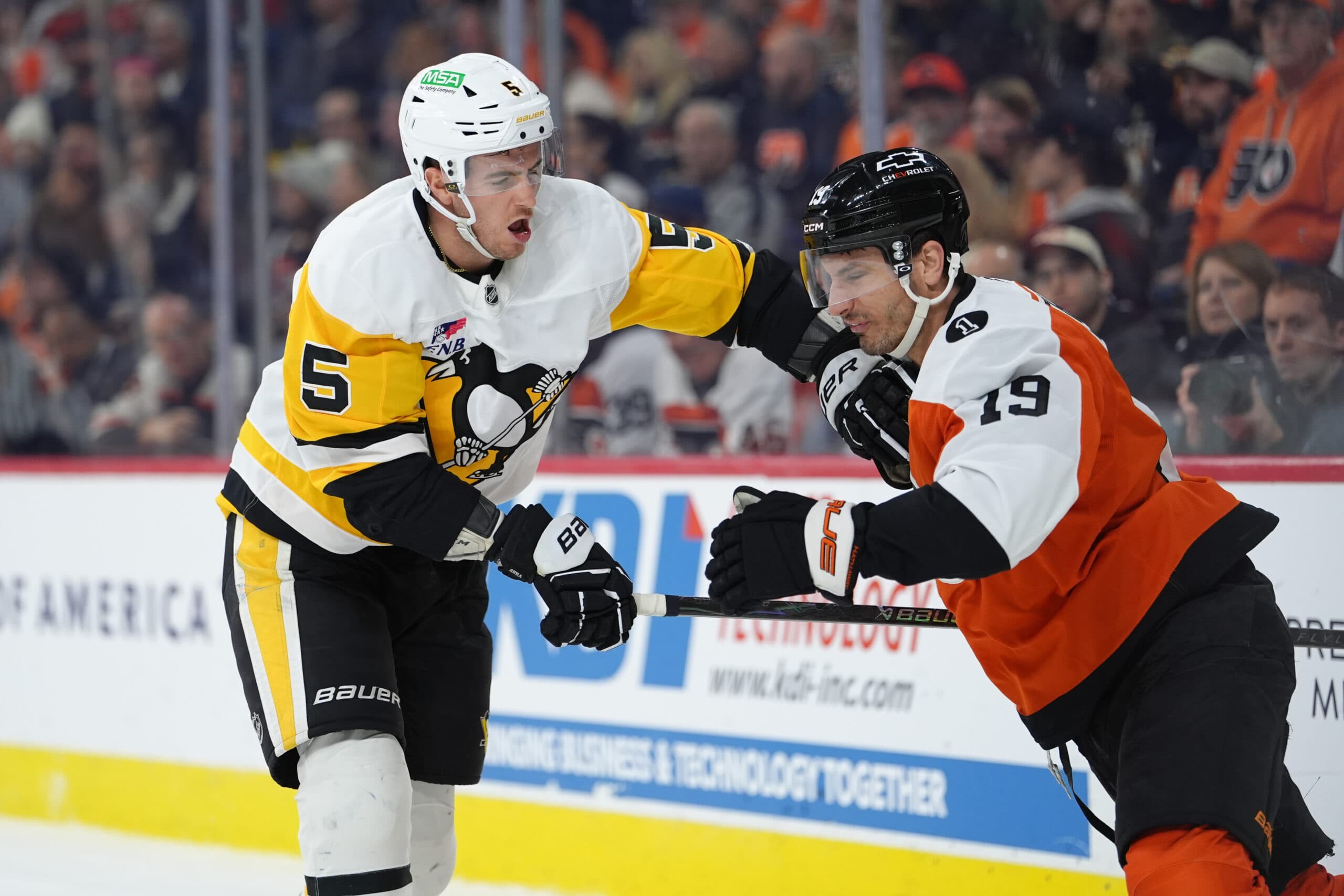
Photo credit: Kyle Ross-Imagn Images

Jul 3, 2026, 09:00 EDTUpdated: Jul 4, 2026, 22:43 EDT
Once Darnell Nurse was traded to the San Jose Sharks, the floodgates opened, and with his $9.25 million cap hit cleared, the Edmonton Oilers made their biggest move on day one of free agency by signing defenceman Ryan Shea to a five-year, $20 million contract.
Shea played 39 games in 2024-25 before breaking out with the Pittsburgh Penguins last season, appearing in a career-high 80 games and averaging 18:53 of ice time per night.
Reflecting on his growth as a late bloomer last December, the 29-year-old credited an offseason focused on getting stronger, but noted that confidence was a key factor in his growth. He said, “You just get comfortable, and when you’re comfortable, it’s easy to get more confident and build on your game.”
That confidence was evident throughout the 2025-26 season, as Shea posted a career-high 35 points and led the Penguins with a +30 rating.
That said, I’d imagine his confidence should be sky-high after signing the biggest contract of his career with the Oilers. If Shea can channel that confidence and build on his success from last season, below is what the Oilers should expect from their new blueliner.
Even-strength point production
All of Shea’s 35 points (six goals, 29 assists) last season came at even strength, which ranked 20th among all NHL defencemen. With his addition, the Oilers now have three blueliners who finished in the top 20 in even-strength points last season — Shea, Evan Bouchard, and Mattias Ekholm.
The expectation moving forward for the D-man is to continue producing from the back end, and Shea noted that he prides himself on making a good first pass, saying on the “Oilers Now” show:
“Making the first available pass is probably my strong suit, I’m not afraid to use my back hand, I’m not afraid to go through the middle and when you got good support from the forwards, the number one thing from the D is to give it to them, especially on this team when you have the most elite type of forwards around, you want to give it to them as quick as possible.”
Shea’s transition to the Oilers is a unique one; he’s going from feeding passes to Sidney Crosby and Evgeni Malkin in Pittsburgh to now dishing outlet passes to Connor McDavid and Leon Draisaitl in Edmonton.
Still, that experience playing with elite talent could bode very well for the Oilers. For example, according to Natural Stat Trick, at five-on-five last season, Crosby’s goals-for percentage jumped to 62.96% when he was paired with Shea, compared to 52.63% without him. That’s the kind of improved results the Oilers are hoping to see carry over to McDavid and Draisaitl.
Solid five-on-five play
Last season, Shea played the most with Kris Letang (572:10 minutes) on the middle pairing, and posted Corsi, Fenwick, and shots-for percentages that were all just slightly below 50% in each category.
That said, his underlying expected goals and chance metrics were all positive. He posted a 51.20 expected goals-for percentage (xGF%), a 50.48 scoring chances-for percentage (SCF%), and a 52.80 high-danger chances-for percentage (HDCF%). He also recorded a 58.33 goals-for percentage (GF%), which was the second-highest among Penguins blueliners.
Additionally, according to PuckIQ, Shea held his own against elite competition, as the Penguins outscored opponents 16–13 with him on the ice against elite players at five-on-five, with Matthew Barzal being his most frequent matchup (24:31).
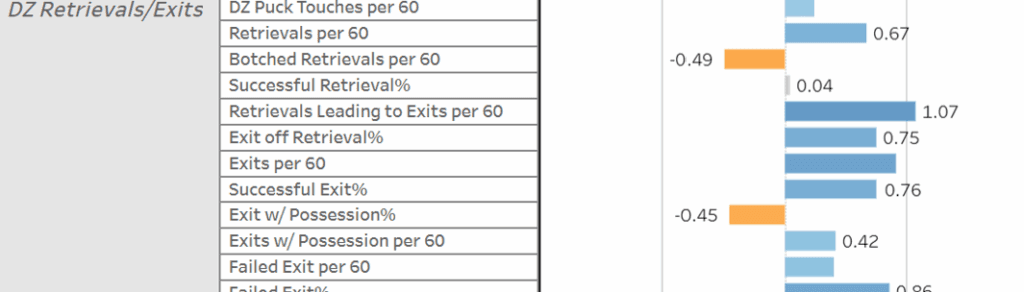
Ryan Shea defensive metrics from All Three Zones
The above chart from All Three Zones highlights the D-man’s puck-moving strengths. Last season, he was strong on defensive-zone retrievals and transitions, with retrievals leading to exits per 60 minutes standing out as a key area of strength.
Overall, these metrics support what the 29-year-old said about his first pass being a strength and suggest that when pucks are dumped into the Oilers’ zone with Shea on the ice, the forwards will need to be ready to transition the other way quickly.
Shea should add versatility on the Oilers’ back end
Bob Stauffer asked Shea what part of his game improved the most to make him a full-time NHLer last season, and he said that, in addition to confidence, he pointed to “my versatility.”
He added, “Whatever the hole in the lineup is, I’d like to think I’d be able to fill it. Whether it’s playing my off-side, my left-side, whether it’s maybe stepping in on a power play once in a while due to injuries, or whatever the case may be, but I think [it’s] my versatility.”
His comments truly show his confidence, with zero hesitation in his willingness to step into one of the best power plays in NHL history with the Oilers. It’s also a plus that, as a left-shot defenceman, he can slide to the right side if needed, a spot he filled in at times last season with the Penguins.
Shea should strengthen the Oilers’ penalty-killing unit
Above all, among the areas where I feel Shea will make the biggest impact for the Oilers is on the penalty-killing unit.
When the Penguins signed Shea in July 2023, one trait GM Kyle Dubas valued most was his penalty-killing ability in the AHL. Last season, he emerged as one of the team’s most-used players while shorthanded on a unit that finished sixth-best in the NHL. He spoke about his role on the PK:
“I kind of took on a role of a PK’er the last year, and a half and I take a lot of pride in that,” he said. “But for me, keeping the puck out of our own net, I believe that’s my number one job, and there’s nothing better than having a good PK.”
Shea played the second-most PK minutes on the Penguins (181:28) in 2025-26, and interestingly, among Penguins’ D-men that played at least 50 PK minutes last season, he posted the highest scoring chances-for percentage on the unit at 13.44%, higher than notable puck movers Erik Karlsson (9.76%) and Letang (9.41%). This likely reflects his strong puck-transition ability, even while shorthanded.
Thoughts on the Shea signing
Overall, Shea might not be the flashiest household name, but this looks like a solid, under-the-radar signing for the Oilers.
Heading into free agency, I felt that after the Oilers traded Nurse, Jake Walman would move up to the second pairing on the left side, having mainly played on the third pairing last season. However, given Walman’s injury history, I also believed the Oilers needed a versatile third-pairing defenceman capable of stepping into second-pairing minutes on the left side as insurance, and I wrote that Brett Kulak would be the ideal fit.
However, Kulak ultimately re-signed with the Colorado Avalanche on a five-year, $22.5 million deal ($4.5M AAV), but Shea might be an even better fit. He may not be as smooth a skater as Kulak, but he’s still very mobile, excelled on the second pair, is three years younger, and $500K cheaper per season.
All in all, Shea looks like an ideal middle-pairing D-man who can defend, has experience feeding passes to elite players, produces points, and can take over Nurse’s old role on the PK — all at less than half the price of Nurse’s salary. There are no guarantees, but if he keeps trending up from last season, that $4 million AAV could end up being quite the bargain.
PRESENTED BY DERRICK DODGE
There’s a new chapter beginning at Derrick Dodge, and the momentum is real. Under new ownership, the dealership is bringing fresh energy, a renewed focus on customer experience, and a bold, forward-thinking approach to vehicle buying. This change marks the start of an exciting new era, built around transparency, trust, and putting customers first. To celebrate this transition, every vehicle purchase comes with a trip for two to Las Vegas. Whether you’re shopping for your next vehicle or simply curious about what’s changed, Derrick Dodge is moving forward with confidence, purpose, and a clear vision for the future.


Breaking News

Edmonton OilersTeam Cap Summary

Cap Summary
2026-27
2027-28
Projected Cap Hit
$99,274,166
$87,350,000
Projected Cap Space
$4,725,834
$26,150,000
Current Cap Space
$4,725,834
$26,150,000
Active Players
23/23
15/23
Draft Picks
Round
'26
'27
1
0
0
2
1
1
3
1
0