
Leon Draisaitl makes it 1-0! 📹: Sportsnet

Nation Sites
The Nation Network
OilersNation has no direct affiliation to the Edmonton Oilers, Oilers Entertainment Group, NHL, or NHLPA
A look at the Oilers’ hot line of Podkolzin-Draisaitl-Kapanen through the eyes of Podkolzin’s skills coach, Ned Lukacevic
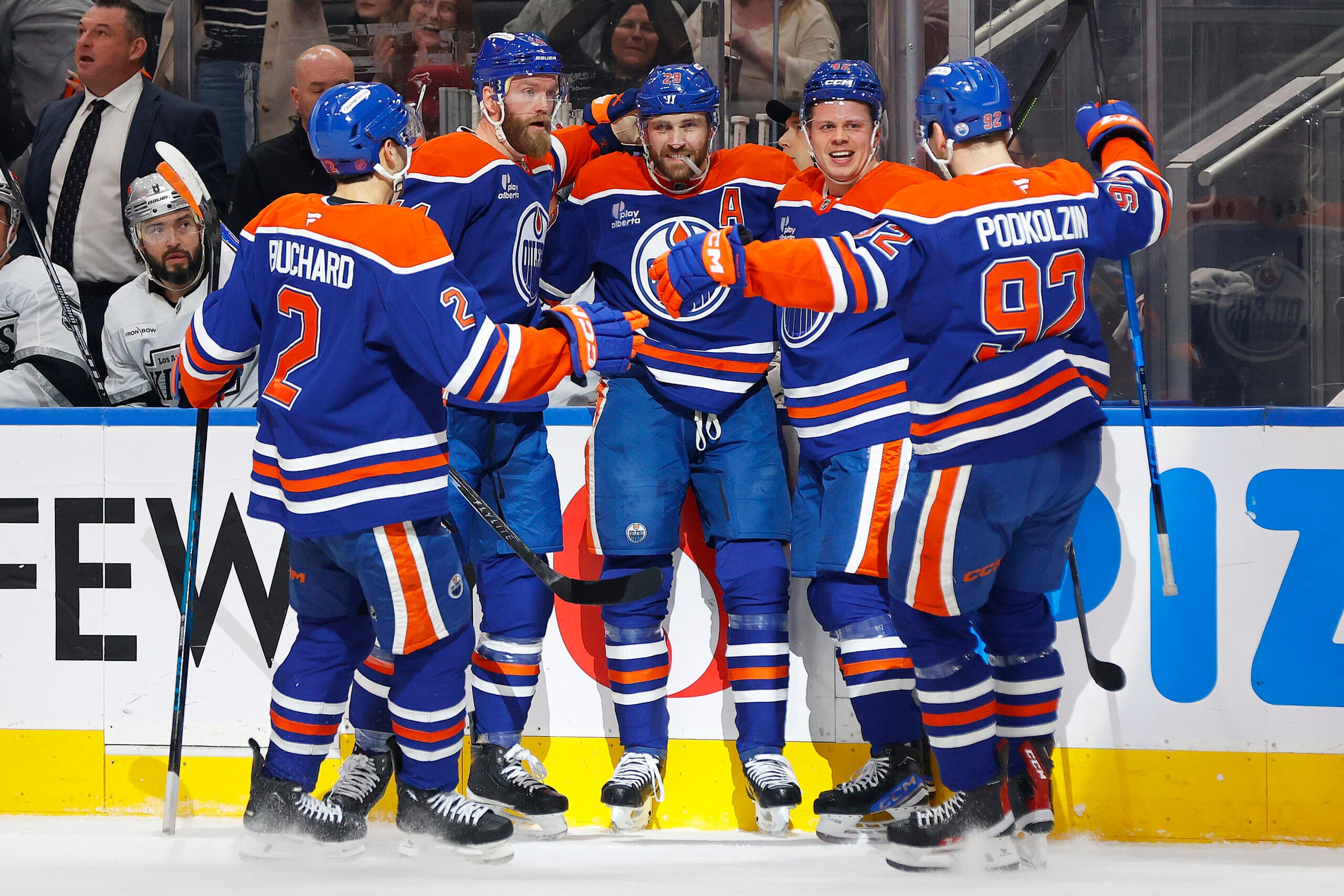
Photo credit: Perry Nelson-Imagn Images

Jan 12, 2026, 11:00 ESTUpdated: Jan 12, 2026, 14:21 EST
A 4-3 shootout defeat to the Los Angeles Kings stings, but the Vasily Podkolzin–Leon Draisaitl–Kasperi Kapanen line was a silver lining for the Edmonton Oilers, keeping their hot streak alive by combining for two goals in the game.
Kapanen returned to the lineup three games ago, joining Podkolzin and Draisaitl on the second line, and the trio has already combined for five goals. Their strong stretches of play have made them one of Edmonton’s best lines over that span, but why has this combination worked so well?
We sat down with Podkolzin’s offseason skills coach, Ned Lukacevic, who shared his insights on that line’s chemistry — both on and off the ice — and what makes this red-hot trio so dangerous, while offering some individual thoughts on Kapanen and Podkolzin.
Q: The Podkolzin–Draisaitl–Kapanen line was put together three games ago and has scored five goals in that span. What are your thoughts on that line since they’ve been back together?
“They’re an amazing line together. You can see they have chemistry. I know the Oilers like to switch lines a lot, but it feels like this line is showing continuity now. They like each other, and they get along off the ice. They’re really close friends, so I think it really helps, just being able to talk to each other, understand each other.
On the ice, they know where each other is going to be. Even dating back to last season in the playoffs, particularly in the Vegas series, where they were put together for the last two games of the series and scored the big Game 5 OT goal, they have a feel for each other — how each one of them plays and how each one of them needs to play to have success.
They play to their strengths: Kapanen brings energy — he’s a fierce skater and forechecker; Podkolzin is the physical, energetic type that can win those wall battles, creates turnovers, like when they scored last game against the Kings. And having an elite talent like Leon, to see the ice, scan the ice, and make those open plays — I just think it’s a dynamite combination right now.”
Q: I’m kind of joking when I ask this, but do you think the fact that they’re all European players adds to that line’s chemistry on the ice?
“No, I think you’re onto something, because I do think there’s a cultural connection in that manner — moving from different countries to North America, it builds that connection with guys that have gone through similar things as you. Though Kapanen and Draisaitl have been in North America a lot longer than Podkolzin.
Also, as mentioned, they’re pretty close friends — they get along off the ice. Being good together on the ice is one thing, and being close with the same guys off the ice takes it to another level. Because then you can have those hard conversations too, so I think that does play a hand in it, because I feel they had similar upbringings and values.
In hockey, it’s important that you’re playing with guys you can trust and rely on when you’re going to battle and fight together every night.”
Q: With that line, you have the hardworking grinder in Podkolzin, the speedster in Kapanen, and the elite talent in Draisaitl — why has it been hard for defenders to deal with this trio?
“Because all three of them are workhorses. They have a good stick on the puck, and when they get on the forecheck, they’re fierce. They get on the body — not just Podkolzin and Kapanen, but Draisaitl lays licks, too. He gets in there and separates body from puck.”
They win their board battles, they use the area behind the net really well, they cycle with each other, they spin off of each other, and get to open ice. They’re not only hard to defend through the neutral zone, but also below the goal line and hash marks. Throw in their size and skill, and it’s a dangerous combination. They’re relentless.”
Q: Throughout the season, there have been several players who have played on the right side of the second line with Podkolzin and Draisaitl. What do you like about Kapanen in that spot right now?
“For one, his speed. I also feel he’s playing with a little chip on his shoulder. He understands, as a veteran player, exactly what he needs to do to stay on that line. He understands what his role is, and he’s relishing that role.
Before playing in Edmonton, and even when he first got there, I think he wasn’t really sure of his role. I think now he knows, ‘I have to be a hard forechecker that creates energy for this line and for this team.’ What I like about him is that we’re now seeing his consistency so far, with his effort and energy. Plus, he has a ton of skill.”
Q: Looking more at Kapanen — he’s been a good fit since arriving in Edmonton early last year. He was a first-round pick and has had multiple 30-point seasons, but has struggled with consistency throughout his career. Do you think it’s possible for a player, nearly ten years into his career, to finally put it all together?
“100%. And this is why — because I think Kapanen’s realizing now that what he’s done before hasn’t really worked. As mentioned, he’s been inconsistent throughout his career. He’s played with skillful players, maybe at times relied too much on skill and not played as hard as he should. I think he’s seeing now that if he doesn’t play this way, after being on a few teams, who’s going to sign him, and what role is it going to be?
It’s not like what he’s done before hasn’t worked, because he’s had a good NHL career. But I think he’s realizing now that, to be successful, to be on a Cup-winning team, and to potentially win a Stanley Cup himself, he’s matured, and that maturity comes at different times. Maybe it’s a realization: ‘This is a role I’m good at, and this role will carve out more years playing in the NHL for me, so I need to play this way right now, before it’s too late.’

I love this response by Kasperi Kapanen. Zero hesitation with a 'No one touches my captain, especially on his birthday!' type of reaction. He's been such a good pickup for the Oilers.
He’s rejuvenated his game. Before, he was known as a skillful guy who could bring some energy at times, but now he brings energy all the time while also being very skilled.”
Q: Kapanen made a nice play behind the net, feeding Podkolzin for a nice goal against the Jets a couple of games ago. What are your thoughts on that play?
“That just shows Kapanen’s hockey IQ and his skill. That pass was elite — not only to make that pass, but it’s special to have that move in your toolbelt. As he’s gained confidence, which comes from work, preparation, and bringing energy, he’s now able to make those plays that he’s always been able to make, but he’s just more comfortable making them.
Podzilla ties the game! 📹: Sportsnet
Another kudos to him is that maybe he wasn’t trying that before, because he was thinking, ‘Ok, I have to play simple. I have to gain Kris Knoblauch’s trust, I have to gain the guys’ trust, and be a consistent performer and play a certain way.’ Now he’s building off of that, and I think moving forward, you’re going to see him put more of these plays together. His confidence is there, the belief in him is there.”
Q: Now, bringing it to your friend Vasily Podkolzin. He has already surpassed his goal total from last season with 10 and is on pace for 18, which would be a career high. What stands out to you about his offensive instincts this year?
“He’s just being more assertive, and he’s not overthinking it. Earlier in the season, he sniped a goal against Florida on Sergei Bobrovsky — that’s a shot he probably wouldn’t have taken in the past, but he scored top shelf. It seems he just has more of an ‘I can do it’ mentality, and that comes from confidence being given by the coaching staff and by management.


Podkolzin ends Bobrovsky’s night with this absolute SNIPE 🎯
But it goes back to him. He’s put in the work, so he’s earned his opportunity on the second line.
Also, there’s a trust with Leon now. If there’s a play, he might say, ‘You don’t have to force it to me, wait till I’m open. Make the right play.’ I think before he was forcing plays toward Leon and trying to get the puck to him always, but now you see he holds it for that extra second and then gets the puck to an open guy, or Leon. Overall, his assertiveness and confidence have gotten a lot better. His first instinct comes to mind — instead of thinking about whether he should do it, he’s just doing it now.”
Q: Before scoring against the Jets, Podkolzin went through a nine-game scoreless streak. Did you talk to him during that time, and how did he stay positive throughout that stretch?
“Yeah, we chatted. It’s hard because he’s kind of thinking, ‘Ah, I’m playing with Leon, I have to produce offensively.’ But the people in that room understand what he’s bringing and why he’s there.
I try to explain to him that you don’t always have to produce offensively. But you have to create something.
If you’re not getting points, are you creating chances at least? Is the puck on your stick? Are you getting shots on net? Are you creating turnovers? Or are you just a guy floating around the ice, burning calories? The difference is, he’s being productive in his game, but during that stretch, he wasn’t finding the scoresheet.

Photo courtesy of Ned Lukacevic (@nedlukacevichockey on Instagram)
But if you continuously put in the hard work — and I’m not talking short-term, I’m talking around 25 games or so — you’ll start to produce points, and those points are a result of that work ethic.
Now, he has three points in the last four games, and one of Draisaitl’s goals last game against the Kings was an example of his hard work — a big check, causing a turnover that he didn’t get a point on.
So, in that scoreless stretch, he didn’t have a lot of points, but his confidence was still there. He still had the puck on his stick a lot, created opportunities, threw a ton of hits, caused turnovers, and made good plays. And that happens. It’s just about talking to him, letting him know he’s doing the right things, and the points will come, and they have.”
Q: Why do you think Podkolzin and Draisaitl play so well together?
“For one, I think because they’re good friends off the ice, they go for coffee, they go for dinners, they really have a lot of respect for each other and get along well.
They love seeing each other succeed and playing for the team and the city. They enjoy being together on that line. Now, they have continuity and, most importantly, chemistry. Again, they spend a lot of time together and have fun off the ice, and when you combine that with knowing where your linemates are going to be and understanding each other on the ice, it’s a recipe for success.”
Q: How rewarding is it for you as a skills coach, having worked with him and spent time with him in the offseason, to see Podkolzin find success this season?
“It’s amazing. I’m emotionally invested in all the Oilers games because of working with Podkolzin. I have a son now — he’s six years old and loves hockey — and he knows I worked with Vasily, so my son and I have that connection to watch Oilers games together.

Vasily Podkolzin, Ned Lukacevic and his son (@nedlukacevichockey on Instagram)
Also, knowing what Podkolzin has gone through — getting drafted by the Vancouver Canucks in a big hockey market, playing for three different coaches in the organization, getting sent down to the AHL, and, as the saying goes, essentially being traded away for what seemed like a bag of pucks — it could’ve been easy for him to shut it down, maybe even go back to Russia. But he stuck with it and totally turned his career around with the Oilers. Big kudos to him.
For me to be a part of his journey makes me really proud. He allowed me to help him and trusted me enough to build a connection, and he was so open-minded throughout the process. I’m proud of him and that I was able to help, and it especially feels good knowing he trusted me at such a big and important stage of his career.”
ARTICLE PRESENTED BY bet365
Recent articles from Sean Panganiban
- Four positives from Oilers’ four-game road trip: Frederic is finding a new gear, the Nurse-Murphy pairing has potential, and more
- Thoughts from Vasily Podkolzin’s skills coach, Ned Lukacevic, on the recent flashy play of the Oilers forward
- Oilers Thoughts: Murphy puts on defensive clinic, Dach deserves more minutes, Podkolzin’s scoring pretty goals, and more
Breaking News
- Sunday Scramble: The Oilers better hurry, the Sharks are circling, and Gudas’ ban not enough
- GDB 68.0: Oilers back home for Sunday Funday matchup against the Predators (6 PM MT, SNW)
- Connor Ingram declared Oilers’ starting goalie, will get ‘majority of starts’
- How the Oilers have changed since the Olympic break
- Oilers Game Notes: Predators visit Edmonton trying to keep faint playoff hopes alive