
OilersNation has no direct affiliation to the Edmonton Oilers, Oilers Entertainment Group, NHL, or NHLPA
Should the Oilers be afraid of adding dead cap space?
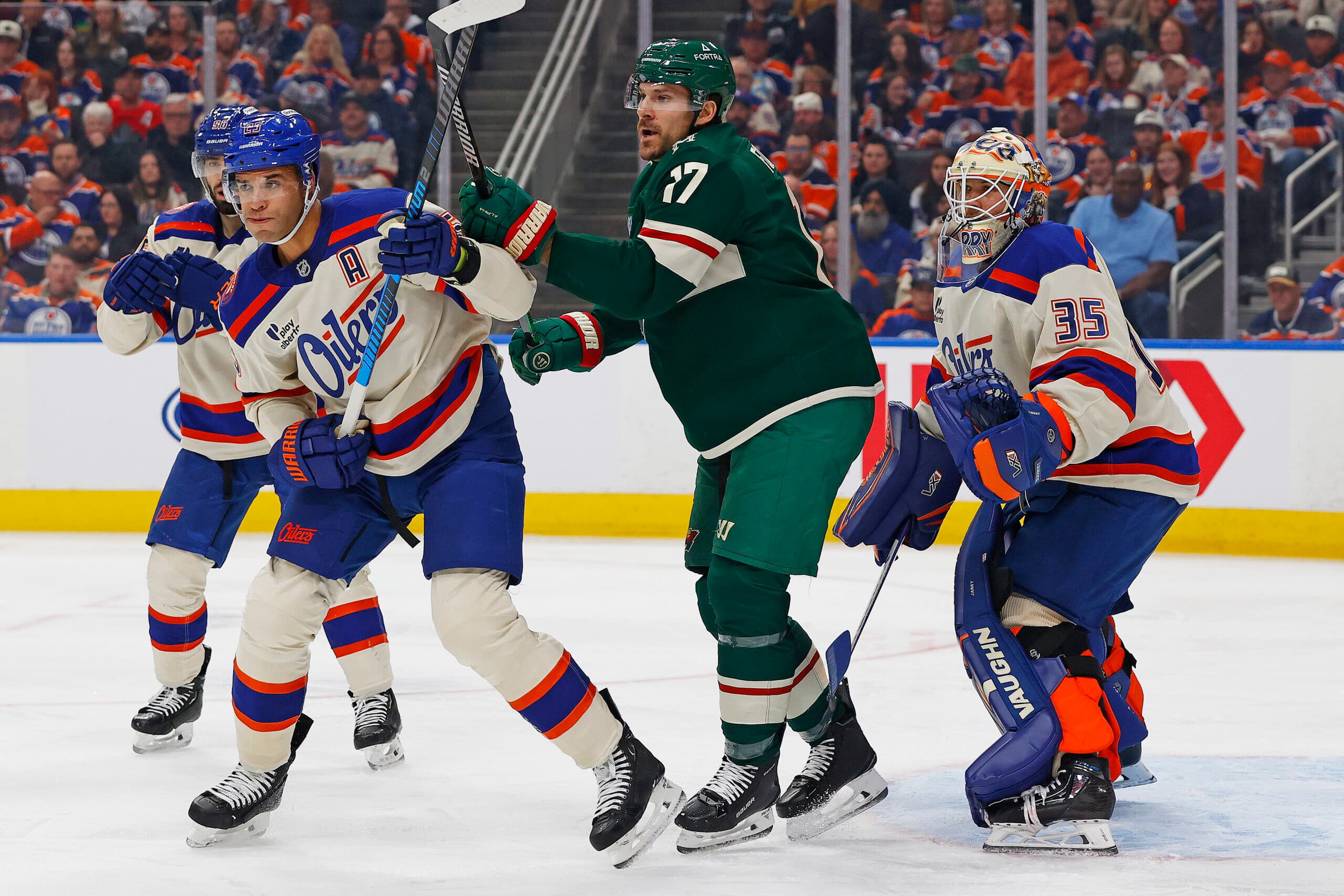
Photo credit: Perry Nelson-Imagn Images

Jun 7, 2026, 09:00 EDTUpdated: Jun 7, 2026, 14:05 EDT
One thing that the two teams competing in this year’s Stanley Cup Final have is that neither one has any dead cap space on its books.
No buyouts. No retained salaries. Nothing. A clean sheet.
If you head over to the Edmonton Oilers PuckPedia page and scroll down a little bit, your eyes will eventually find the buyout penalties from the Jack Campbell contract.
$2.6 million for the 2026-27 season, followed by $1.5 million for each of the next three seasons.
Having dead money on the books is nothing new for the Oilers, though. Before Campbell, it was the James Neal buyout, and before that, the likes of Andrej Sekera and Benoit Pouliot.
Good organizations aren’t forced to buy out players because they simply don’t sign bad contracts to begin with. That is something that the Oilers have really struggled with throughout the Connor McDavid era.
As one of the most consequential offseasons in franchise history begins, Oilers general manager Stan Bowman is faced with the task of improving this team despite having a lack of assets and not a lot of cap space to work with.
And there are still some bad contracts on the books.
If Bowman wants to improve the roster this summer, he will have to shed some salary, and personally, he shouldn’t let the ghosts of contracts past stand in his way of making the right moves this summer and as much as some fans might not want to hear, eating some dead money might actually be a smart move.
Let’s take a look at the goaltending conversation.
As it stands right now, Tristan Jarry has two years remaining on his deal at $5.375 million. Connor Ingram is a pending UFA.
Ask yourself right now, of the two, who would you rather have on the Oilers next season?
I think everyone would say that salaries aside, they’d rather have Ingram.
Well, if you retained 50 per cent of Jarry’s contract and shipped him somewhere else, that would save you right around $2.65 million which is almost enough to sign Ingram to his AFP projected cap hit of $2.9 million.
If there was a team out there willing to take on Jarry at 50 per cent retained, the Oilers would have the cap space to sign who I believe to be the better goalie.
Now that is a bit of a pipe dream scenario, but what if the Oilers were to swing a deal with the Detroit Red Wings for Sebastien Cossa?
The Red Wings have two other quality young goalies in their system but neither appears ready to take the leap next season. If the Oilers overpay slightly for Cossa, could the Red Wings view Jarry (50 per cent retained or somewhere around there) as a cheap backup for John Gibson, whom they could simply bury next season and use as organizational depth once one of their goalies is ready to take the leap to the NHL?
The duo of Cossa and Ingram, even with Jarry’s retained money on the books, still likely comes out to under $7 million and I think everyone reading this would agree that a duo of Cossa and Ingram is much more reliable than having Jarry and Cossa together.
It might take upping the assets you’re giving up in the trade, and it would come with the negative PR of having dead money on the books, but the Oilers would be a better team at the end of the day.
Eating dead money should be viewed as the last resort option, but that doesn’t mean that it shouldn’t be considered at all.
Now, when it comes to a player like Darnell Nurse, I don’t think retaining any amount of money just to dump the player is automatically the right move.
While Nurse is, without a doubt, overpaid at $9.25 million, he still has some value. He eats a lot of minutes on the Oilers’ blueline and has stayed remarkably healthy over the last number of years.
If the Oilers were to retain 50 per cent of Nurse’s contract just to get rid of it, they would undoubtedly spend north of $4 million trying to replace those minutes and that would totally wipe out any savings that they got.
Change for the sake of change? I suppose there’s a benefit to that, but I’m really only interested in retaining a significant chunk of Nurse’s salary if the team on the other end is willing to actually give back something of value.
If they can get a strong draft pick or a good young player in exchange for keeping 25-50 per cent of Nurse’s deal, then you can make an argument that even though there’s dead money on the books, the team is still better off.
The Oilers should not have a blanket rule that they aren’t willing to retain money in any transaction. It might not feel great, but the team is going to have to get creative if they want to really change up their roster this summer, and they can add some dead money onto their books while still improving the team at the same time.
It just has to be the right deal.
ARTICLE PRESENTED BY bet365


Breaking News
- Oilers prospect Rudolfs Berzkalns named captain of USHL’s Muskegon Lumberjacks
- Grading every trade of the Stan Bowman era with the Edmonton Oilers
- Why the Oilers can survive Frederik Andersen’s absence
- Oilersnation Radio: Bounce back Oilers, injury worries, and the Connor Hellebuyck situation
- NHL Notebook: Canucks sign Buium to eight-year, $9.38 million AAV extension

Edmonton OilersTeam Cap Summary

Cap Summary
2026-27
2027-28
Projected Cap Hit
$102,071,666
$88,322,500
Projected Cap Space
$1,928,334
$25,177,500
Current Cap Space
$1,928,334
$25,177,500
Active Players
22/23
16/23
Draft Picks
Round
'26
'27
1
0
0
2
1
1
3
1
0