
OilersNation has no direct affiliation to the Edmonton Oilers, Oilers Entertainment Group, NHL, or NHLPA
Do the Edmonton Oilers possess the winning formula for a Stanley Cup?
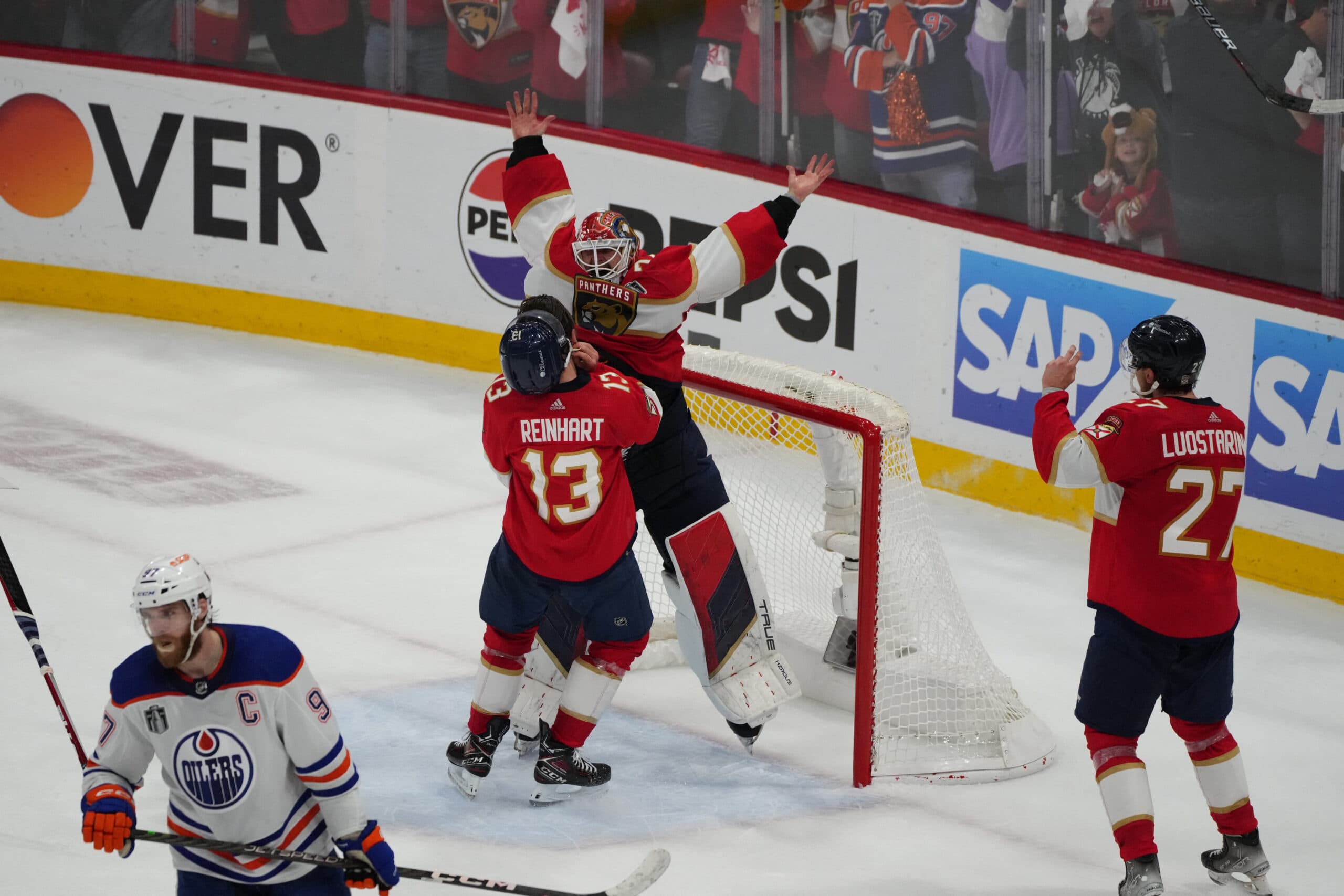
Photo credit: Jim Rassol-USA TODAY Sports

The Winning Formula.
It’s an oft-used expression and something that every professional sports franchise is chasing. But what is the “winning formula” in the NHL? If it were as easy as applying a template, surely one of the great hockey minds out there would have solved it by now. While some sportswriter isn’t going to crack the code, we can look for common themes, styles of play and specific attributes. Let’s look at the most recent Cup champions to find out.
What was the winning formula for recent Stanley Cup champions?
2026: Carolina Hurricanes = dominant possession + depth contributions + overwhelming territorial advantage
2024 and 2025: Florida Panthers (sorry Edmonton Oilers fans) = formidable roster depth & scoring + suffocating defence
2023: Vegas Golden Knights = scoring depth + protecting the middle + surprise elite goaltending
2022: Colorado Avalanche = superstar talent up front and on defence + depth to supplement the stars
2020 and 2021 Tampa Bay Lightning = superstars in all three major positions + defensively responsible bottom-six + playoff experience
The first common theme that sticks out is depth – in one form or another. I’m not blowing anyone’s mind with depth contributions being paramount to winning the Stanley Cup, however, the different types of depth are what are interesting. For the Hurricanes, Panthers and Golden Knights, depth meant depth scoring – every line was dangerous. For the Avalanche and Lightning, depth contributions came more in the form of shutdown defence and role players, allowing more contributions from superstars. Bottom line, while scoring up and down the lineup is nice, it’s not a must. As long as everyone is filling their role – whether that be winning key faceoffs, shutting down the opponent’s best player or filling the net – winning seems to follow.
For many of these teams, aggressive roster management and key adds at the deadline created depth. Picks and prospects were moved to add players like Seth Jones, Brad Marchand, Ivan Barbashev, Artturi Lehkonen, Josh Manson, and Blake Coleman. Each of these players was a key contributor in their teams’ Cup runs.
Another (not surprising) trend – playing excellent defence also seems to lead teams to the promised land. Again, however, this seems to come in different forms. The Hurricanes didn’t have to play much defence because they always had the puck. The Panthers were impenetrable, even with Connor McDavid barreling down on them at times. Vegas protected the middle especially well, leading to few high-danger scoring chances. Even with the possession numbers often not in their favour, they were able to control the game and capitalize on the counterattack. Tampa got excellent goaltending to help out the defence and also had the threat of Hedman to Kucherov to the back of the net going the other way if the other team overcommitted. Championship defence has come in different forms, but it always results in the same thing – fewer pucks in your net.
It’s also hard to miss that, outside of the Hurricanes in 2026, all of these winners have true, top-tier NHL superstars on their roster. Having players who can take over a game and will their team to victory provides a distinct advantage in the playoffs where matchups play more of a factor, and checking is tighter than ever. The Hurricanes proved this is not a true ‘must-have’ to win, however, they do have several upper-tier players, any one of which can be a game-breaker on any given night. Again, no one is surprised that having superstars on your roster helps you win Stanley Cups, but seeing this trend from past champions reinforces the motivation for teams to go out and bring in as much top-tier talent as possible when they’re in their winning window.
What isn’t in the formulas also is interesting: top five power plays and penalty kills aren’t necessary to win. Many of these former champions weren’t in the top five on the PP or PK during the regular season. But most also weren’t near the bottom of the league in these categories either. It’s more about not having any weaknesses that can be exploited and having depth to fall back on when the games get tough in May and June.
Another interesting trend is seen in the Panthers and Lightning. In the years they repeated, both had underwhelming regular seasons, and long Cup runs (and summers spent celebrating) took their toll on these teams. Their saving grace was players who had been there and done that – once the playoffs rolled around, they were able to flip the switch. The Oilers fell short on this approach last year. While they didn’t win, two long playoff runs in the previous seasons had the group pacing themselves in the regular season. The problem was, when the playoffs came around, they were too injured and weren’t able to flip the switch to do the same damage as these repeat champions.
How do the Edmonton Oilers compare to recent Cup champions?
Now, considering these models, how do the Oilers stack up this season?
The Oilers’ forward depth has the opportunity to be special this season. A combination of elite scoring, young players looking to take the next step, and proven grit in the bottom-six makes this group a nightmare to gameplan for. The defensive group has long been one of the question marks for this team. The addition of Connor Murphy last season should help shore up the defensive side of the puck and the penalty kill. It will be interesting to see how new additions Ryan Shea and Shakir Mukhamadullin fit, but each carries the skill and hockey IQ to make a real difference. Goaltending looks really deep on paper – 2 goalies with extensive NHL experience and a young up-and-comer who has a tremendous upside. With the NHL continuing towards the model of a tandem being required to win, especially with an 84-game season this year, the Oilers will likely need contributions from all 3 players to do damage.
The Oilers match up with any other team’s star players extremely well – we have seen time and again the ability for one of (or both) Connor McDavid or Leon Draisaitl to take over a game. Their crazy point totals and constant contributions sometimes overshadow the efforts of Evan Bouchard and Zach Hyman; we know this core has the star power to take over games in the post-season.
While the recent injury news surrounding Matt Savoie and Frederik Andersen has resulted in the projected cap space taking a hit, I would be surprised if the Oilers don’t work some magic this season so they can make some adjustments via trades or in-season signings. While the team has a history of adding at the deadline, I would expect them to be aggressive this year, especially if there is an obvious hole that needs to be filled.
Mike Babcock also could be an X-factor. Combine his knowledge, experience, and systems with a deeper roster and the Oilers could make some huge progress on their previous defensive struggles. The opportunity to supplement the D-core with an additional, proven player also instills confidence.
Lastly, coming off a longer summer of rest, rehabbing injuries, and a sour taste in their mouths from an early playoff exit last season, the team is positioned well to enter the playoffs in much better shape than last season. It’ll be interesting to see what the winning formula for the Oilers adds up to this season.
How will future NHL salary cap changes affect winning teams?
Now back to the bigger picture. The league is in a period of transformation – the salary cap is growing (projected at $113 million in 2027-28), contracts are becoming shorter, and players are starting to have more of a say in where they are playing and for how long. This surely affects what the winning formula will be in the future. With more money in play and players around for shorter periods of time, the ability to build culture and camaraderie will be at a premium. Groups need to gel together to win in hockey, and more changes of key players will make this harder to do. Championship windows will also get shorter – this will put more pressure on GMs to make moves that work in the short term. Managing cap space will be at even more of a premium than in the past, and contributions from players on entry-level contracts will be even more important. Ensuring your team is relevant so you can attract talent and keep it will be crucial given it will be easier than ever for players to jump ship if things aren’t working out. Future Cup champions will be the ones who still have deep rosters because they were able to manage these changes better than everyone else.
Letters to the Editor
 Photoshop by Tom Kostiuk
Daily Faceoff Edmonton wants to hear from you, the reader, in our new weekly “Letters to the Editor” segment. Letters can be emailed to Daily Faceoff Edmonton’s managing editor Zach Laing (zach.laing@bettercollective.com), titled “Letters to the Editor.” Please include a letter up to 200 words, including your name and place of residence (city, town, province, or state). Your letters may be edited for length and/or clarity. Letters must be submitted by Sunday morning to be considered for that week’s edition.


Recent articles from Matt Kuny
Breaking News
- Do the Edmonton Oilers possess the winning formula for a Stanley Cup?
- Oilers prospect Aidan Park looks to builds on freshman year after viral draft moment
- Oilers’ injuries shouldn’t be a major concern
- 31 Oilers Questions: Where will Max Jones begin the 2026-27 season?
- Monday Mailbag: How concerned should the Oilers be about Matt Savoie and Frederik Andersen?

Edmonton OilersTeam Cap Summary

Cap Summary
2026-27
2027-28
Projected Cap Hit
$102,071,666
$88,322,500
Projected Cap Space
$1,928,334
$25,177,500
Current Cap Space
$1,928,334
$25,177,500
Active Players
22/23
16/23
Draft Picks
Round
'26
'27
1
0
0
2
1
1
3
1
0