


This is getting Vasilly 🤪 #LetsGoOilers

OilersNation has no direct affiliation to the Edmonton Oilers, Oilers Entertainment Group, NHL, or NHLPA
Inside Vasily Podkolzin’s career year and off-season plans with skills coach
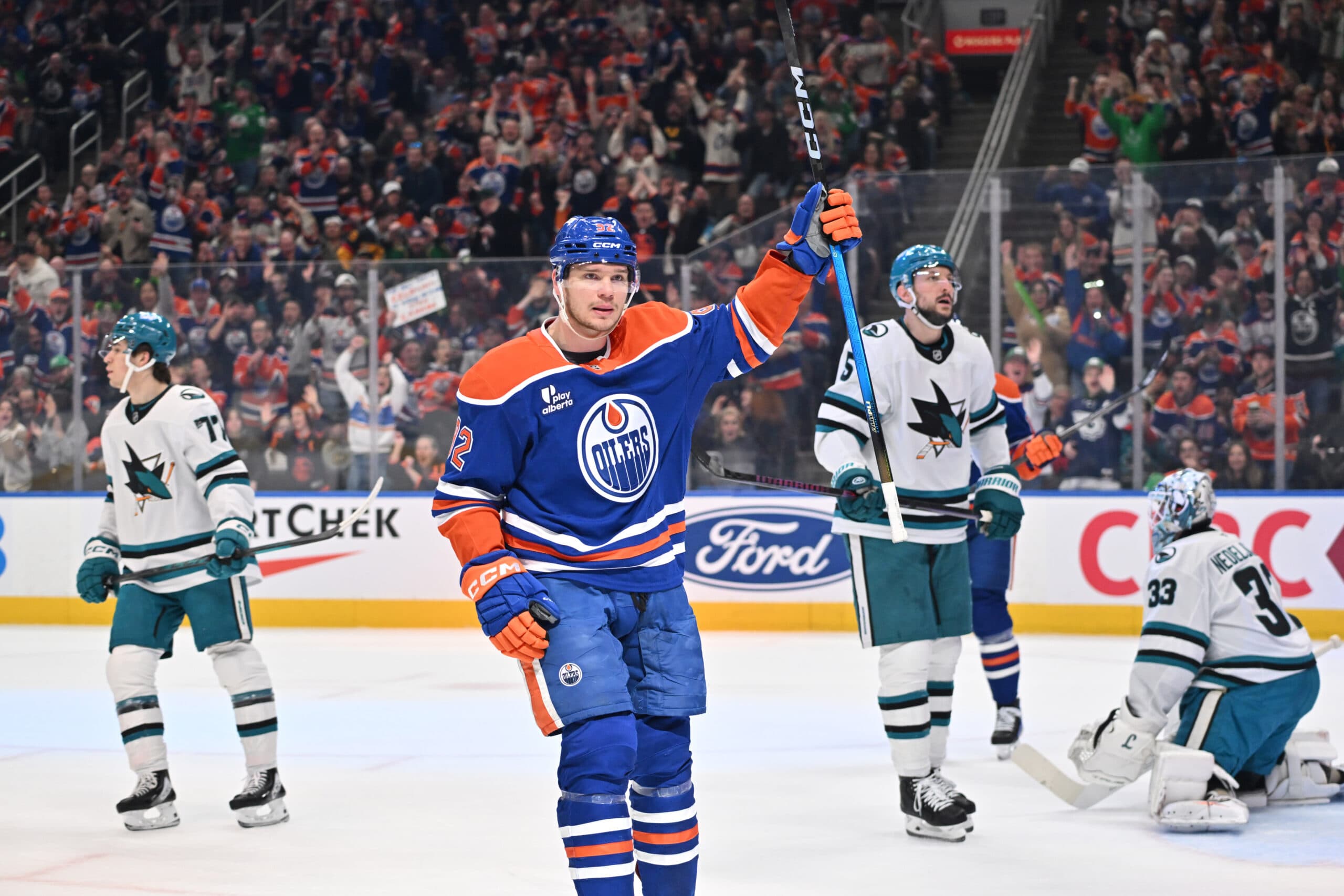
Photo credit: Walter Tychnowicz-Imagn Images

May 16, 2026, 13:00 EDTUpdated: May 18, 2026, 11:54 EDT
The Edmonton Oilers’ first-round exit to the Anaheim Ducks was certainly disappointing, but I recently wrote that there were some silver linings to an otherwise unfulfilled season.
One of them was the growth of Vasily Podkolzin.
Podkolzin was a physical menace in the regular season, leading the team with 242 hits and six fights, both increases from a year ago. But above all, he set a career high in points with 37 (19 goals, 18 assists), while looking noticeably more confident with the puck and emerging as a leader on the team.
With that in mind, we chatted with his skills coach, Ned Lukacevic, about the differences he saw in Podkolzin’s game compared to a year ago, where he’s improved in several areas, and what the outlook is for their August offseason training sessions.
Q: Podkolzin set a career-high in points with 37. What are your thoughts on that, and how does it feel to watch him accomplish it?
“I wouldn’t say I’m surprised because you can see last year with the bit of opportunity that he was getting. He was having some success. You could see he was kind of just at the tip of the iceberg with what he can do with an opportunity.
We both talked about that point range, him and I, around the 40-point mark, and he was right on the nose.
It’s just amazing to watch. He put in a lot of work and battled through a lot of hardships.
Whether you know him personally or not, it’s inspiring to see someone put their head down and continually do the right things for the team — fighting, blocking shots, leading the team in hits, playing hard, and being reliable. It’s not easy to play that way every single night. Pods has earned every bit of the success and rewards that have come from his efforts.”
Q: What do you think were the biggest factors behind him breaking through like that?
“He got an opportunity to continue playing with Draisaitl, right? Then Draisaitl goes down, he plays a bit with McDavid, gets rewarded, and builds some confidence from there. And sometimes things kind of happen for you. It doesn’t always happen like that for everyone, but the chips sometimes fall into place when they’re supposed to.
And then obviously, it’s all about timing. And I believe his time had come.
A lot of players’ time comes, but they don’t take advantage of it or rise to the occasion. But Podkolzin did. He trained hard in the offseason. He knew exactly what he had to do when more opportunity opened up for him.
And I think with his hard work and effort, he was rewarded with a few bounces. Then he slowly built confidence and started finding his way onto the scoresheet more, and eventually started picking corners. And when that happens, it kind of compounds. And sometimes that’s all it takes, just that opportunity.
And once you get it, your season can take off, and your career can take off too.”
Q: Is there something you noticed in his game from the beginning of the season to the end that improved over the course of the year?
“I just thought he was carrying the puck more and holding onto it a little longer. He wasn’t just throwing the puck away to get rid of it.

Vasily Podkolzin doing his best Pavel Bure impression. Jokes aside, Podkolzin sure has had some extra jump in his skating lately.
He was hanging onto it more and passing up just an “okay” play for a better one. Even in the playoffs, he’d have the puck, turn back with it, and look for a better play. I also loved how he was shooting the puck more and being more assertive.
I also thought that when he was in a scoring position, and he’d receive the puck, it was on and off his stick so quickly. And I think that in times before, it would come off his stick a little slower than it should have.
So, I thought that he had more of a killer instinct from the get-go this year.”
Q: You mentioned his shot. One thing I noticed is that his release was pretty slick last season. He scored a few goals top shelf, just picking his spot. What did you see in his release last season?
“I think it was just his mentality. It was a “if I get a shot, if I get an opportunity, I’m shooting it” mentality. I also thought he did a better job of getting open, getting better shots, and improving his shot volume as well.
He wasn’t doing that in the past. I feel like before, he might not take those shots below the top of the circle, below the circles, or from a tight angle. I think that came from confidence.

FIRST SHOT, FIRST GOAL AND VASILY PODKOLZIN HAS THE OILERS UP EARLY! 📹: Sportsnet
But I also think it comes from practice, too. I think he’s got a great shot — he’s always had a powerful shot. But his release hasn’t always been the quickest. He’s got a lot of power, but I know he’s put a lot of work into his release, not just with me, but in practice and after practice, working on getting the puck on and off his stick really quickly, in less than half a second. He knows goalies are so good and he needs that advantage.”
Q: You mentioned earlier in the season that when Podkolzin isn’t playing with Draisaitl or McDavid, he can be a driver. In the playoffs, he was the driver of the line when he played with Nugent-Hopkins and Hyman in Game 5. What are your thoughts on that?
“A player like that who has relentless puck pursuit and plays with so much drive in his game — no matter what line he’s on — other than when he’s playing with superstars like McDavid and Draisaitl, he’s always going to be that “driver type” because A) he’s so physical, B) he creates turnovers, and C) he’s relentless on the forecheck, while also being so defensively sound.
Podkolzin has a very good stick. I also thought one thing he did a great job of last season was his stick on the puck, and his ability to hunt pucks down, and create separation when he closed in on defenders. Combine that with his goal-scoring and his ability to make plays, and he was an absolute force out there at times.”
Q: Earlier in the season, you mentioned that in offseason training, you worked with him on playing with Draisaitl. But in 2025-26, he actually had a better goals for percentage at five-on-five with McDavid at 66.67%, compared to Draisaitl at 61.67%. What does that tell you about his ability to read and complement those two elite players?
“I think it just shows that he’s able to adapt, but at the same time, you can put a lot of guys who are workhorse-type players on those lines, right, and it isn’t always a good fit. It might work for a small sample size with other players, but you look at Podkolzin with McDavid and Draisaitl, we’re looking at like a year, year and a half of solid evidence that he works with them. It’s not like a three-week or four-week stint. It’s in big stretches with Draisaitl for a long time and McDavid in big stretches too.
It’s because of his work ethic and how powerful he is in the O-zone and off the cycle. I think a big part of his game that goes unrecognized is that he’s very good off the cycle. He’s very good on and off the walls.
Podkolzin understands that when he gets the puck off the wall, he knows where to go with it. He understands his options before it comes to him, and he’s really good behind the net, and I think Draisaitl and McDavid like that.
Also, as a former first-round draft pick, he has really good hockey IQ, and that’s what also makes him effective — his thinking ability. He can play fast with those two players, but he also thinks fast, too.”
Q: From what you saw last season, are there any aspects of the drills you worked on together that showed up most in his game?
“Just kind of piggybacking on what we were talking about, I thought it was his wall work, because he really liked doing wall work. There were a lot of rims, rims, rims. He liked it when I rimmed the puck to him behind the net.
He liked receiving rimmed pucks off the wall. And I felt last season he had tons of plays that, I’ll say to casual fans, wouldn’t really stand out.
But if you go back and watch his games, he had so many opportunities picking the puck up off the wall in the D-zone, or picking the puck up off the wall in the O-zone, and then either attacking or looking for another play. I thought he was really good off the wall.
And I thought, before coming to Edmonton, that was something he struggled with a bit — picking pucks up off the wall as a winger. But I think he put a lot of ownership on understanding that he needs to be good there. Any winger has to be good on the wall, but him especially, kind of fighting to make it to the NHL and earn a full-time role, he knew that he had to be good at it.”
Q: Last season, in my view, I saw Podkolzin emerge as a leader. He fought and stood up for teammates and tried to put the team on his back with a fight at the end of Game 3. Are you seeing that too, and could you see it coming?
“It’s hard to see it coming when you’re playing in the American Hockey League for a couple of seasons, and you’re basically being told you’re a bust. But you saw it in his attitude and in his demeanour.
He didn’t feel sorry for himself, and he was so grateful for other opportunities. And he knew, even in Vancouver, that he had to keep working; he had to get out of that situation. So he had leadership qualities.

JEFF VIEL AND VASILY PODKOLZIN DROP THE GLOVES IN THE FINAL SECONDS 💥
And I think that, for me, a leader makes everyone around them feel important. And I think that’s what McDavid and Draisaitl do. I think he’s learning that from those guys. He’s starting to understand where he can add.
He knows he’s not going to be the captain. But he knows he can piggyback off those guys and be part of that supporting cast in terms of the leadership group. He’s really learned and he’s listened.
And he took it upon himself to fight, block shots, and play physical.
And I think when you do those things all the time — not just once a week, but every game — you play hard. As an ex-pro, it’s hard to play like that every day, yet he’s the first one on the ice and the last one off.
When you do that, your teammates respect you and show you respect, and you feel that as a player. And I think he got that, and that also helped give him confidence to lead. But that was because of all the work he put in.”
Q: Podkolzin seemingly does everything for the Oilers. He hits, he fights, he blocks shots and scores. What do you ultimately feel like his ceiling is as an NHL player?
“I think if he continues to work on his foot speed, he’s not slow, right? No. But if you watch him, if you actually break down how he skates and how hard he’s working, if you count his strides per game, I bet it’s almost double most of the guys on his team, other than McDavid, Draisaitl, and some of the guys who move like that.
So since his stride isn’t overly efficient, he works really hard to get from point A to point B. If he can keep working on his foot speed, because he is fast, he’s actually very fast once he gets going, but I think his stride can be a little more efficient, and he knows that. But I think if he’s able to add a little more quickness, like going from left to right, that lateral quickness, I think he could be a really, really great NHL player.
He’s already a good NHL player, right? He’s a 40-point guy. I think his ceiling over the next three years, if he continues to work on that quickness, is that he could be a 60-point guy — consistently in that 50 to 60-point range, kind of in a Tomas Holmstrom or Alex Burrows type of way.”
Q: Will you be working with Podkolzin again this offseason?
“Yes, he’ll be coming here in August. He’s going to work out with me and with Ryan Nugent-Hopkins’ brother, who is a strength coach here and has been for the last couple of years.
Nuge’s brother is a trainer, and Pods skates with me, and we’ll be working together for about a month.”
Q: Is there anything specific he said he’d like to work on in the offseason?
“We haven’t gotten into that yet, actually, with the season just ending, but last year, there was a focus on wanting to handle the puck more, and we added drills like skating with the puck more and increasing speed.
This year, maybe he might say, ‘I almost had 40 points, I almost had 20 goals. I want to practice more shooting, I want my shot to be more accurate, I want to take more difficult shots.’ So we’ll see.
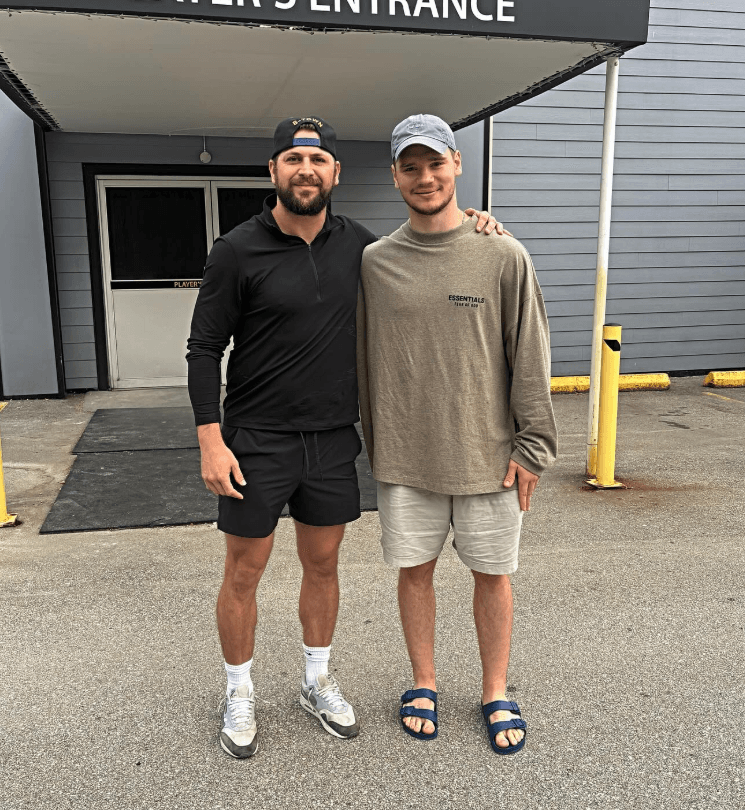
Photo courtesy of Ned Lukacevic (@nedlukacevichockey)
But he’s going to stay true to what’s got him to where he is — wall work, down-low play, and playing hard. But in the end, he knows exactly what he needs, and we’ll fine-tune those things too.”
Q:Is there anything specific you might suggest working on with him, or any particular drill you’d want to show him?
“I’ve been thinking about it, and I’ve gone back and watched his games, and I think there’s an area of his game where he can attack low more, where he can draw a guy to him more.
You know how McDavid attacks and cuts back and is so good on his edges.
You know how McDavid attacks and cuts back and is so good on his edges.
I think when Pods gets down low, he can take guys on more, from the goal line to the net, he can will his way there almost, and then cut back again and force defenders to him because he’s so big and strong. That’s where I see he can create more offence and add another tool to the tool belt.”
Q:We talk about Podkolzin being a driver, and you called it earlier in the season that he could become a driver of a line. Are there specific drills that can help a player develop into more of that driver-type role?
“Plain and simple, being a driver just comes from your f**kin heart. It comes from compete. And a lot of people don’t have it. They wait and say, ‘I’ll jump on his back.’ A driver says, ‘Jump on my back.’ It’s seriously a do-or-die attitude. Podkolzin knew that if he didn’t do that last year, he wouldn’t be in the NHL. He had to find something that would separate himself, and he’s worked on that.
How do you work on that? You practice like a dog. When you’re tired, you keep going. He got the opportunity with Edmonton, and he knew he had to hammer guys, be relentless, and basically do the things that got him drafted 10th overall.”
Q:I want to change the topic slightly. Another one of your clients, Logan Stankoven, had a decent regular season with 44 points, but he’s absolutely lighting up the playoffs with the Carolina Hurricanes with seven goals and one assist in eight games. How did you initially get connected with Stankoven?
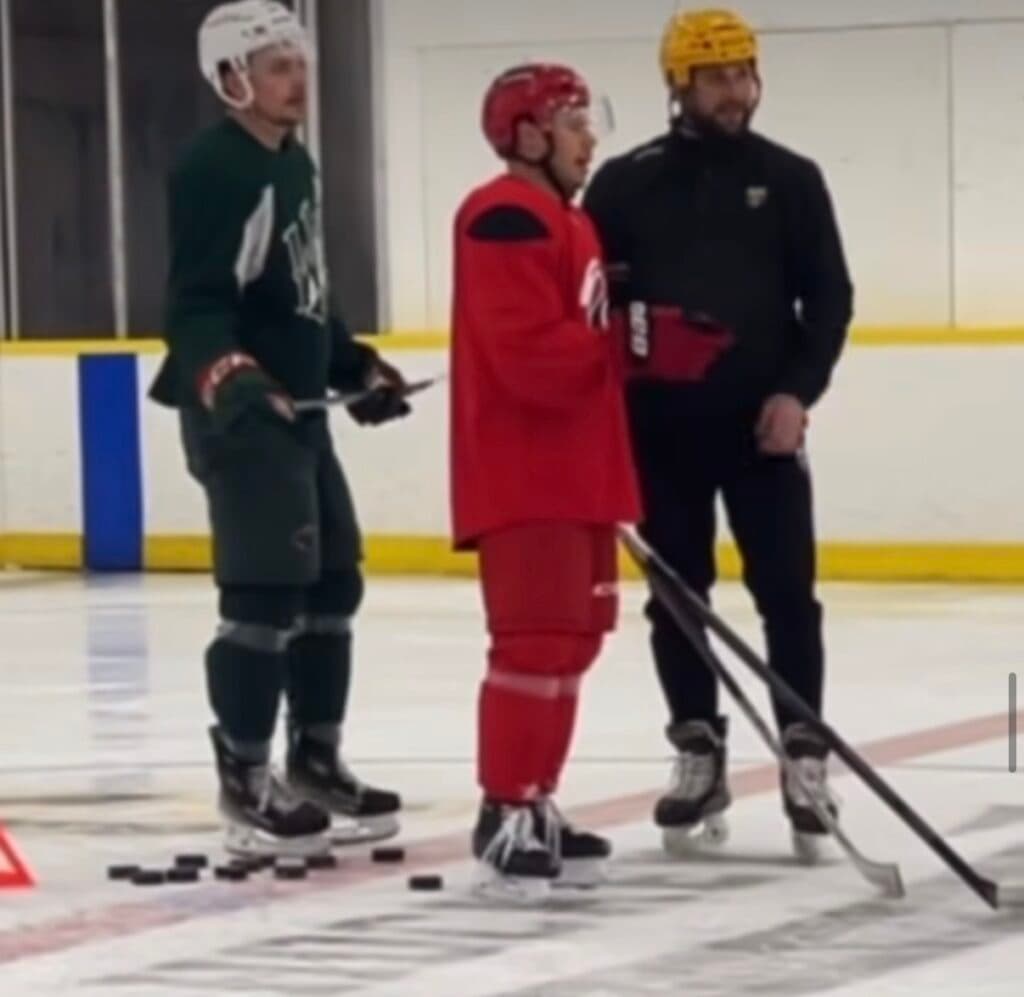
“I’ll be straight up with you. I followed Logan Stankoven on Instagram, and he followed me back. We connected through a couple of conversations, and he actually saw my videos with Podkolzin. And he said something along the lines of, ‘I love the drills you do with Podkolzin, do you have any ice?’
I said, ‘Yes, I do, come out whenever you want.’ He came out, and we’ve also built the same type of relationship and connection, and that’s really how it happened. It’s amazing,and I’m grateful to work with these guys.
Logan Stankoven training with Ned Lukacevic (@nedlukacevichockey)
These guys are all the same. They’re just grateful too. They want to work hard, they take any information they can get, and they add it to their game and try to round their game out.”
Q:Last question. Seeing two of your clients in Podkolzin having a career season and Stankoven lighting up the NHL playoffs, how does it feel as their skills coach, having worked with them, to see them have success like that?
“It’s pretty surreal, to be honest with you. Every time Pods scores a goal, or Stankoven scores a goal, my DMs and text message inbox fill up. I’m elated for them.
But I think, like anything in life, you have to have humility. And for me, I have a lot of humility in terms of yes, they’re having success, but it’s not just because they worked with me.
They put in the work. They work hard in the offseason, they study the game. I’ve just been able to be someone who helped them along in their journey and helped them carve out ways they can be successful. It feels good to be part of their success.”


Breaking News
- Oilers season-opening roster sees five on IR; projected for $1.4 million in deadline cap space
- How you do anything is how you do everything: Inside Mike Babcock’s details
- The Oilers handling of their centre depth could be a cause for concern
- NHL Notebook: Leafs, Blue Jackets swap Marchenko, Knies in blockbuster trade
- Seravalli predicts McDavid won’t sign extension with Oilers next summer

Edmonton OilersTeam Cap Summary

Cap Summary
2026-27
2027-28
Projected Cap Hit
$103,696,666
$89,222,500
Projected Cap Space
$303,334
$24,277,500
Current Cap Space
$303,334
$24,277,500
Active Players
23/23
17/23
Draft Picks
Round
'27
'28
1
0
1
2
1
0
3
0
1