
OilersNation has no direct affiliation to the Edmonton Oilers, Oilers Entertainment Group, NHL, or NHLPA
Grading the most impactful Oilers free agent signings
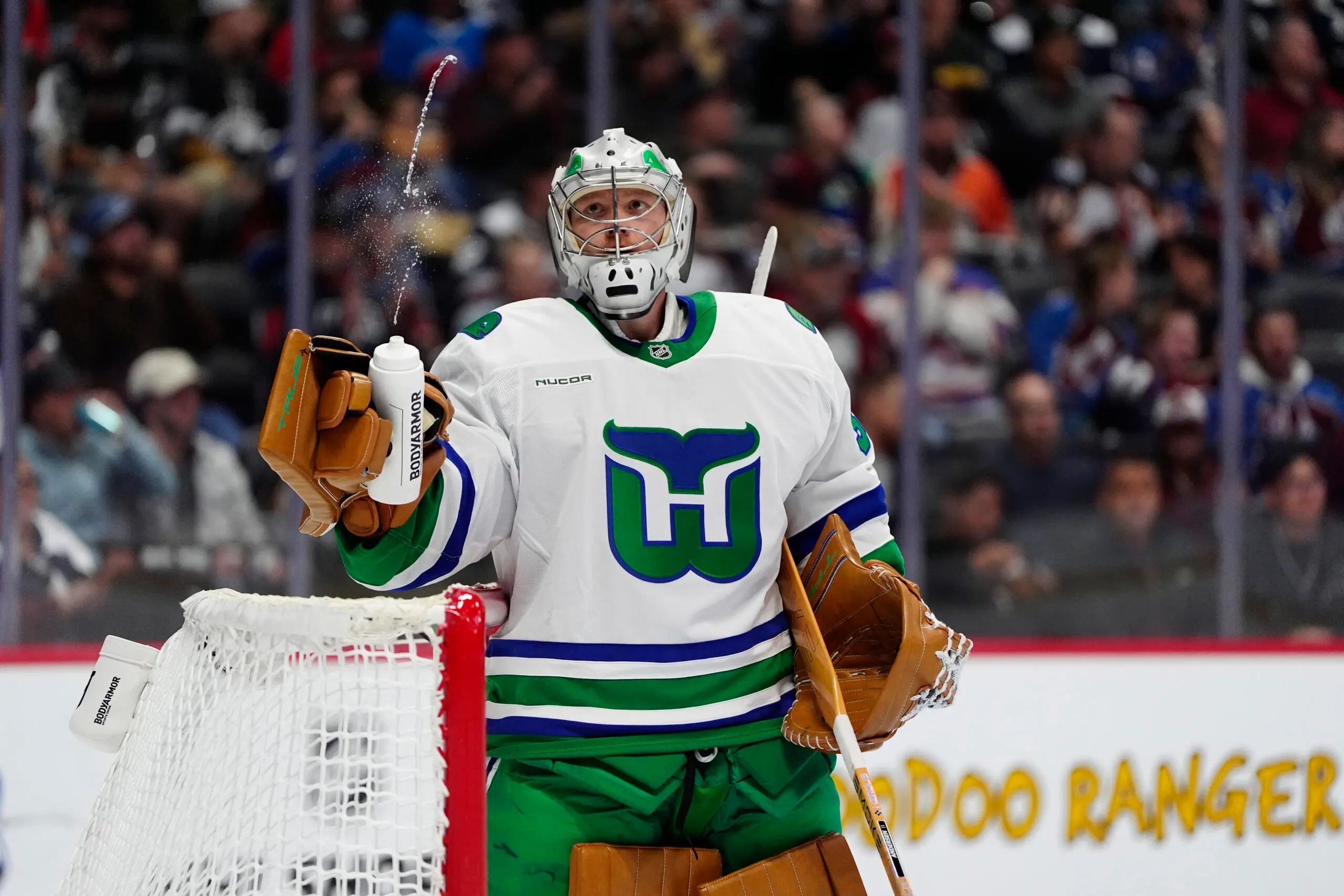
Photo credit: Ron Chenoy-Imagn Images

By Lane Golden
Jul 3, 2026, 15:00 EDTUpdated: Jul 4, 2026, 22:43 EDT
What many expected to be a quiet July 1 for the Edmonton Oilers ended up producing as many fireworks as the Canada Day celebrations that followed.
Stan Bowman’s seat had to be feeling hot to start the summer after his club’s disappointing performance last season. But to his credit, he didn’t waste any time getting to work in free agency — he made a pair of impactful trades and signed more than half a dozen free agents on day one.
The biggest domino to fall was the Darnell Nurse trade, which cleared $9.25 million off the books and gave Edmonton the flexibility to make significant moves throughout the afternoon.
The Oilers know all too well that a busy July 1 doesn’t necessarily mean a successful one. In fact, history suggests it’s often the opposite. The key to a good free agency is to avoid albatross contracts and emerge with surplus value. I believe Bowman accomplished exactly that. Let’s discuss some of the key free agents Edmonton signed.
Ryan Shea – $4 million x 5 years
No matter how you feel about Nurse and his contract, there’s no question the Oilers needed to find a replacement when they dealt him to the San Jose Sharks. Nurse was a fixture on Edmonton’s second pair and finished fourth on the team in penalty killing minutes last season. Ultimately, they chose former Pittsburgh Penguin Ryan Shea to take up the mantle.
Shea was originally a Bowman draft pick back in 2015 for the Chicago Blackhawks, but he didn’t make his NHL debut until 2023-24 with the Penguins. Despite being a late bloomer, he’s progressed well in Pittsburgh over the last couple of years.
Shea played second-pair minutes for the Penguins last season and hit a career high of 35 points, all of which came at even strength. While a fortunate on-ice shooting percentage inflated his production, there are still plenty of encouraging offensive attributes in Shea’s game. The most noteworthy one is how confidently and accurately he can snap the puck up to his forward’s sticks.
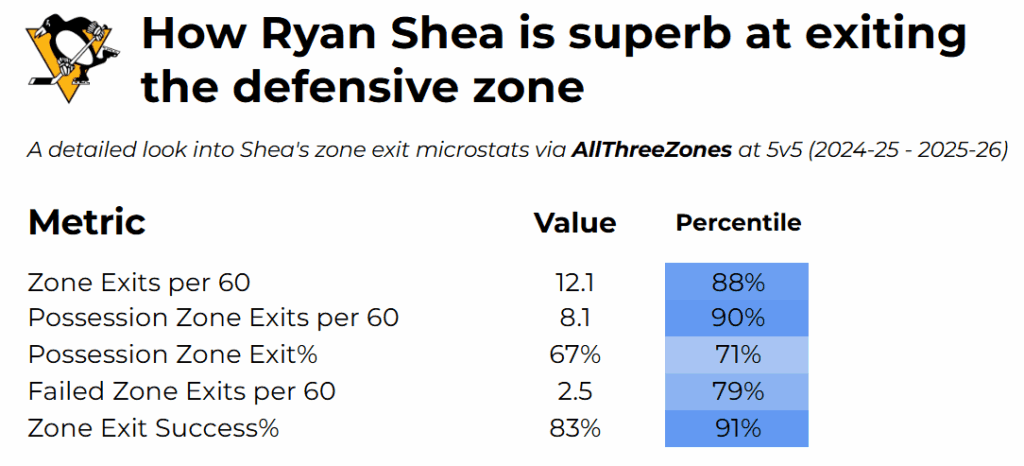
Shea placed in the top half of the league in nearly every retrieval and exit microstat tracked by All Three Zones. He had more passing-exits per hour than 97 percent of NHL defencemen. That’s particularly refreshing compared to Nurse, who lacked the puck skills to consistently jump-start the rush with his passing. Simply put, he’s a guy who can tilt the ice in the right direction.
For Edmonton, the most intriguing quality Shea possesses might be his penalty-killing prowess. He ranked third on the Penguins in penalty kill time on ice and second best in expected goals against per hour. That’s the area where Shea will give the Oilers the biggest boost over Nurse, who struggled in a prominent PK role last season.
Shea is an excellent puck mover and penalty killer, but he isn’t without a few warts. Over the three years he’s spent in the NHL, his five-on-five defensive game is fairly inconsistent. JFresh’s model ranks him at the 30th percentile in even-strength defence over the last three seasons, while facing slightly below-average competition. HockeyViz had Shea ranked at one per cent below league average in defensive impact.
His middling defensive results didn’t seem to hurt him much last season, however, as Shea finished a plus-22 at five-on-five, while Nurse was a minus-14 on the Oilers.
It’s fair to say that Shea was better than Nurse this past year, but that doesn’t mean his contract comes without risk. With nearly 650 fewer NHL games played than Nurse, Shea is a far less battle-tested player in the NHL, and he has a far shorter track record playing in a top-four role. That lack of experience gives me some pause, even if Shea has outperformed Nurse recently.
While I’m not completely convinced Shea is a significant upgrade over Nurse, I am convinced he’s a better stylistic fit. The Oilers built their identity around pushing the pace and moving the puck quickly. Shea will provide them with high-end passing while upgrading their penalty kill — two things they desperately needed. And he can do it for less than half of Nurse’s money, which is an enormous boost in cap efficiency.
His short track record of success suggests there is some risk here, but the upside and fit heavily outweigh it. Hockey analytics gurus Brendan Wadlow and Dom Lusczyszyn projected Shea’s market value at $4.7 million and $5.5 million on their respective models. Getting this player locked in for $4 million is a solid deal for the Oilers and one that makes a ton of sense.
Grade: B+
Kasperi Kapanen – $2.6 million x 1 year
It wasn’t a guarantee that Kapanen would return to the Oilers after he hit the market without an extension, but ultimately the two sides reached a deal: a one-year contract worth $2.6 million.
Kapanen has been a great fit for the Oilers ever since they picked him up off waivers in 2024-25. Last season, he registered 1.79 points per hour, which was the fourth-most among Oiler forwards. Not only that, but he produced significantly better defensive results than the prior year. The Oilers gave up 2.02 goals against per hour in Kapanen’s minutes this past season after giving up 3.6 the year before.
Kapanen’s chemistry with Vasily Podkolzin has been one of the keys to his success. Last season, Kapanen and Podkolzin outscored opponents 17-8 with a 50.8 per cent expected goal share. Leon Draisaitl loves playing with forecheckers who can chase down pucks for him, which is the bread and butter of the Podkolzin-Kapanen wing pair. It’s a great fit, but Kapanen had some struggles when he played apart from his regular linemates. Without Podkolzin and Draisaitl, he was outscored 8-4 with an underwhelming 42.7 per cent expected goal share.
That could be a bit of a red flag, but in a rising cap world, $2.6 million is essentially fourth-line money, and a one-year commitment is low risk. Even if Kapanen needs to play with specific teammates to maximize his impact, he’s shown he can make a difference in a complementary role.
Kapanen’s speed and physicality have also translated well to playoff hockey. He’s elevated his play in each of the last two postseasons for the Oilers, becoming one of their few bright spots in an otherwise putrid series against the Anaheim Ducks this spring.
He may not be the biggest play driver on this team, but Kapanen can live up to a $2.6 million contract. Brendan Wadlow’s contract projection model placed Kapanen’s market value at $2.68 million, almost exactly what he received.
Grade: B
Mathieu Joseph – $1 million x 1 year
In one of the more low-key moves for the Oilers on Wednesday, the team locked up veteran fourth liner Mathieu Joseph to a one-year, $1 million contract. Joseph produced just 25 points in his last 111 NHL games, but that doesn’t mean he won’t bring value to the table.
According to HockeyViz, Joseph’s defensive impact ranked 12 per cent above league average last season at five on five and six per cent above average on the penalty kill.
As front offices have become increasingly data-driven, squeezing value out of the fourth line has become more important than ever. Joseph profiles as one of the better defensive depth forwards available, and an upgrade over both Curtis Lazar and Mattias Janmark.
This is another solid deal for the Oilers, who should get some value here, especially if Joseph can rediscover some of the offence he had in 2023-24 when he notched 35 points with the Ottawa Senators.
Grade: B+
Frederik Andersen – $1 million x 1 year
The Oilers backed themselves into a corner with their goaltending after the Tristan Jarry trade last season. They hitched themselves to Jarry and his pricey cap hit for two more years, but after he severely underperformed, they were left without a true starter. The Jack Campbell buyout added to the wasted cap dollars, bringing the total to roughly $7.9 million committed to Edmonton’s crease heading into free agency, with only one NHL goalie on the roster.
They needed to find a goalie who could challenge Jarry for the starting job, and they needed it to come cheap.
Bowman helped right his wrong by signing a quality goaltender, Frederik Andersen, to a cheap one-year contract worth $1 million. The deal includes several performance bonuses, which would count against the cap in 2027-28.
+$600K at 10 games played
+$400K at 20 games played
+$200K if Edmonton wins a playoff round and he plays 50% of the games
+$200K if Edmonton wins Round 2 and he plays 50% of the games
+$200K if Edmonton wins the WCF and he plays 50% of the games
+$200K if Edmonton wins the Stanley Cup and he plays 50% of the games
At maximum, the contract could cost the Oilers an additional $1.8 million on the cap following next season. If he earns those bonuses, it will have been well worth the investment.
Andersen is a legit starter when healthy, but injuries have prevented him from playing more than 35 games for four consecutive seasons. He had a slight down year for the Carolina Hurricanes during the regular season, in part due to the environment.
While the reigning Stanley Cup Champions are a structured team, they began to open up their offence once they added high-flying wingers like Taylor Hall and Nikolaj Ehlers, and, in turn, gave up far more rush chances against. Increasing their risk profile was a must for the Hurricanes to take the next step and win the Cup, but it made life difficult on their goalies. Carolina is such a dominant possession team that Andersen was left twiddling his thumbs as his team cycled the puck against their opponents for minutes on end. When he was finally called into action, it often came in the form of odd-man rushes.
Under difficult circumstances, Andersen still produced a positive goals saved above expected, according to HockeyStats, as he has in four of the last five seasons.
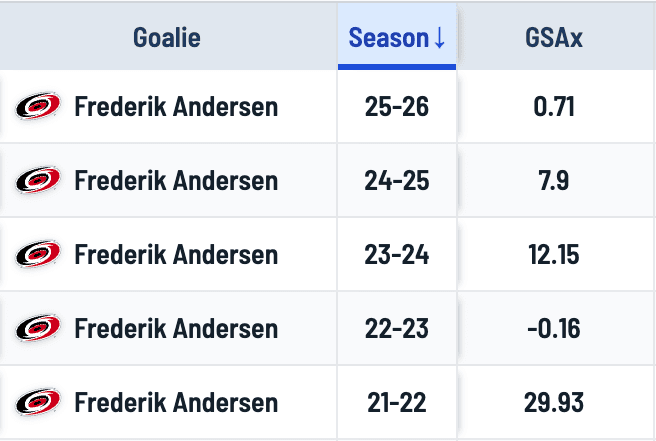
While Andersen’s injury woes are a real concern, the bonus structures remove essentially any risk from a cap perspective. Worst-case scenario, they only burn $1 million on a goalie who isn’t available to them for much of the season. Additionally, the team traded for Devon Levi on Wednesday morning, a young goalie who has performed exceptionally in the AHL over the last three seasons. He should provide solid insurance if Andersen gets hurt again.
Bowman did an excellent job manoeuvring the tricky goaltending situation that he created for himself. Andersen is highly likely to outperform this contract.
Grade: A
The big picture
July 1 was a fantastic day for Bowman and the Oilers management group. They replaced Nurse with a defenceman who better fits their style of play for less than half the price. And the rest of their deals were all one-year contracts, which limits one of the biggest risks we see every year in free agency: committing to the wrong player long-term.
They may not have made a massive splash, but they improved their penalty kill and goaltending, their two most pressing needs. Assuming they re-sign their RFAs, the Oilers should have roughly $6 million in cap space left over. Whether they use that to add an impact player this summer or wait to accrue more space during the season remains to be seen. But they’ve put themselves in a good spot.
PRESENTED BY PRAIRIE TOYOTA DEALERS

It’s time for a truck that can play in every zone. Which means, it’s time to Toyota! Its standard i-FORCE engine delivers more power than ever and a towing capacity of up to 6,400 lbs. It helps you take on challenging landscapes with confidence with its available Panoramic Multi-Terrain View Monitor that provides a live, underfloor view of the terrain your tackling. It even makes loading and unloading gear effortless with its available Power Liftgate. Whether it’s for early morning practice or weekend away games, the Tacoma is a teammate you can rely on. Visit your local Prairie Toyota dealer today.


Breaking News

Edmonton OilersTeam Cap Summary

Cap Summary
2026-27
2027-28
Projected Cap Hit
$99,274,166
$87,350,000
Projected Cap Space
$4,725,834
$26,150,000
Current Cap Space
$4,725,834
$26,150,000
Active Players
23/23
15/23
Draft Picks
Round
'26
'27
1
0
0
2
1
1
3
1
0