
OilersNation has no direct affiliation to the Edmonton Oilers, Oilers Entertainment Group, NHL, or NHLPA
A history of the Norris Trophy and a tight 2026 race
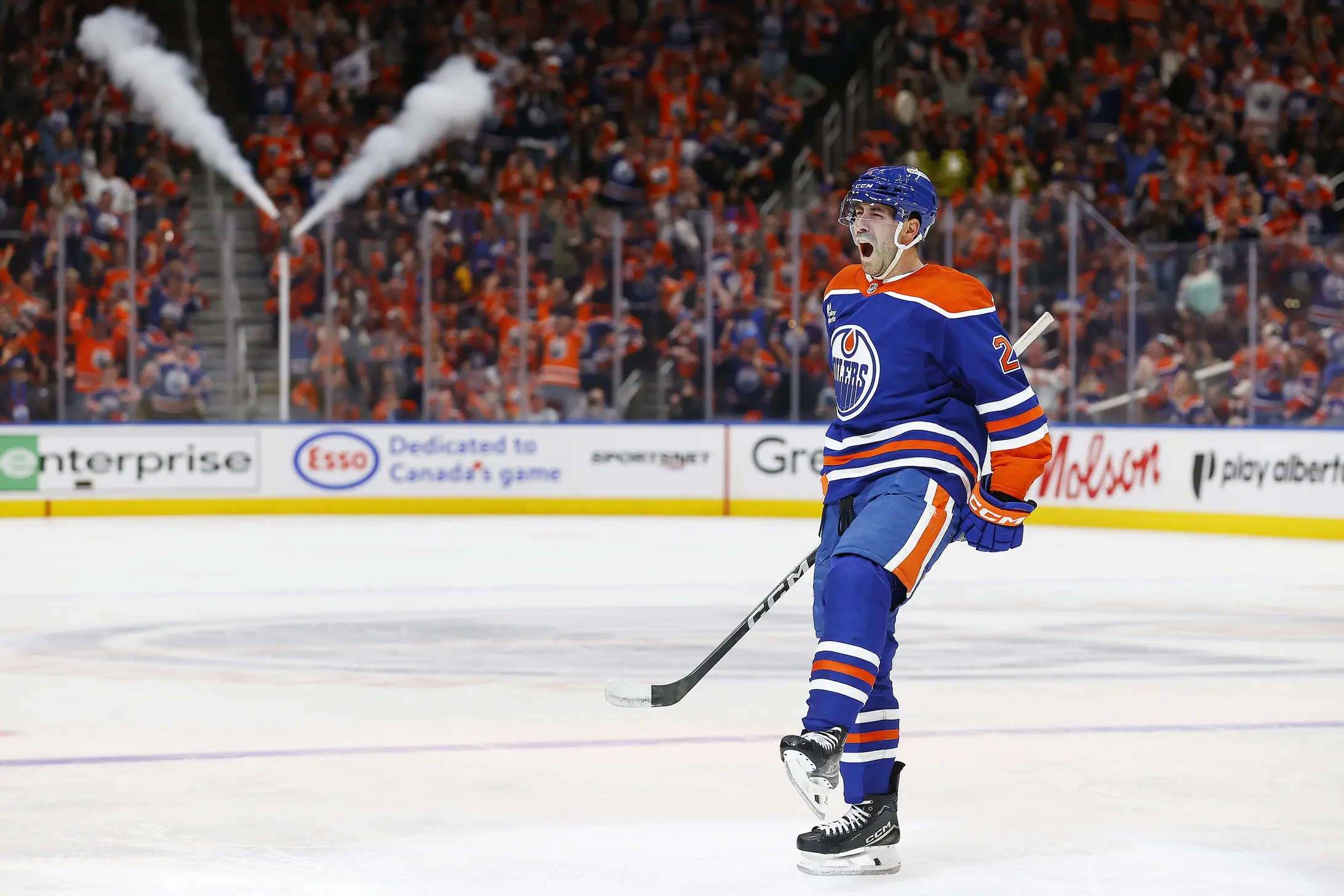
Photo credit: Perry Nelson-Imagn Images

By Jason Gregor
Apr 14, 2026, 16:30 EDTUpdated: Apr 14, 2026, 20:13 EDT
The James Norris Memorial Trophy was first handed out in 1954 when Red Kelly was named the inaugural winner of the NHL’s best defenseman award.
Kelly led NHL defenders in scoring with 49 points in 62 games, and offensive totals have always had a heavy influence on who wins. It isn’t the only criteria, but they are a main factor.
Doug Harvey won seven of the next eight years, winning in 1955-1958 and again in 1960-1962. Harvey led the NHL in scoring in 1955, 1957 and 1961. He was third in 1956, second in 1958, sixth in 1962 and 8th in 1960. Harvey had a down year in 1959, finishing 14th in scoring, and Tom Johnson won and finished second in points. In the early days, points were the main factor, considering there wasn’t plus/minus or other statistical data to look through. And there wasn’t an endless supply of videos to watch to help decide your vote.
Pierre Pilote won the Norris in 1963-1965, then Jacques Lapierre and Harry Howell each won once, before a young Bobby Orr changed the game for defensemen.
King Clancy was the first defender to score 40 points in 1930. He did it in 44 games, so offence has always been connected to the position, but we saw a slow increase in offence until Orr arrived.
In 1944, Babe Pratt was the first defender to surpass 50 points when he scored 58. Pilote beat him by one, scoring 59 in 1965, albeit in 18 more games.
Orr skated on the scene in 1969 and set a new standard of 64 points, but he would double that very soon.
He scored 120 points in 1970, then 139 (still the NHL record today) in 1971 and followed that up with 117, 101, 122 and 135 in 1976.
Orr rushed the puck relentlessly. He was also tough and could defend. He was the complete package, and his style of play completely changed the position.
Denis Potvin scored 98 points in 1976 and joined Orr in the 100-point club in 1979 with a 101-point season. Paul Coffey burst on the scene with the high-flying Edmonton Oilers, skating effortlessly like Orr and chasing his records. Coffey would finish his career with seven seasons with 90+ points (most in the NHL), and he had five 100+ point campaigns including coming one point shy of Orr’s record with 138 points in 1986. Coffey set the NHL record for most goals by a defenseman with 48 that year, besting Orr by two. Orr and Coffey own the top-1o scoring seasons in NHL history, each with five.
Ray Bourque had four 90+ seasons (1984, 1987, 1991, 1994), Gary Suter (91 in 1988), Al MacInnis (90 in 1990 and 103 in 1991), Brian Leetch (102 in 1992) and Phil Housley (97 in 1993) joined the exclusive 90+ point club.
Between 1970 and 1995, the NHL had 25 occasions where a defenseman produced 90+ points done by the aforementioned eight men and in that 25-year span Orr won the Norris eight times, Bourque won five, Potvin three, Coffey three and Leetch one. They won 20 of the 26 awards. Larry Robinson won in 1977, and he led the NHL with 85 points. Randy Caryle won in 1981 and led scoring with 83 points. Doug Wilson won in 1982 and was second in scoring (85 to Coffey’s 89), but Wilson led the league in goals by defensemen with 39.
I’m not sure what happened in 1983 and 1984, but the voters decided to give the award to Rod Langway — I guess because they loved his defensive play. Langway, who was traded from Montreal to Washington in September of 1982, had 32 points in 1983 and was -2. He had 33 points in 1984 and was +14. Coffey scored 96 points in 1983 and was +52, but he finished sixth in voting. In 1984, Coffey scored 40 goals, had 126 points and was +52. He had 76 even-strength points, which was more than every D-man had points except three, but he still finished second in voting to Langway. Langway had Larry Murphy and Scott Stevens as fellow defencemen on that Washington team, but the voters were adamant he was the best D-man in the league. I would love someone to go through every Capitals game that season to see what the data available today would show us. It would be interesting to see and compare how Langway and Coffey impacted the game. hockey-reference.com has Langway with a 1.2 OPS (offensive point share) and 6.3 DPS (defensive point share), while Coffey had a 9.9 OPS and 4.3 DPS.
Coffey did win in 1985, 1986 and 1995, Bourque won in 1987, 1988, 1990, 1991 and 1994, while Chris Chelios won in 1989 and 1993, and Leetch won in 1992. After the outlier voting years for Langway, the voters reverted back and looked at players who contributed on both ends of the ice.
In the past 30 years, we’ve seen the award much more spread out than it was in the previous 25 years. In the 29 seasons the Norris was awarded, we’ve only had four players win multiple times in Nick Lidstrom (7x), Erik Karlsson (3x), Duncan Keith (2x) and Cale Makar (2x). The other winners include Chelios, Leetch, Rob Blake, Al MacInnis, Chris Pronger, Scott Niedermayer, Zdeno Chara, PK Subban, Drew Doughty, Brent Burns, Victor Hedman, Mark Giordano, Roman Josi, Adam Fox and Quinn Hughes.
LOOK AT RECENT WINNERS…
Here is a look at the winners over the past three decades:
1996: Chelios was fourth in points with 72 and trailed Coffey, Bourque and Leetch. Chelios won with 408 votes to Bourque’s 403. Bourque had one more first-place vote (23-22), but Chelios had three more second-place votes (19-16). It was incredibly close, and Chelios had 10 fewer points than Bourque
1997: Leetch won handily with 42 of 54 first-place votes. He led defensemen with 78 points.
1998: Rob Blake won with 27 of the 54 first-place votes. He was eighth in scoring (only eight points back of leader Lidstrom) and finished -3. He led defensemen in goals with 23. Blake was a ferocious hitter that season, but the NHL didn’t track hits back then, so there is no way to know where he ranked. He beat out Lidstrom, who finished second with 13 first-place votes. He is one of the rare cases to win with a negative plus/minus ranking.
1999: MacInnis won with 54 of 56 first-place votes. He led defensemen league in goals, points and was second at +33.
2000: Pronger won the Norris and the Hart trophy (most valuable player). He was second to Lidstrom (73) in scoring with 62 points, but Pronger was +52 to Lidstrom’s +19. Pronger garnered 53 of the 58 first place votes.
2001: Lidstrom had 56 of 62 first place votes. He was second (71) in scoring behind Leetch (79), but Leetch was -18.
2002: A great battle between Lidstrom and Chelios. Lidstrom had 29 first place votes to Chelios’ 28. Lidstrom finished with 472 total voting points to 431. Lidstrom led defensemen with 59 points, while Chelios had 39, but he was +40 to Lidstrom’s +9. They each had 29 EV points, but Lidstrom had the PP advantage 30-7. Chelios got a lot of votes for his defensive play.
2003: Lidstrom took 42 of 62 first place votes with MacInnis getting the other 20. MacInnis outscored Lidstrom 68-62, Lidstrom led defensemen in goals with 18, but he was +40 to MacInnis’ +18.
2004: Niedermayer won with 72 of 104 first place votes (big increase in voters from 2003). He was second in scoring with 54 points, four back of Sergei Gonchar, but Gonchar was -14 to Niedermayer’s +20. Zdeno Chara was +33 with 41 points and finished second in voting.
SALARY CAP ERA…
2006: Lidstrom wins his fourth Norris with 91 of 129 votes. Lidstrom led defensemen with 80 points, the most since 1995.
2007: Lidstrom was fifth in scoring with 62 points, seven behind the leader Niedermayer, but Lidstrom was +40, while the top four scorers Niedermayer (+6), Gonchar (-5), Sheldon Souray (-28) and Dan Boyle (-5) were well behind in their GF-GA differential.
2008: Lidstrom won handily with 127 of 134 first place votes by leading in points with 70 and led with +40.
2009: Chara defeated Mike Green with 1,034 total votes to 982 and had 68 of the 133 first place votes. Green led defensemen in goals (31) and points (68) and was +24 (5th). He had a 59.6 goal share (GF%) and 55.5 shot share (SF%). Both of those numbers were better than Chara’s. Green missed 14 games and was on the ice for nine fewer GA than Chara. I wonder if the missed games were a factor for voters. Somehow Chara wasn’t on seven voter’s ballots while Green didn’t make the top five for 13 voters. Thankfully they are on public record today.
2010: Duncan Keith had 76 of the 133 first place votes. Green finished second again with 34. Keith had 14 goals and 69 points, 48 which were EV. Green had 19 goals, 76 points and 40 EV. Green was +39 to Keith’s +21. At 5×5 Green’s GF-GA was 88-50 (+38) while Keith was 83-71 (+12). Green had a ridiculous 4.16 GF/60 and Keith was sixth best at 3.15. Green led in GF% 63.7 per cent to 55.5 per cent while Keith led in SF% 58.1 per cent to 51.8 per cent. Both had great seasons, I’m just surprised Keith was that far ahead. Green never had a reputation of being a great defender, and I think for many they get caught up in “reputations” rather than what occurred that season. No doubt Keith had a better career, but for this season they were very close, and Green was better in quite a few categories. Keith didn’t make three voters’ top five while Green was off six ballots completely. Ridiculous.
2011: One of the most competitive races ever. Nick Lidstrom garnered 736 total votes, Shea Weber had 727, Chara 688 and Lubomir Visnovsky 573. Lidstrom had 35 first place votes while Weber (32), Chara (33) and Visnovsky (20). Keith Yandle (5) and Kris Letang (2) also got first place votes.
Visnovsky led in points with six, while Lidstrom was second with 62. Weber had 48 (10th) and had 44 (19th). Chara led in GF% at 65.18 per cent (73-39), Visnovsky was 55.8 per cent (76-60), Weber was 51.8% (58-54) and Lidstrom was 50.8% (58-56). Lidstrom only being +2 and winning over the other three is odd to me, when his point totals weren’t infinitely better. It is interesting to note that Visnovsky, Weber and Lidstrom all had a SF% of 49.7 to 49.9 while Chara was at 53%. If you are big on xGF% they were all within 2%. Lidstrom had 22 points at EV but led defensemen with 39 power play points.
2012: Another close vote. Erik Karlsson won with 1,069 total votes to Weber’s 1057 and Chara had 950. Karlsson had 78 points to 49 for Weber and 52 to Chara. Karlsson led with 50 EV points, which was 17 more than Chara, who was third and double Weber’s 25. At 5×5 Karlsson had a 53 SF%, Chara was 56.5 per cent and Weber 51.2 per cent. Karlsson’s GF was 81-65, Chara 76-51 and Weber 62-47. Karlsson wasn’t as good defensively (though he wasn’t bad), but he was better offensively. The crazy part was none were on every ballot. Chara wasn’t on one, Weber didn’t make three and Karlsson wasn’t on six of the 149 ballots.
2013: Shortened 48-game season and another ultra close vote. P.K Subban had 1,266 voting points while Ryan Suter had 1,230. Subban had 66 first place votes and Sutter had 65. Kris Letang had 31.
Letang and Subban tied for the scoring lead with 31 points, but Letang missed 13 games, while Subban missed six. Letang missing 27 per cent of the season likely cost him votes. Suter had 32 points and didn’t miss a game. Letang had 21 points at 5×5 points while Suter had 13 and Subban had 11. Subban scored 68.4% of his points on the PP with 26, the highest percentage of any Norris trophy winner in NHL history. At 5×5 Subban’s GF-GA was 35-18, Letang 39-22 and Suter was 34-34, but Suter played 960 min 5×5 compared to Subban’s 676. Had Letang not been injured, I could have seen him winning.
2014: Keith won handily with 68 first place votes and 1,033 voting points while Zdeno Chara had 667 and Shea Weber 638. Karlsson led defensemen in scoring with 74 and Keith was second with 61. Karlsson has -15 to Keith’s +22 and at 5×5 Karlsson was -4 to Keith’s +18. Karlsson was seventh in voting and received zero first place votes.
2015: Karlsson led defensemen in goals (21) and points (66), and he won the Norris despite having nine fewer first place votes than Drew Doughty. Doughty had 53 to Karlsson’s 44, but Karlsson had the advantage in second place (42-30), third place (33-20) and fourth place votes (19-13). Karlsson was on the ballot for 146 voters while Doughty made 126 ballots. Doughty was 14th in scoring that season with 46 points. Karlsson (76-66) and Doughty (68-58) were both +10 at 5×5. Ottawa made the playoffs with 99 points while LA missed the playoffs with 95 points.
2016: Doughty and Karlsson battled it out again, and this time Doughty won with 1,254 votes to Karlsson’s 1020. Doughty garnered 93 first place votes to Karlsson’s 46. Karlsson led defensemen in scoring with 82 points, but he was -2 overall and -2 (77-79) at 5×5 while Doughty was +15 at 5×5 (61-46) and +24 overall. Doughty had a 56.9 SF% to Karlsson’s 49.7 per cent.
2017: Brent Burns won the Norris with 1,437 total votes and 96 first place votes to Karlsson’s 1,292 and 63. Burns led defensemen in goals (29) and points (76) while Karlsson was third with 71. Victor Hedman was second with 72 and finished third in voting. Burns was +24 at 5×5 while Karlsson and Hedman were each +6 and Burns had a 53.5 SF% to Karlsson’s 51 per cent and Hedman’s 50 per cent.
2018: Hedman won with 1,385 total votes and 94 first place with Doughty finishing second with 1,164 and 52. John Carlsson led defensemen in scoring with 68 points while Hedman was fifth with 63 and Doughty was seventh with 60. Hedman was tied for the league lead in goals (17), had a 60 GF% (76-50) while Doughty had 72-60.
2019: Mark Giordano won in a landslide with 165 of 171 first place votes. He was second in points with 74 to Burns’ 83. Giordano had a 79-51 GF-GA at 5×5 while Burns was 83-73, but Carlsson who was fourth in voting but had the second most first place votes (3) was 92-62. Giordano had a 55.8 SF% while Carlsson was at 51.8 per cent and Carlsson had 70 points.
2020: Roman Josi won with 1,499 voting points and 109 of 170 first place votes with Carlsson finishing second with 1,267 and 56. It was an interesting year in that the top-five vote getters all ended up with the most votes in the spot they finished. Josi had most first-place votes, Carlsson the most seconds, Hedman the most thirds, Alec Pietrangelo the most fourths and Jaccob Slavin the most fifth place votes. That rarely happens.
2021: Adam Fox won with 743 points and 40 of the first-place votes, while Cale Makar had 655 and 31 and Hedman had 433 and 22. This was a difficult year due to a short 56-game season and teams only playing in their divisions. Fox was second in points with 47 behind Tyson Barrie’s 48. Fox finished tied for 17th in 5×5 scoring with 18 points while Makar had 19. At 5×5 Fox was 43-31 GF-GA with a 51.2 SF% while Makar was 49-30 and a SF% of 58.4. There were no glaring statistical areas where Fox was a clear winner. Not one D-man made each voter’s top five list.
OFFENSIVE RE-SURGENCE….
This is when NHL defensemen started returning to the 90+ point plateau. It hadn’t happened since 1994, but since 2022 we have seen an NHL defenseman reach 90+ points for five consecutive seasons.
2022: Makar won an extremely close race with 1,631 voting points to Josi’s 1,606. Josi led the NHL with 96 points and was the first D-man since 1994 to produce 90+ points. He led Nashville in scoring, led all defensemen in 5×5 scoring and was +20 at 5×5 (82-62) while Makar had 86 points, was second in 5×5 scoring with 43 and was +39 at 5×5 (87-48). Makar was fourth on the loaded Avalanche team with 86 points.
Their first-fifth place votes looked like this:
Makar 92-98-5-0-0
Josi: 98-76-17-3-0
Josi: 98-76-17-3-0
2023: Karlsson won his third Norris, and he had 1,585 voting points and 123 of the 196 first place votes. Fox was second with 1,125 and 41 first-place votes. Karlsson scored 101 points which was 25 more than second-place Josh Morrissey and Quinn Hughes. Karlsson had 64 points at 5×5, while Vince Dunn was second with 42. He had 34 more points than any San Jose teammate. Karlsson was even at 5×5 at 96-96, but the Sharks were outscored 124-72 without him on the ice. He had a remarkable season on a bad team. No where in the wording of the award does the defenseman have to be on a playoff team. For the Hart I think it matters, because it is most valuable to your team and if your team is a non-playoff team with you, then they’d still be a non-playoff team without you. I don’t believe the Norris winner must play on a playoff team.
2024: Quinn Hughes won garnering 1,864 points and 172 of the 192 first place votes. Josi was second with 1,207 points and 12 first place votes. Hughes led defensemen with 92 points followed by Makar (90), Josi (85) and Evan Bouchard (82). He led in 5×5 points with 43 followed closely by Josh Morrissey (42), Josi (41), and Makar (40).
Hughes’ GF-GA at 5×5 was 92-55 (+37), while Bouchard had 94-58 (+36), Josi 82-63 (+19) and Makar had 72-64 (+8). Bouchard led in SF% at 60.21 per cent, Hughes was 53.2 per cent, Josi 53.1 per cent and Makar 52.6 per cent.
Hughes and Josi were second on their team in scoring while Bouchard and Makar were third.
The only surprise when you look at the stats was how large the gap was in voting. Hughes was the clear favourite, despite not having a massive advantage in any statistical category. I have no issue with him winning, just looking back it is rare to see such a large margin of victory with no glaring statistical advantage.
2025: Makar won easily with 1,861 voting points and 176 of the 191 first place votes. Zach Werenski was second with 1,266 points and 13 first-place votes. Makar led defensemen in goals (30) and points (92). Werenski was second in both with 23 goals and 82 points. At 5×5 Makar was +22 (73-51) as was Werenski (86-64). Werenski led in 5×5 scoring in both goals (15) and points (48) and Makar was second with 13 goals and 42 points. Makar had a higher SF% at 56.3 per cent to Werenski’s 53.4 per cent.
Werenski led his team in scoring and Kirill Marchenko was second with 74 points, while Makar was second on Colorado behind Nathan MacKinnon’s 116 points. Was Makar’s season clearly that much better than Werenski’s to have a 176-13 first-place advantage? Personally, I don’t think so, but I was in the minority.
THIS SEASON…
This has been an outstanding season for defenseman. Bouchard, Werenski, Makar, Hughes, Karlsson, Lane Hutson, Rasmus Dahlin, Moritz Seider, Darren Raddysh have had great seasons, as have a few others, but only three will be finalists and a voter can only have five on their ballot. Personally, I see four who are in one tier and then a few others slightly below, but I won’t influence anyone and will wait until the winner is announced. But here are some numbers to compare for the aforementioned nine defenders. I will say it makes little sense how often I’ve heard or read people suggest the award isn’t just for offence. It takes literally 30 seconds to look up time on ice and situational play to realize that the top offensive defenseman are also among the top total minutes played and usually they are playing against the best players.
It is easier to be a pure defensive defensemen who just has to defend without making pinpoint passes — knowing when to activate in the play and producing offensively as creating plays is still the most difficult aspect of the game. Here are a variety of stats to compare the top candidates for the Norris.
* stats from NHL.com, Naturalstattrick.com and PuckIQ.com.
** PK TOI (Rank) = Where they rank on their team in terms of PK TOI.
***DFF% v. Elite = Dangerous Fenwick For (raw count). DFF means dangerous unblocked shot attempts.
** PK TOI (Rank) = Where they rank on their team in terms of PK TOI.
***DFF% v. Elite = Dangerous Fenwick For (raw count). DFF means dangerous unblocked shot attempts.

You will notice Seider, Hughes and Bouchard have played over 2,000 minutes. The suggestion that top guys need to defend more seems absurd to me, considering top offensive defenders in today’s game play loads of minutes against top players. The best D-man can produce offensively, play big minutes against top players and be on the penalty kill.
From an offensive standpoint, I do think it is important to point out that Werenski leads his team in scoring with 81 points. Kirill Marchenko is the highest-scoring forward on Columbus with 67 points. Bouchard has McDavid and Draisaitl, Makar has Nathan MacKinnon and Martin Necas, Hutson has Nick Suzuki and Cole Caufield, Hughes has Kirill Kaprizov and Matt Boldy, Raddysh has Nikita Kucherov, Heiskanen has Jason Robertson and Wyatt Johnston and Seider had Alex DeBrincat. All of those forwards had 80+ points.
There are multiple players who have strong cases. There won’t be a unanimous winner and I could see different players landing first place votes. I just strongly disagree with some of the narratives that have circulated suggesting the award isn’t just for offensive players. Historically, offence has always been a part of it, but today’s best offensive players also are much better defensively than some believe.
OIL UP: THE OILERSNATION PLAYOFF COLLECTION IS HERE

Edmonton, the playoffs are calling—and it’s time to answer. We are so back, and Oilersnation is ready with the OIL UP playoff collection, available now. From tees and hoodies to hats built for every game-day fit, this drop has everything you need all postseason long. Whether you’re heading to a watch party, the rink, or setting up camp in front of the TV, consider this your official playoff uniform. Don’t wait—gear up before puck drop. Shop the full collection now at nationgear.ca


Breaking News
- Oilers’ Devon Levi has golden opportunity in wake of Andersen injury
- Oilers prospect Tommy Lafrenière ready for NCAA challenge at Western Michigan
- Top 100 Oilers: No. 18 — Evan Bouchard
- House where former Oilers owner Peter Pocklington was shot goes up for auction
- What Oilers could become go-to guys this season?

Edmonton OilersTeam Cap Summary

Cap Summary
2026-27
2027-28
Projected Cap Hit
$102,071,666
$88,322,500
Projected Cap Space
$1,928,334
$25,177,500
Current Cap Space
$1,928,334
$25,177,500
Active Players
22/23
16/23
Draft Picks
Round
'26
'27
1
0
0
2
1
1
3
1
0