


Well, that's not what you want to see from the Oilers on the power play😶, 4-2 Ducks. 📹: Sportsnet

OilersNation has no direct affiliation to the Edmonton Oilers, Oilers Entertainment Group, NHL, or NHLPA
From day one, the lack of cohesion made this ‘average’ Oilers season concerning and weird
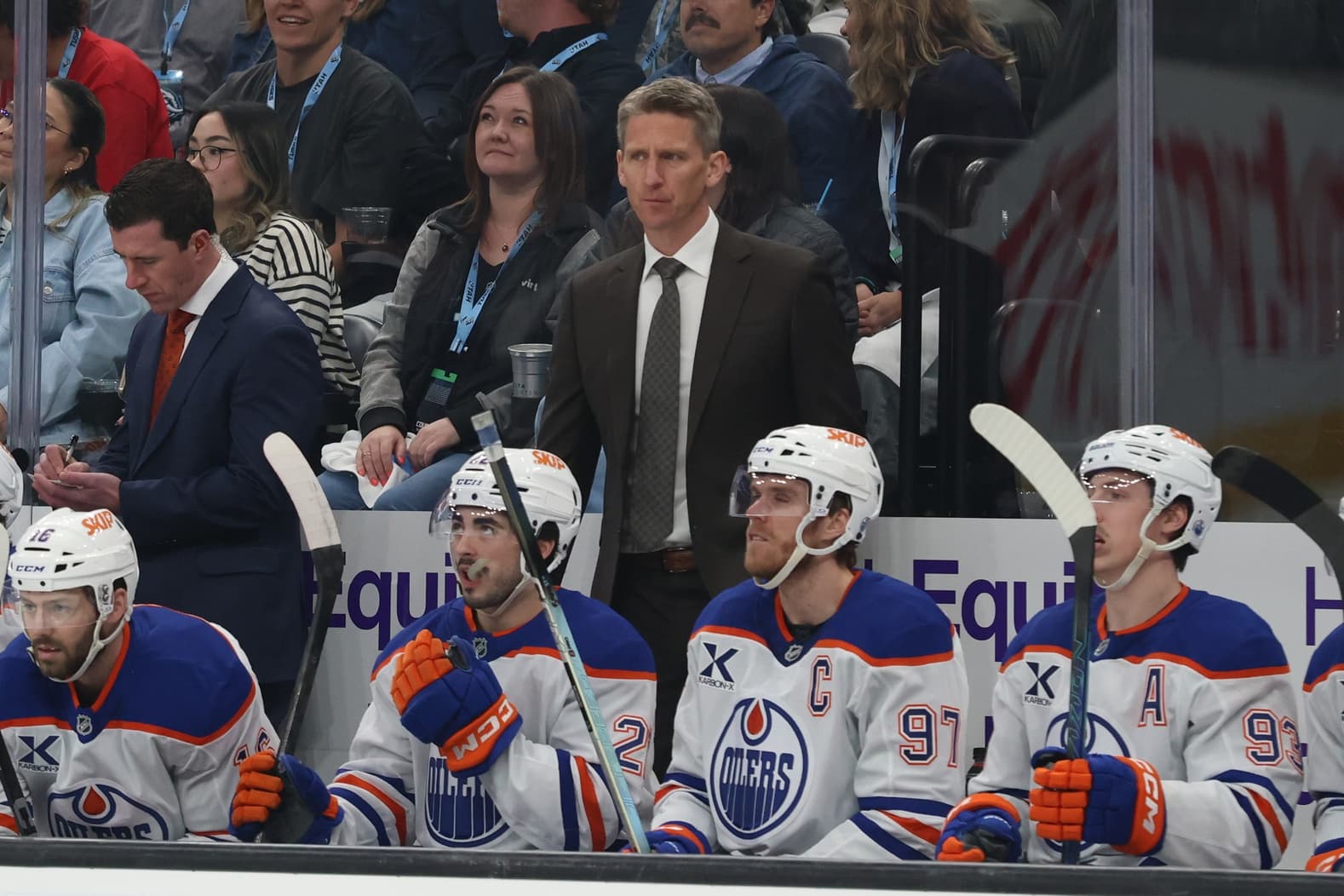
Photo credit: Rob Gray-Imagn Images

May 2, 2026, 12:00 EDTUpdated: May 3, 2026, 00:57 EDT
Last Saturday, after the Game 3 loss against the Ducks, Edmonton Oilers head coach Kris Knoblauch was asked a question about his team’s inconsistent performance.
Despite the players saying the right things and despite the Ducks being a beatable opponent, this interaction told me this team wasn’t likely to come back.
Mark Spector: “It seems like you’ve been searching for your game. It’s been a season of searching. Couldn’t find it early, found it around Christmas, lost it again, found it after the Olympic break, playoffs start you’re looking for it again. Why do you think that is?Kris Knoblauch: “I’ve got a lot of thoughts about that. If any of them are correct…um, I dunno. Just…having the…nah, I don’t think I have an answer for ya today.”
This wasn’t a new question from Oilers reporters, of course, but Knoblauch’s mind was trying to find a way to couch the information, like he usually does. In the end, he said it all without saying it. That would come later.
Well, after a tired, injured, and overall lifeless hockey team couldn’t make the right adjustments, kill penalties, or play a brand of playoff hockey, losing in six games to a younger, faster, green hockey team on Thursday night – everyone said it.
To borrow Knoblauch or Connor McDavid’s words in the funereal post-game interviews, the regular season was “monotonous” or a “formality” for a team that was “average” all year long.
Hey, I don’t blame them, either. My expectations for this team’s ceiling in 2025-26 were always low.
Florida made everyone believe that going to three straight Stanley Cup Finals ain’t a big deal. Don’t forget, Florida and Tampa Bay are outliers in the league since the NHL expanded beyond 21 teams. As I pointed out in November, winning a Stanley Cup after losing two in a row hasn’t been done since the 1950s, a time when the league was just six teams, not 32.
The volume of tough hockey this team played, the mental and physical toll, was too much to bear. Add in the electric shock of an Olympic competition, the truncated schedule, and then another soul-crushing loss for McDavid, the result of this season isn’t surprising.
Edmonton was banged up and covered in scar tissue. That’s not an excuse: it’s the reality of the situation. They didn’t have it.
The sins of the series
However, losing is one thing. How you lose is another. While the Ducks played fine, if you surfed the TV to other first rounds, it was a pillow fight. Right up until the final buzzer, even with injuries, fatigue, all of it, this was a winnable series.
How the Oilers lost not just renews, but amplifies all the old and very relevant conversations about this team’s faults, serious ones that require attention if Edmonton wants to compete for the holy grail again.
There will be plenty of time to pick through them all. The Darnell Nurse contract. The goaltending. The timeline.
For now, I’ll say this.
In the big picture, the Oilers struggle to learn lessons from season’s past. Despite a pedigree to participate in back-to-back Stanley Cup Finals, those lessons, the mental toughness, the commitment to a defensive game, all have to be rediscovered each season.
They can’t structure their way to victories in the regular season, or won’t play in them, or stack their game throughout the year. It’s just hot and cold. The Oilers have come back in series plenty of times, but isn’t it concerning how often they have to? They need to socked in the mouth and taste their own blood before they can get involved.
The players have to take some of the onus.
What’s the plan?
This series is a healthy reminder that one aspect of a team’s overall game can completely sink your chances.
The Oilers killed 8-out-of-16 power plays, a ghastly 50 per cent, which is a common script in their runs of old – but for their opponents. If there’s any solace for a Los Angeles Kings fan, and there’s almost none after Ken Holland’s exit interviews, they saw the shoe on the other foot for the Oilers, outplaying their opponent five-on-five, but the special teams play so tilted it sinks them.
Edmonton, despite a five-on-five scoring advantage, shot themselves and didn’t play well with leads all year. The March 28 game against the Ducks, one the Oilers played well and led 3-0, but was quickly narrowed to just a one-goal lead in a flash. Yes, Edmonton won that game, but it was an indicator that the Ducks were going to be handful.
Yet, the biggest moment in the series for the Ducks wasn’t a power play goal, it was a shorthanded one. Ryan Poehling finished the chance to restore a two-goal lead, emboldening the underdogs who gagged away Game 1.
For the Oilers, this play had nothing to do with injury, but was a sophomoric and immature sequence that simply can’t happen.
Superior skill in one area can overcome a poor area. After all, the Oilers only killed 67 per cent of penalties in 2025 and made the Stanley Cup Final. They got away with it.
Anaheim’s power play went 4-for-12 against the Oilers in the regular season. What was the plan against the league’s 23rd-best regular-season power play?
Plan is the keyword pointed toward management and the coaching staff:
What was the plan when Trent Frederic was signed? What was the plan of spending free agency signing wingers with the idea of playing Connor McDavid apart from Leon Draisaitl, then ditching it right before Game 1 of the regular season? What was the plan in goal before the season began with two free agent goaltenders, to ditch Skinner with assets by December?
The why of how the Edmonton Oilers conduct business will drive a person batty.
The weird
I’m sure the tone of this article sounds awfully negative. I don’t mean it to be. But the 2025-26 season was a frustrating exercise, and also weird in a concerning way for the future.
In somewhat chronological order, here is the weird:
- Signing Trent Frederic to eight years
- Uniting McDavid and Draisaitl together from the get-go
- Slow, steady stream of injuries
- Inability to overcome injuries
- Entering the season with two pending free agent goalies, yet making goalie situation worse
- The Tristan Jarry trade, dwindling of assets with Brett Kulak and a 2nd round pick
- Bickering between Jarry and teammates at practice
- Draisaitl’s comments before Olympic break
- Andrew Mangiapane becoming a negative asset
- McDavid’s comments after TBL loss
- Lifeless in home rematch vs FLA in March
- Double-digit attempts required to get a three-game win streak
- Team playing with structure when Draisaitl goes down
- Team then abandoning structure when Draisaitl returns for playoffs
- A PK that was hapless for most of the season, gets worse in the playoffs
- 4th line generating some chemistry with Dach-Frederic split up immediately in playoffs
- Losing how they did…with a whimper
Nothing gelled. The Oilers appeared to be fighting it, disconnected, and left fans and pundits to ask ad nauseam, “Can they flip the switch? Have they flipped the switch? Are the Oilers back?”
You can understand the fatigue, but the lack of cohesion? To this level? Awfully concerning.
The good news is, the team gets the one thing they need to try and climb the mountain again: rest. The body keeps the score. Their emotions have been drained.
Now begins an incredibly complex task, threading a fine needle to make this team truly a contender amidst aging, the salary cap, and the punitive contracts the Oilers have either signed or acquired.
To me, this feels like a “no-stone-unturned” type of off-season where deeper questions will be asked. Do they tinker, or do they cut at the core?
Once again, the Edmonton Oilers are in a position where they must do something, be bold, as David Pagnotta predicts. Do the people in place making those “bold” decisions still get to?
You don’t need a reminder to pay attention. For better or for worse, this off-season will be the most consequential in the McDavid era.
Michael Menzies is an Oilersnation columnist and co-host of PreGaming and Oilersnation After Dark. He’s also been the play-by-play voice of the Bonnyville Pontiacs in the AJHL since 2019. With seven years of news experience as the Editor-at-Large of Lakeland Connect in Bonnyville, Menzies collects vinyl, books, and stomach issues. Follow him on X at Menzies_4.
ARTICLE PRESENTED BY bet365


Breaking News
- Mailbag Monday: What do the Oilers need out of Jake Walman this season?
- Sunday Scramble: Will the Oilers respond to growing anger surrounding Alex Formenton?
- Cal Nichols, former Oilers chairman who saved franchise, dies at 84
- Why it’s time for the NHL to eliminate video review
- Oilers 2026 Prospect Countdown No. 5: Tommy Lafreniere
Edmonton OilersTeam Cap Summary
Cap Summary
2027-28
2028-29
Projected Cap Hit
$88,322,500
$61,025,000
Projected Cap Space
$25,177,500
$61,975,000
Current Cap Space
$25,177,500
$61,975,000
Active Players
16/23
10/23
Draft Picks
Round
'27
'28
1
0
1
2
1
0
3
0
1